



Toilet and Faucet Repair and installation in Las Vegas
Repairs, replacements, and new installations for toilets, faucets, shower valves, and trim. Flat-rate pricing, quoted before we start.
-

700+ 5-star Reviews
-

No Subcontractors
-

No Extra Fee Weekends & Nights
-

Free same-day estimates
-

SNWA Water Smart Contractor
Why Fixtures Wear Out Faster Here
Everything on this page traces back to one thing, so it is worth understanding before the rest.
Southern Nevada water carries a heavy mineral load. Every time water sits in a valve, a cartridge, or an aerator, those minerals settle out and build up as scale. The parts that suffer most are the ones with small openings and moving seals.
What this means in practice. Manufacturer lifespans assume ordinary water. Here, a cartridge that should last a decade may need replacing in half that. It is not a defect and it is not poor installation. It is the water.
What slows it down. A water softener reduces how fast scale forms on every one of these parts. It will not undo wear that has already happened, but it meaningfully extends what you install next. If you are replacing several fixtures at once, that is the moment the softener conversation is worth having.
What scale does to each part:
-
Scale acts as an abrasive against the rubber and ceramic seals inside. Once a seal no longer seats cleanly, the faucet drips. This is the single most common fixture failure we see.
-
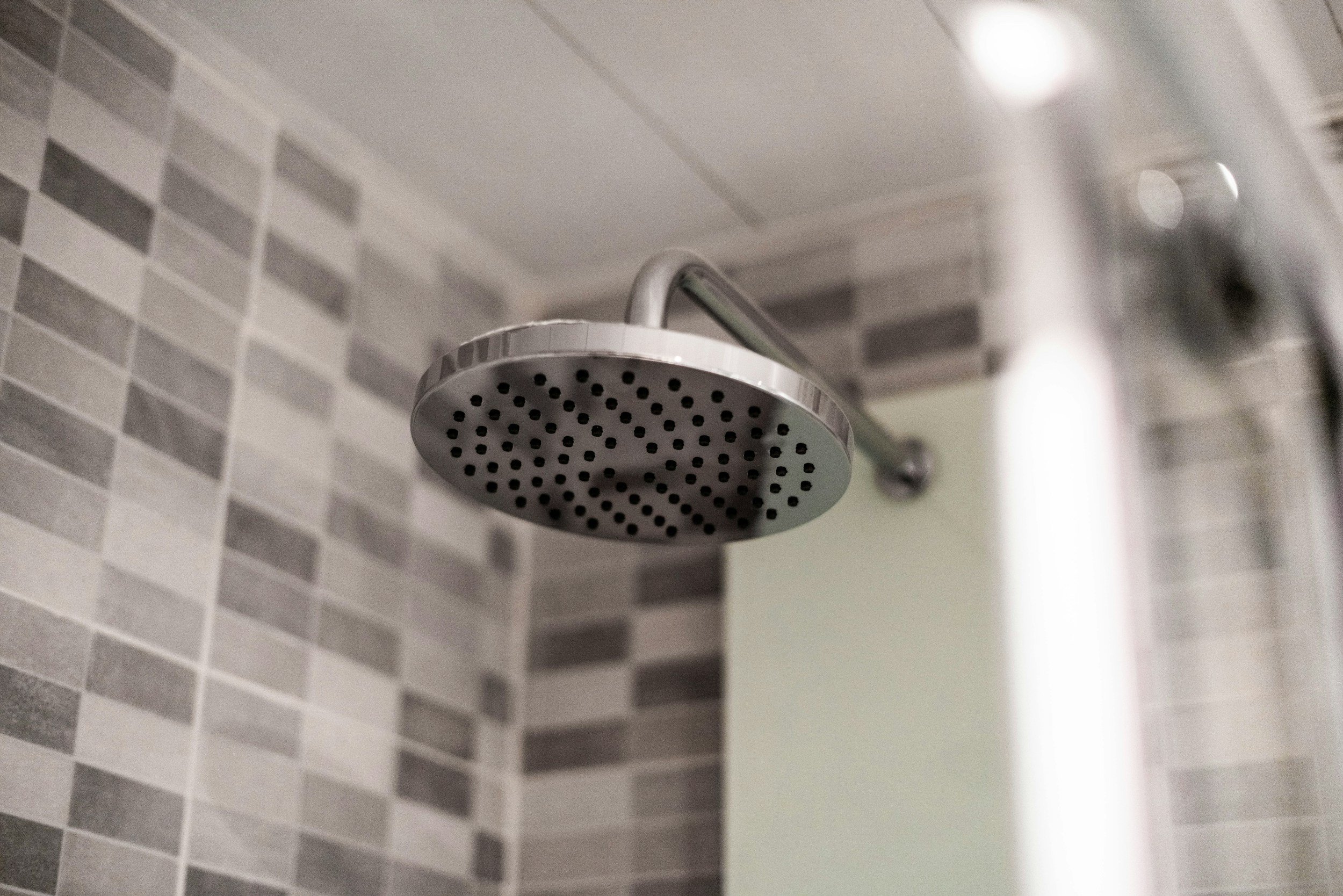
The screen at the tip of a faucet and the holes in a shower head are small enough that scale closes them off. Flow drops at that one fixture while the rest of the house is fine.
-
Rubber degrades faster in mineralized water. A flapper that no longer seals lets water pass continuously from tank to bowl.
-
Scale on the seal keeps the valve from shutting off completely, so the tank overfills and drains into the overflow tube.
-
The small shutoff valves under sinks and behind toilets seize up from scale, which is why they often will not close when you need them to.
Reviews
We take pride in our customer service and workmanship. Don’t take our word for it, take a look.
Not Sure About a Quote You Were Given?
We Will Take a Look
Plumbing problems often come with a number attached, and it is usually bigger than you expected. If you are sitting with an estimate and have no way to know whether it is reasonable, we are glad to come look at it.
✓
There is no charge for it.
✓
If the quote you got was fair, we will tell you that.
✓
There is no obligation.
✓
If you need less than you were told, we will tell you that too.
Big plumbing decisions are stressful, and most people have no reason to know what a repipe or a sewer replacement should cost. Having a second set of eyes on it should not cost you anything.
Areas we service
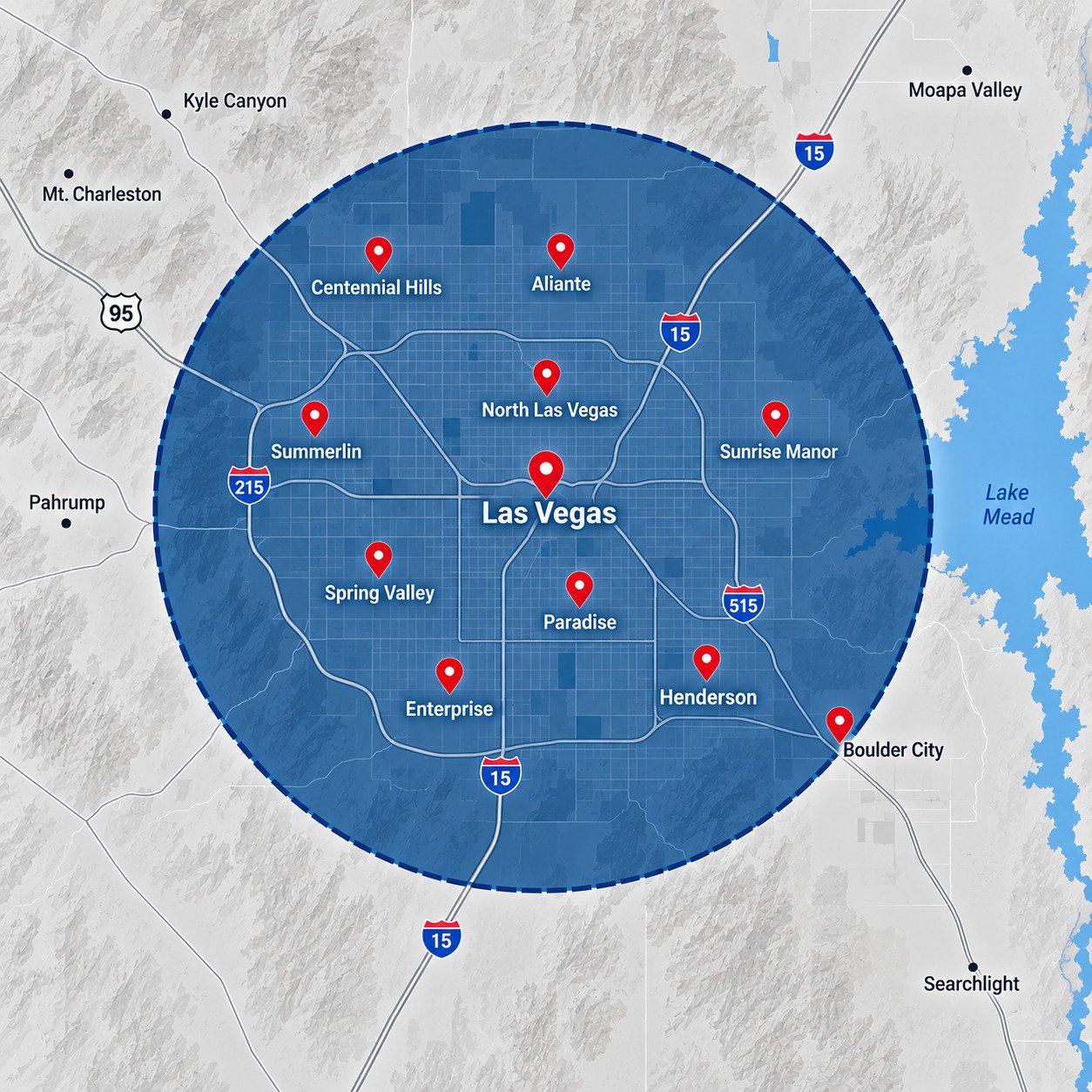
We cover the whole Las Vegas Valley, from Summerlin to Boulder City and everywhere in between. Our office is on East Charleston, so we're usually on the central and eastern side, but we're out across the valley every day. Not sure if we reach you? Give us a call.
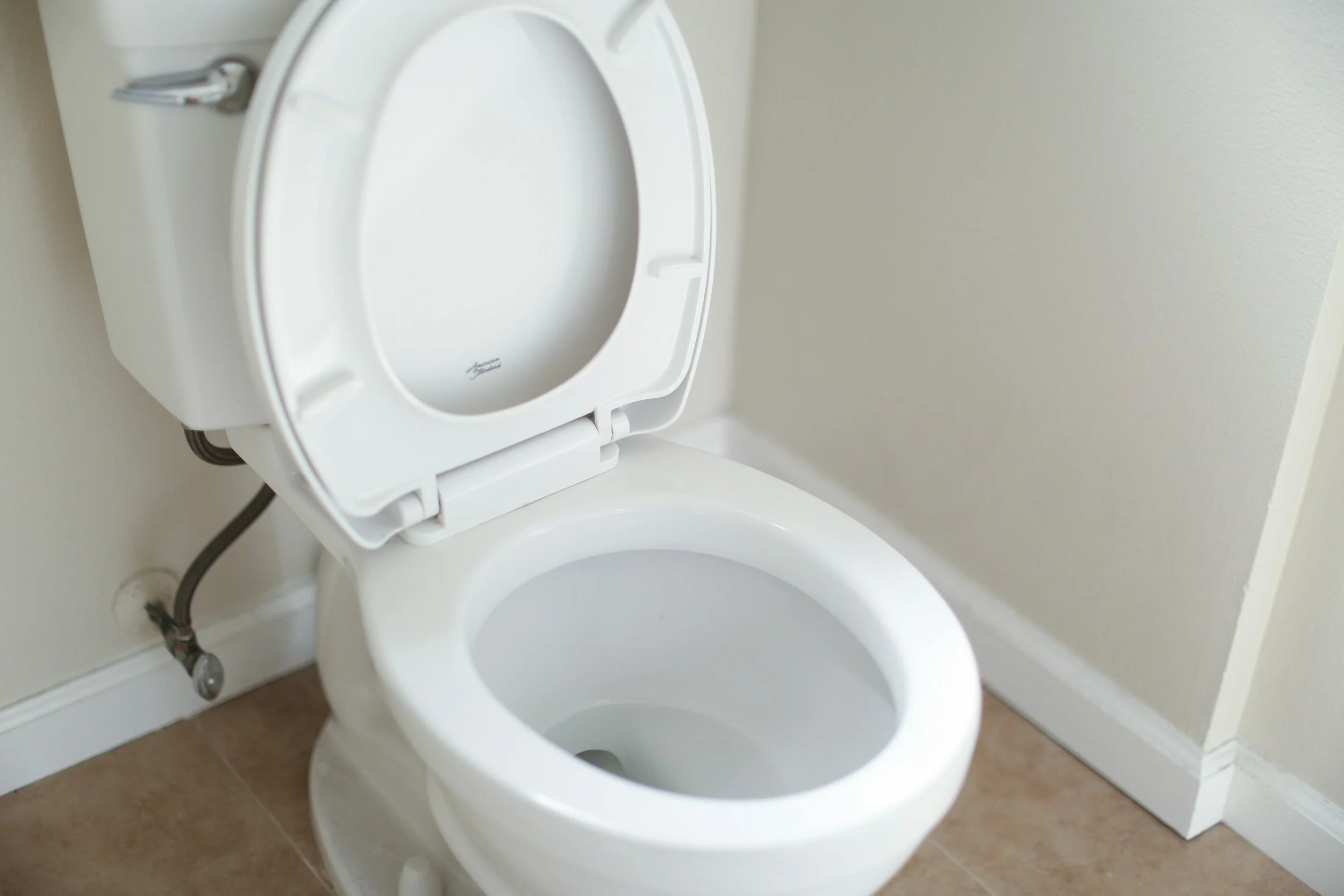
Toilet Repair & Install in Las Vegas, NV
-
Running constantly. Water passing from tank to bowl without stopping. Almost always the flapper, the fill valve, or a float set too high.
Running in bursts, then stopping. A slow flapper leak. Water seeps out until the tank level drops far enough for the fill valve to kick in, then it refills. The cycle repeats indefinitely.
Weak or incomplete flush. Mineral buildup closing off the rim jets under the bowl lip, a flapper closing too early, or a partial clog downstream.
Water pooling at the base. Usually a failed wax ring. Sometimes a cracked bowl. The difference matters, because one is a repair and the the other is not.
Rocking when you sit. Loose closet bolts or a compromised flange. Either way the wax seal below is being worked loose every time the toilet moves, so it will eventually leak.
Sweating tank. Condensation, not a leak. Common in summer when cold supply water meets warm humid air.
Gurgling when the washer drains. Not a toilet problem. That points at a vent issue or the main line.
-
A running toilet is the most common silent water waster in a house, and the reason it goes unnoticed is that it makes no sound and leaves no mark. Water moves from tank to bowl and straight down the drain.
The check takes fifteen minutes and costs nothing. Put a few drops of food coloring in the tank and do not flush. Come back later. If color has reached the bowl, the flapper is not sealing.
If your water bill climbed with no change in how you use water, run this test on every toilet in the house before assuming the problem is somewhere bigger.
-
Repair makes sense when it is a flapper, a fill valve, a supply line, or a wax ring, and the bowl and tank are sound.
Replacement makes sense when the bowl or tank is cracked, when the flange has failed on an already-old toilet, when repairs are stacking up, or when you have an older high-volume unit and want the water savings.
On cracked porcelain. There is no lasting repair. Sealants and epoxies hold for a while and then fail, sometimes all at once, and a tank that lets go releases everything in it onto the floor. We will tell you plainly when a toilet is past fixing.
Faucet Repair & Install in Las Vegas, NV
-
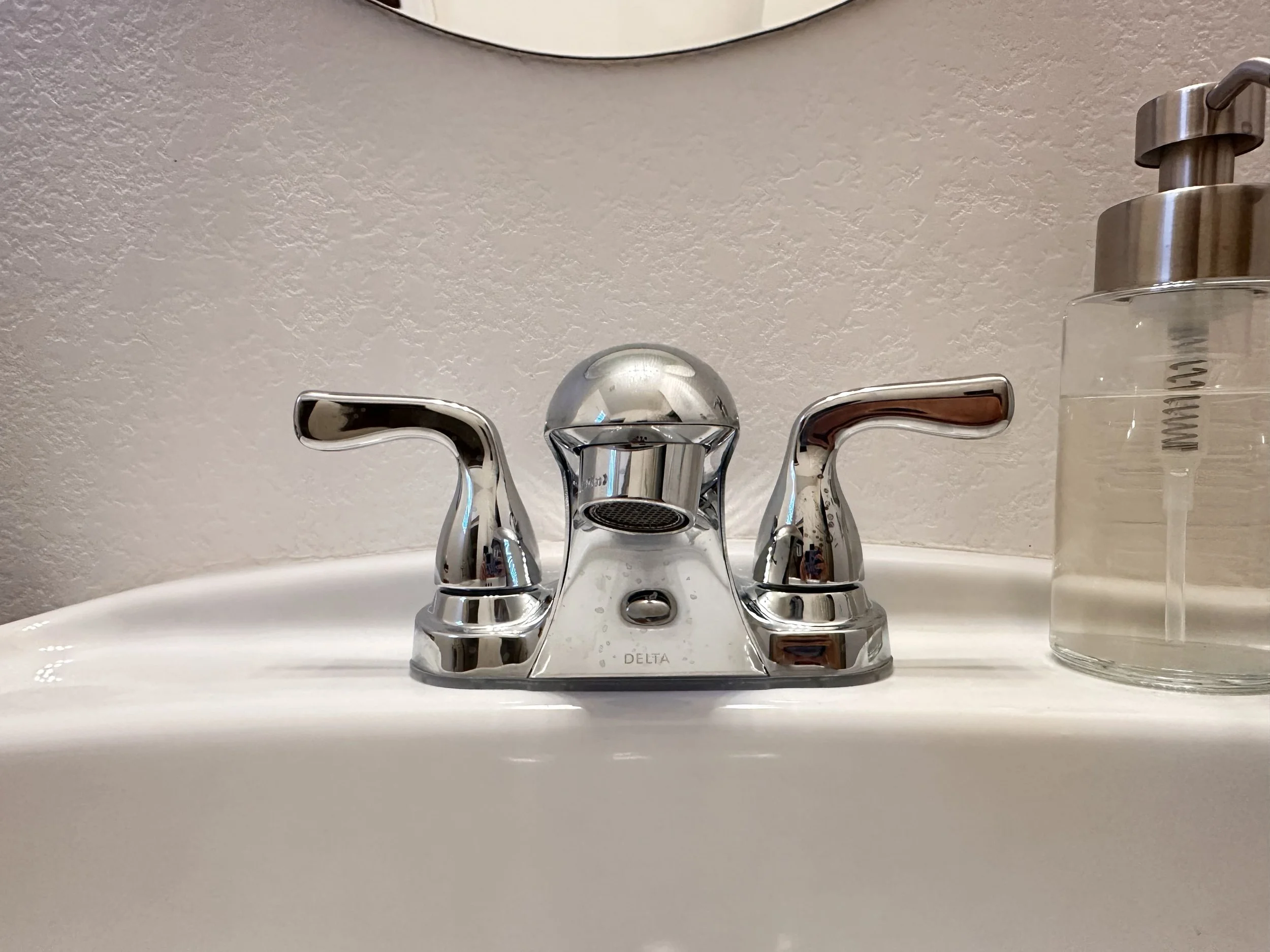
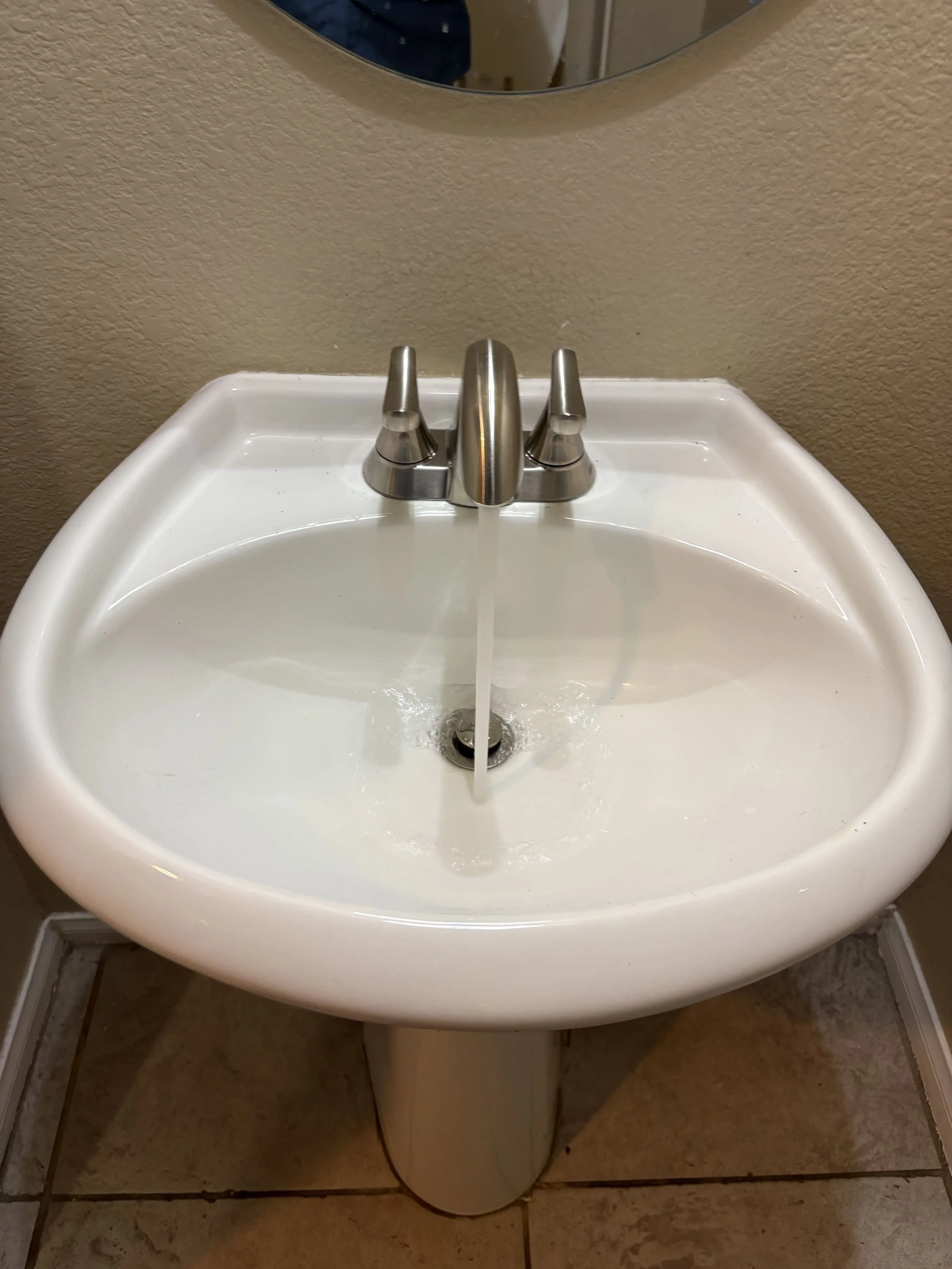
Dripping from the spout. A worn cartridge, washer, or valve seat. The part is no longer sealing against the water pressure behind it.
Leaking around the base of the spout. Failed O-rings where the spout meets the body.
Leaking underneath the sink. The supply line or its connection, not the faucet itself. Check the shutoff and the braided line before assuming the worst.
Low flow at one faucet only. The aerator. Mineral buildup in the screen at the tip.
Handle stiff or hard to turn. Scale inside the cartridge.
Whistling or screeching when you open it. A worn washer, or water pressure that is too high for the fixture. If it happens at more than one faucet, look at the pressure regulator rather than the faucets.
Sprayer weak or not diverting. The diverter valve or the sprayer hose.
-
Repair makes sense when the faucet body is sound and the finish is intact. Cartridges, O-rings, and aerators are inexpensive parts.
Replacement makes sense when parts are no longer available for the model, when the body itself is corroded, when the finish has worn through, or when you are changing the sink anyway.
One honest note. On an older budget faucet, the cartridge can cost a meaningful share of what a new faucet costs. We will tell you when that is the case rather than quietly charging you for a repair that does not make financial sense.
Shower Valves and Trim
The valve is the part inside the wall. The trim is the handle, escutcheon, and spout you see. They fail differently and they are priced differently, so it is worth knowing which one you are dealing with.
Symptoms and what they point to
Dripping shower head. Nearly always the valve cartridge, not the head.
Temperature swings when someone runs water elsewhere. A pressure balance valve that is worn or scaled and no longer compensating.
Cannot get hot enough, or it runs too hot. A scaled cartridge, or a rotational limit stop that has shifted.
Handle loose or spinning. Trim hardware, usually a straightforward fix.
Water coming out of both the spout and the head. A failed tub diverter.
On access. Some valve work can be done from the front through the trim opening. Some needs access from behind the wall. Which one depends on the valve brand and how it was installed, and we will tell you before we start rather than after we have opened something.
On trim-only updates. If you want a new look without a remodel, trim can often be swapped on its own, provided the new trim is compatible with the existing valve. Mixing brands usually is not possible.

Types of installation we do
Toilet and Faucet faqs
-
Usually a worn flapper, a fill valve that is not shutting off, or a float set too high. Put a few drops of food coloring in the tank without flushing. If color appears in the bowl within about fifteen minutes, the flapper is leaking.
-
Enough to show up on a bill, and it runs continuously without any visible sign. It is one of the most common reasons a water bill jumps with no change in habits.
-
Not in any lasting way. Sealants hold for a while and then fail, sometimes suddenly. A cracked tank or bowl should be replaced.
-
The tank is the upper section that holds the water. The bowl is the lower part. A tank crack tends to leak onto the floor behind the toilet. A bowl crack shows up as water around the base. Either way it is a replacement.
-
A worn cartridge, washer, or valve seat. In Las Vegas mineral scale accelerates that wear, which is why faucets here often start dripping earlier than you would expect.
-
Usually the aerator at the tip is clogged with mineral buildup. Unscrew it and look for white deposits. Soaking it in vinegar often fixes it without a service call.
-
Hard water. Scale builds in the cartridge and wears the seals. A water softener slows it considerably, which is worth considering if you are replacing several fixtures.
-
Usually a worn or scaled pressure balance valve that is no longer compensating for the pressure drop. It is a repairable cartridge in most cases.
-
Yes. Bring it and we will install it. If there is a problem with the fixture itself we will tell you before we start rather than after.
-
Most straightforward replacements are done in a visit. Longer if the flange is damaged or the angle stop needs replacing.
-
Yes, removal and disposal are part of the job.
-
Common with older angle stops that have seized from scale. We can replace it, usually at the same visit as the fixture work.
-
No. It wastes water and should be handled soon, but it can wait for a scheduled visit. Shut off the supply valve behind the toilet in the meantime if you want it to stop.