



Gas Line Installation and Repair in Las Vegas
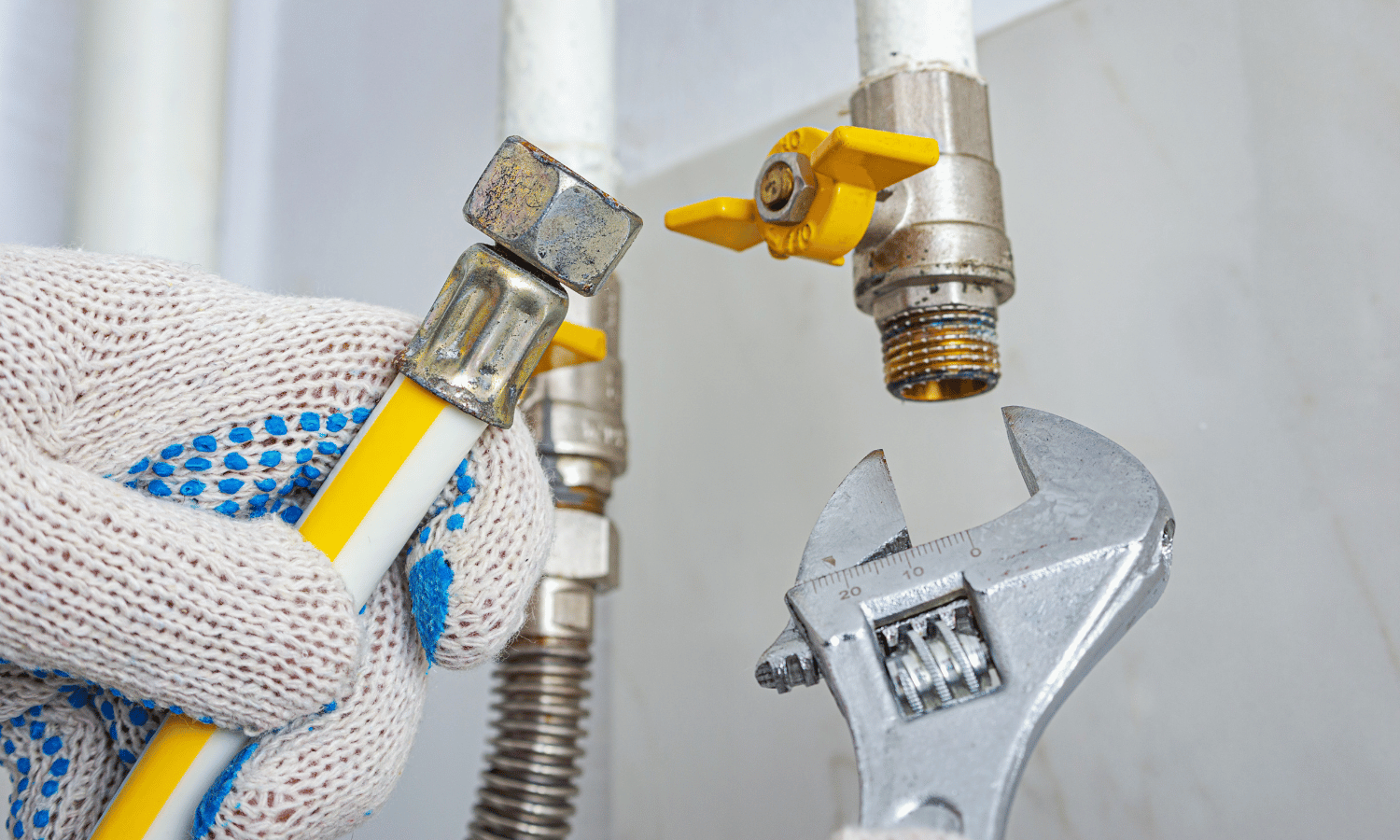
New lines for appliances and outdoor kitchens, repairs on existing runs, and rerouting for remodels. We pressure-test and inspect every line before turning the gas back on.
-

700+ 5-star Reviews
-

No Subcontractors
-

No Extra Fee Weekends & Nights
-

Free same-day estimates
-

SNWA Water Smart Contractor
Smell Gas Right Now?
Leave the house first. Then, from a safe distance, call 911 and Southwest Gas at 877-860-6020. Southwest Gas asks you to call both, whether or not you are a customer.
Do not flip light switches, use a phone inside, or strike anything that could spark. Natural gas is lighter than air and collects at ceiling level, so an enclosed room fills from the top down.
Once the utility has made the area safe, call us. We find the leak, repair it, pressure-test the line, and get it signed off.

Reviews
We take pride in our customer service and workmanship. Don’t take our word for it, take a look.
Not Sure About a Quote You Were Given?
We Will Take a Look
Plumbing problems often come with a number attached, and it is usually bigger than you expected. If you are sitting with an estimate and have no way to know whether it is reasonable, we are glad to come look at it.
✓
There is no charge for it.
✓
If the quote you got was fair, we will tell you that.
✓
There is no obligation.
✓
If you need less than you were told, we will tell you that too.
Big plumbing decisions are stressful, and most people have no reason to know what a repipe or a sewer replacement should cost. Having a second set of eyes on it should not cost you anything.
Areas we service
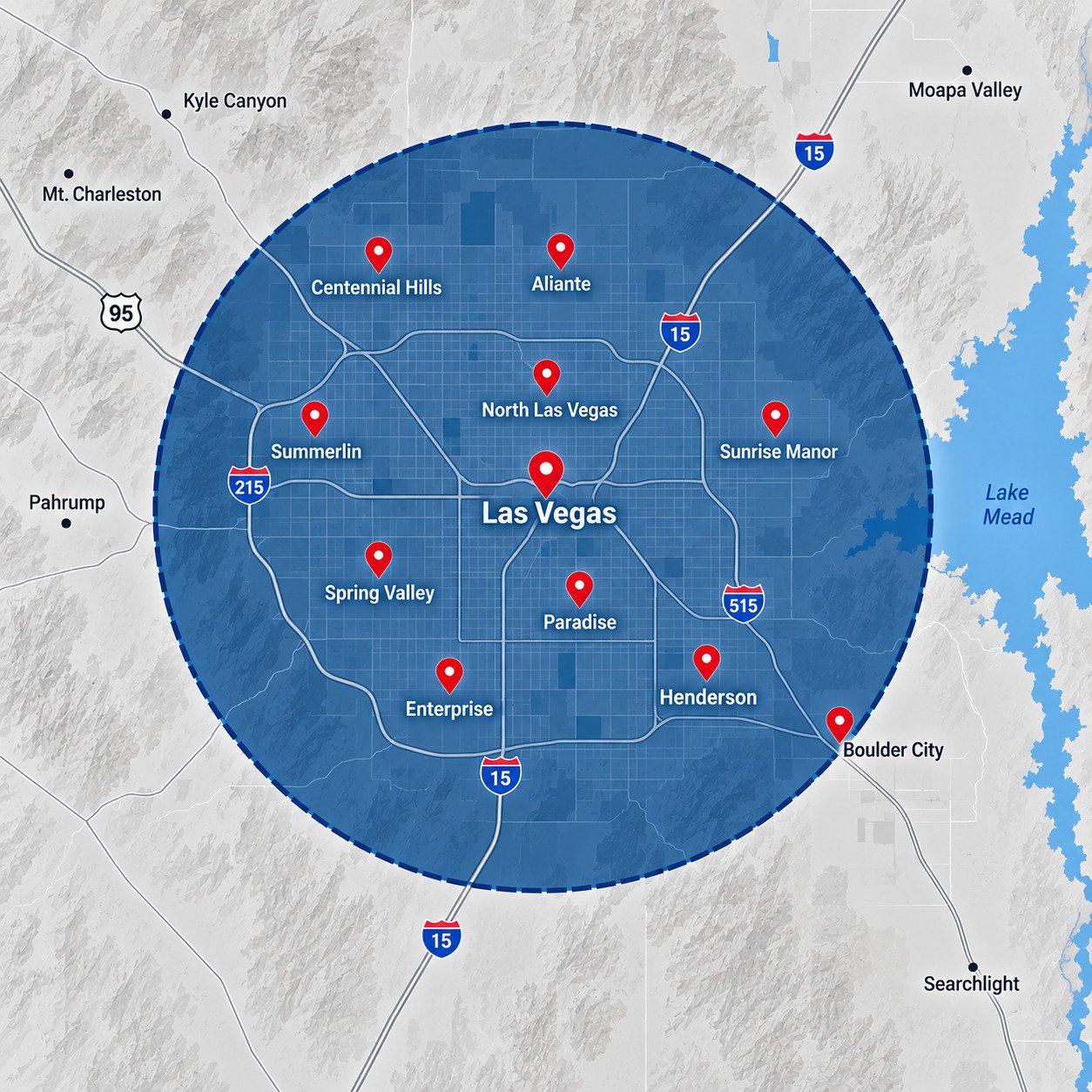
We cover the whole Las Vegas Valley, from Summerlin to Boulder City and everywhere in between. Our office is on East Charleston, so we're usually on the central and eastern side, but we're out across the valley every day. Not sure if we reach you? Give us a call.
What We Do
Gas line repair. Leaks at fittings, corroded sections, damaged lines, and failed shutoff valves.
New gas line installation. Ranges and cooktops, dryers, outdoor grills and fire features, pool and spa heaters, garage heaters, and lines to detached structures.
Gas line rerouting and upsizing. For remodels, appliance relocations, or when the existing line cannot carry the load you are adding.
Gas water heater hookups. Connections, testing, and sign-off.
Safety inspections and pressure testing. Including before a sale, after a remodel, or when you are not sure what has been done to the system.
Permits and Pressure Testing
Gas work past the meter is yours, and in Clark County and the City of Las Vegas it is permitted work that has to be inspected before the gas is turned back on.
We pull the permit, pressure test the line, and coordinate the inspection. If a meter upgrade is needed for the load you are adding, we coordinate that with Southwest Gas.
Why this matters more than it sounds. Unpermitted gas work is the kind of thing that surfaces at a home sale, at an insurance claim, or the first time something goes wrong. A contractor offering to skip it is handing you a problem.
Signs of a Gas Leak
The smell. Natural gas has a sulfur or rotten egg odor added to it deliberately
A hissing sound near a line, meter, or appliance
Dead or dying grass in a line along the yard, with no other explanation
Bubbles in standing water over a buried line
A gas bill that climbed with no change in usage
Pilot lights that keep going out or burn orange rather than blue
Headaches, dizziness, or nausea that improve when you leave the house
Any of these, leave and call the utility first. We come after the area is safe.
Why Las Vegas Gas Lines Fail
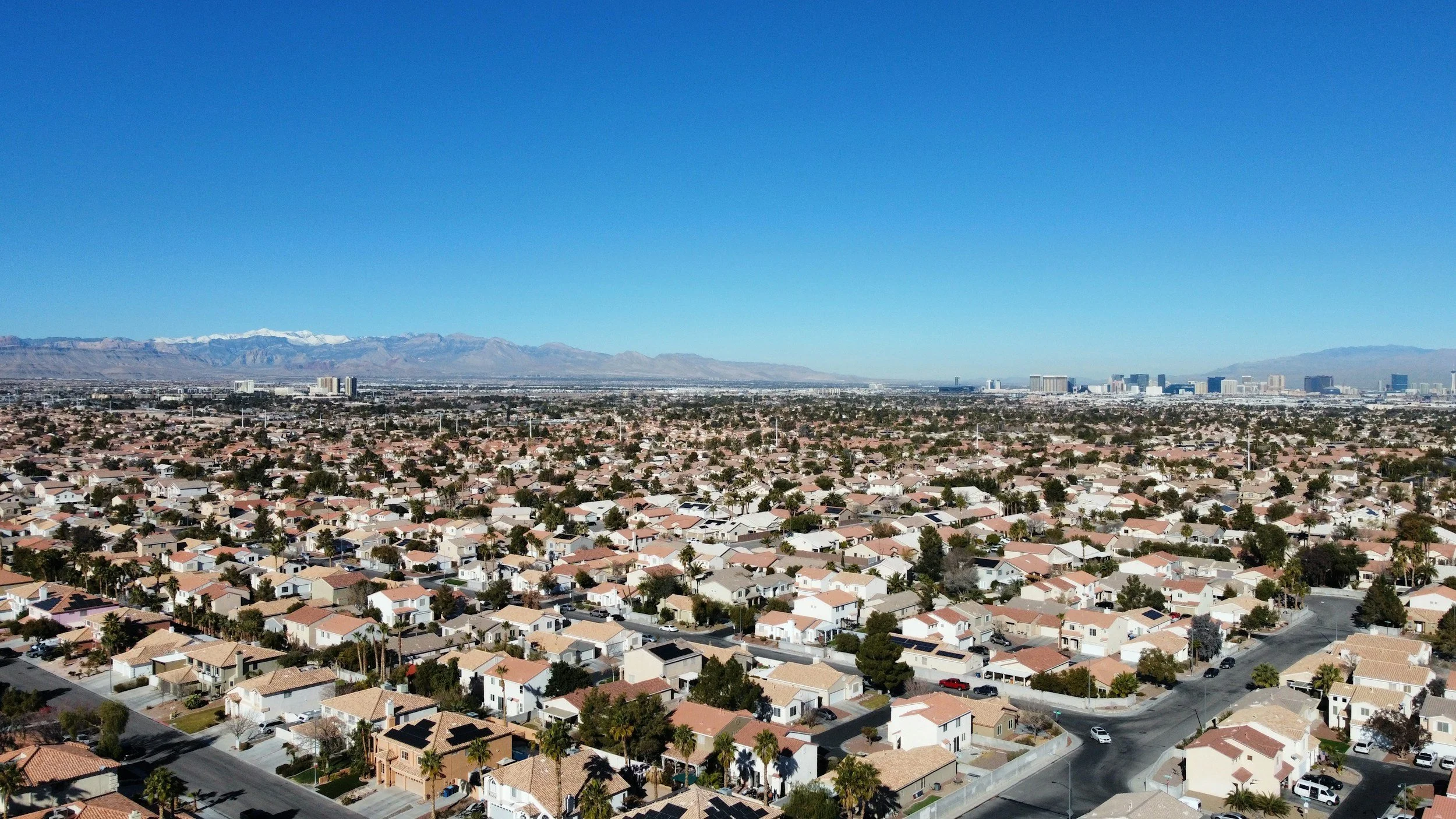
Soil movement. Valley soil expands and contracts with moisture, and buried gas line is subject to the same stress that pulls water line joints apart.
Caliche. The hard cemented soil layer under much of the valley is abrasive against a buried line over the years.
Age. Homes from the 1960s and earlier often have original black iron that has been in the ground for six decades.
Added load over time. A line sized for a range and a water heater does not necessarily carry a pool heater and an outdoor kitchen added later. Undersized lines show up as appliances that underperform rather than as a leak.
Black Iron, CSST, and Flexible Connectors
-
Black iron pipe
The traditional material, threaded at the joints, and what most older valley homes have. Durable, but the threaded joints are where leaks start, and buried sections corrode over decades.
-
CSST, corrugated stainless steel tubing
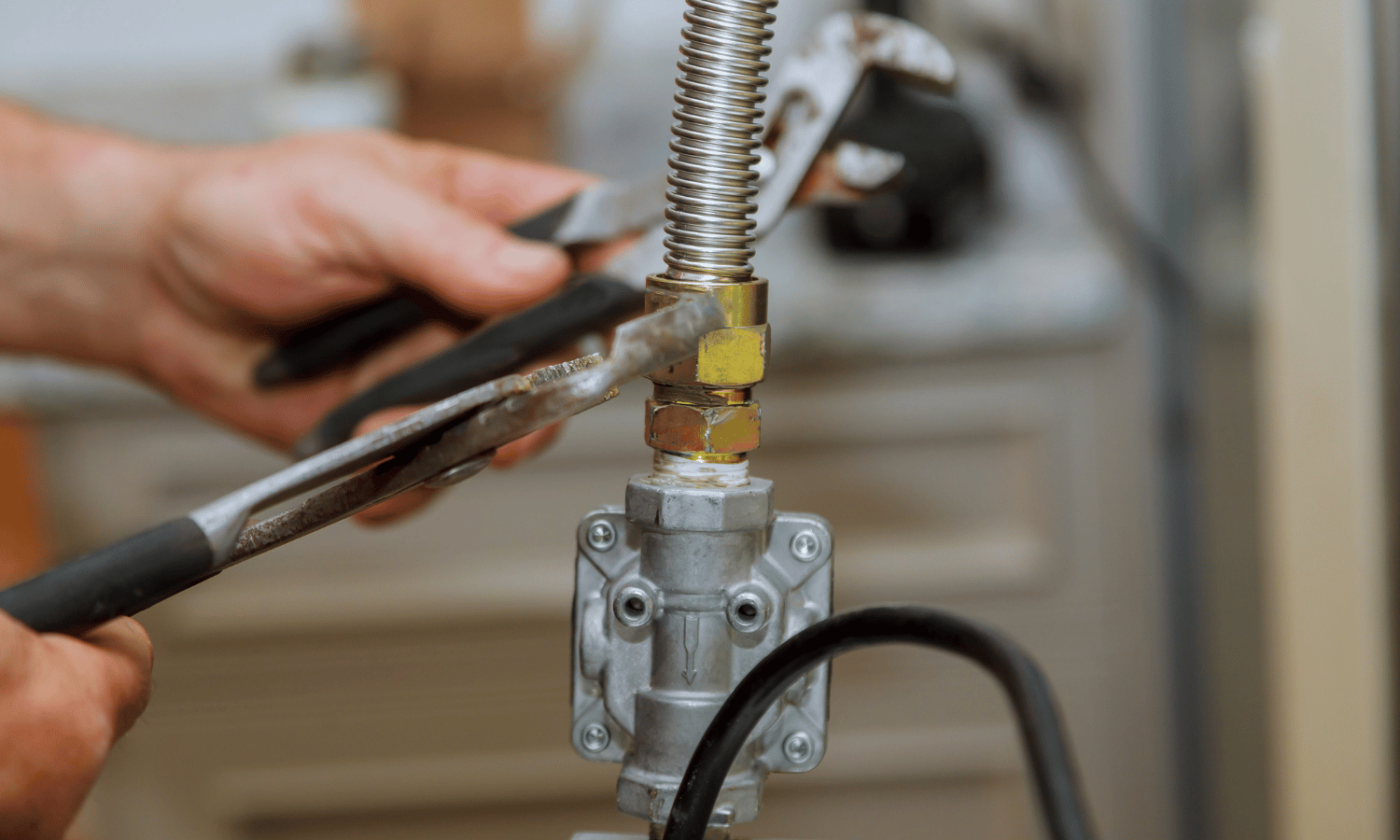
Flexible, yellow or black jacketed, and faster to install through finished walls and attics. It has to be bonded and grounded correctly, which is the thing most often done wrong. Improperly bonded CSST is a lightning strike risk, which matters less here than in other parts of the country but is still code.
-
Flexible appliance connectors
The short corrugated line between the hard pipe and the appliance itself. These have a service life and are the most common failure point on an older range or dryer hookup. If yours is kinked, rusted, or over-tightened, it needs replacing rather than retightening.
Adding an Appliance or an Outdoor Kitchen
Three things decide the job.
What the appliance needs. Every gas appliance has a BTU rating, and the line has to carry it.
What your existing system has left. We check the capacity at the meter and what is already drawing on it. If there is headroom, we extend. If there is not, the run gets upsized.
Where it has to go. An interior run through an attic is different work from a buried line to a detached casita or a grill island across the yard.
We price flat after we have looked at all three.
Gas Line Work Before a Sale or After a Remodel
Two situations where a gas inspection is worth doing before someone else makes it your problem.
Selling. A buyer's inspector will flag visible gas issues, and unpermitted work shows up as a question nobody can answer. A pressure test and a clean record answer it.
After a remodel. If a kitchen or addition was done without a permit, the gas work went in without an inspection. That is worth knowing before an appliance is connected to it.
Buying. If the listing mentions a newer range, an outdoor kitchen, or a converted garage, ask whether the gas work was permitted. The answer is often no.
What Gas Line Work Costs in Las Vegas
We quote flat after we have seen the job. Here is what drives the price, so you can read any gas line quote with a clearer eye.
Length of the run. A connection three feet from an existing line and a buried run across a back yard are different jobs
What it passes through. Attic, crawl space, slab, stucco, or buried through caliche
BTU load of the appliance. A dryer and a pool heater draw very differently, and the pipe has to be sized for it
Whether the existing system has capacity. If it does, we extend. If it does not, the run gets upsized or a new one goes in
Pipe material. Black iron, CSST, or a combination
Permit and inspection
Whether a meter upgrade is needed, which means coordinating with Southwest Gas
Surface restoration on a buried run
Why gas line quotes differ. Two numbers on the same job can differ widely because one includes permit and inspection coordination and the other does not. When you compare, compare what is in them.
We do not quote gas line installation over the phone. Your meter capacity and what is already drawing on it determine the job, and neither is visible from a description.
Common Gas Line Questions in Las Vegas
-
Yes. Gas work past the meter is permitted in Clark County and the City of Las Vegas, and it has to be inspected before the gas is turned back on. We pull the permit and coordinate the inspection.
-
Yes. Outdoor gas lines for grills, fire features, pool and spa heaters, and detached structures are common work for us.
-
Leave the house. Do not flip switches, use a phone inside, or do anything that could spark. From a safe distance, call 911 and Southwest Gas at 877-860-6020. Southwest Gas asks you to call both. Call us once the area is safe and the leak needs repairing.
-
Yes. Every gas line we install or repair is pressure tested before the gas goes back on. It is not optional and it is not an add-on.
-
Generally the utility owns the line up to the meter and the homeowner owns everything past it, inside the house and in the yard. Worth confirming with them, since it can vary.
-
We handle the gas connection, testing, and sign-off. Appliance repair itself is a different trade.
-
Each appliance should have an accessible shutoff valve at the connection, and we install one as part of the run. If you have an older appliance with no shutoff of its own, that is worth correcting whether or not you are adding anything.
-
It depends on the length of the run, what it passes through, the BTU load of the appliance, and whether your existing system has spare capacity. We come out at no charge and quote it flat in writing. We do not quote gas lines over the phone, because the capacity at your meter is what decides the job.
-
A short interior extension is often a single visit. A buried run to a detached structure, or a job that needs a meter upgrade, takes longer because of the excavation and the utility coordination.
-
CSST is flexible corrugated stainless steel tubing, used instead of rigid black iron through walls and attics. It is safe when bonded and grounded to code, which is the step most often missed. We check the bonding on existing CSST when we are working on a system.
-
Yes, and it is free. Call at least two working days before any digging project, including planting a tree. The utilities come mark their buried lines. It is Nevada law, and hitting a gas line with a shovel is one of the more common ways a leak starts.
-
Sometimes. An undersized or partially blocked line shows up as an appliance that underperforms rather than as a leak, particularly if you added a pool heater or an outdoor kitchen after the house was built. Worth checking the capacity before replacing the appliance.