
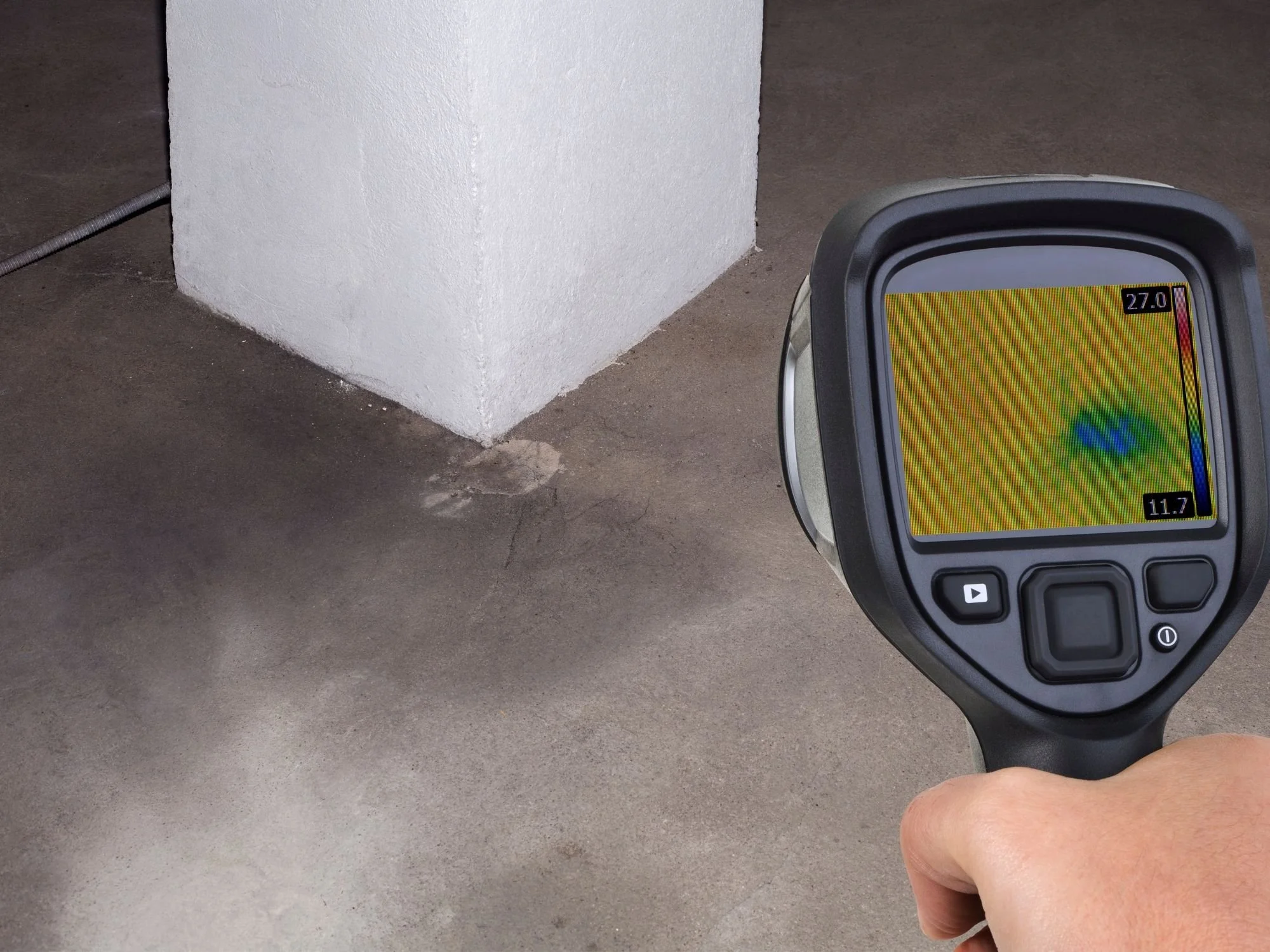




Slab Leak Detection and Repair in Las Vegas
If your bill jumped and you cannot find water anywhere, it may be under your foundation. We confirm whether the leak is under the slab, narrow down where it is, and talk through your options before we open anything.
-

700+ 5-star Reviews
-

No Subcontractors
-

No Extra Fee Weekends & Nights
-

Free same-day estimates
-

SNWA Water Smart Contractor
What Is a Slab Leak?
A slab leak is a leak in a water pipe running underneath or inside your home's concrete foundation. Because the pipe is buried in or below the slab, the water soaks into the ground and the concrete instead of showing up somewhere visible.
That is what makes them costly. A slab leak can run for months before anything obvious happens.
Signs of a Slab Leak
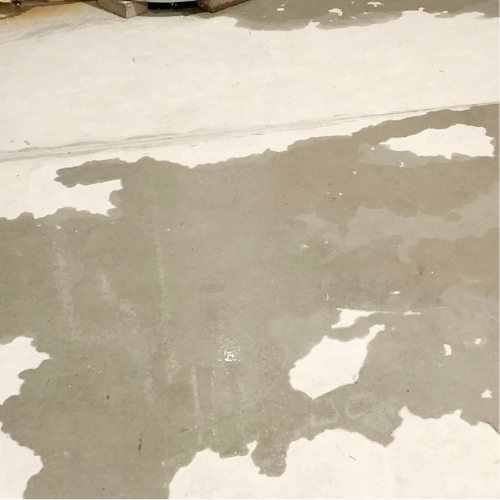
A warm spot on the floor. The clearest sign is a warm spot on the floor, and it means a hot water line under the slab is leaking
The sound of running water with every fixture off
Your water bill jumped with no change in usage
Water pressure dropped across the whole house
Damp or discolored carpet, or warped flooring with no source above it
Cracks appearing in the floor, walls, or foundation
A musty smell or mold along baseboards
The water meter keeps moving with everything shut off
A test you can do right now: shut off every fixture and appliance that uses water, then look at your water meter. If the dial is still turning, water is going somewhere.
Reviews
We take pride in our customer service and workmanship. Don’t take our word for it, take a look.
Not Sure About a Quote You Were Given?
We Will Take a Look
Plumbing problems often come with a number attached, and it is usually bigger than you expected. If you are sitting with an estimate and have no way to know whether it is reasonable, we are glad to come look at it.
✓
There is no charge for it.
✓
If the quote you got was fair, we will tell you that.
✓
There is no obligation.
✓
If you need less than you were told, we will tell you that too.
Big plumbing decisions are stressful, and most people have no reason to know what a repipe or a sewer replacement should cost. Having a second set of eyes on it should not cost you anything.
Areas we service
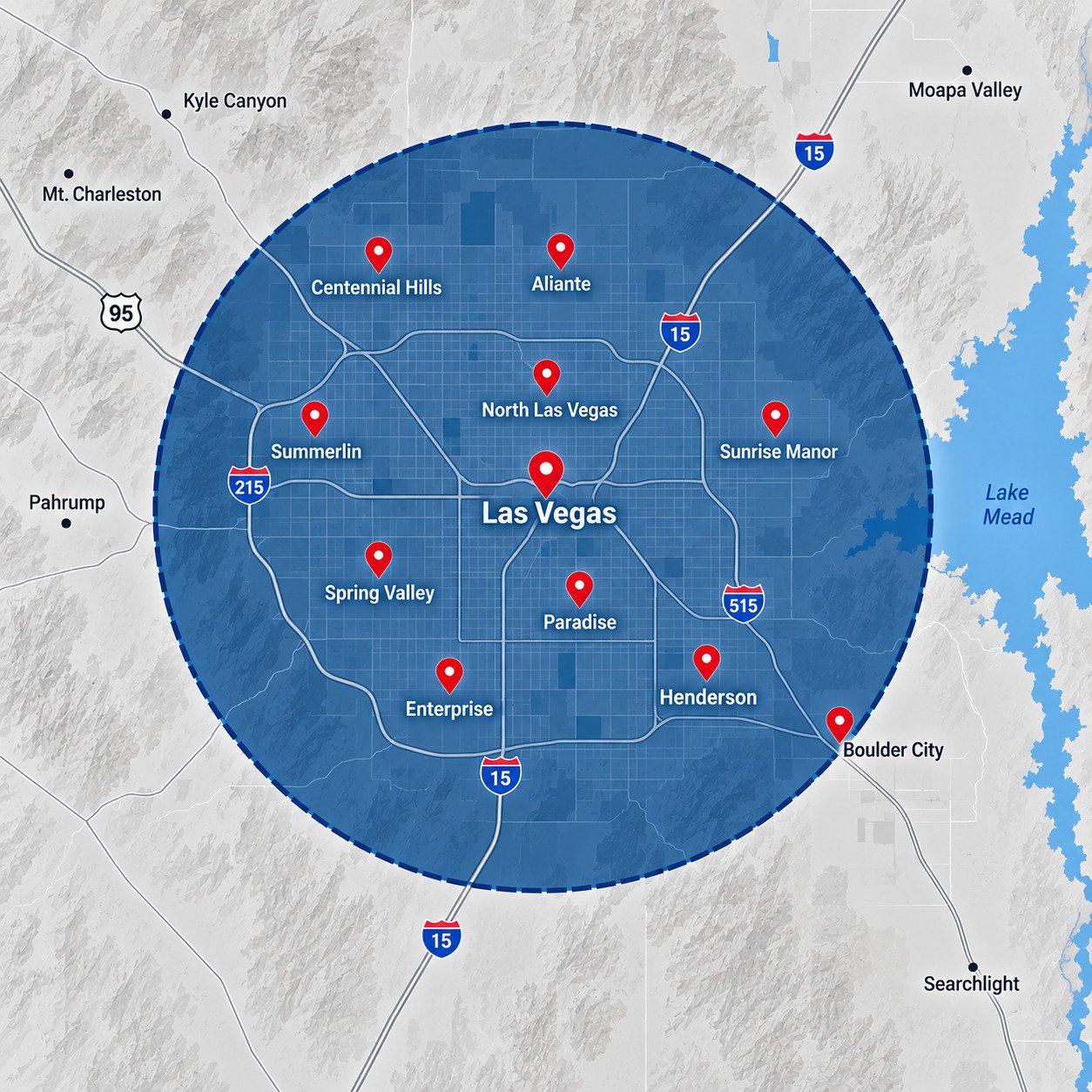
We cover the whole Las Vegas Valley, from Summerlin to Boulder City and everywhere in between. Our office is on East Charleston, so we're usually on the central and eastern side, but we're out across the valley every day. Not sure if we reach you? Give us a call.
What Causes Slab Leaks in Las Vegas
Slab leaks are more common here than in most of the country for specific reasons.
-
Valley soil expands and contracts as moisture changes. That shifting puts pressure on pipe running through and under the slab, pulling joints apart and cracking lines over time.
-
Our water carries a heavy mineral load. Over years those minerals wear at the inside wall of copper pipe until a pinhole opens. Homes built from the 1970s through the 1990s with original copper under the slab are what we see most.
-
Hot water lines expand and contract every time hot water runs. Under a slab, that small movement rubs pipe against concrete and gravel millions of times, and eventually it wears through.
-
Pipe kinked, dented, or badly joined during construction develops a weak point that fails years before the rest of the system.
-
Much of the valley sits on a hard cemented soil layer that complicates both the original installation and any repair.
How We Handle a Slab Leak
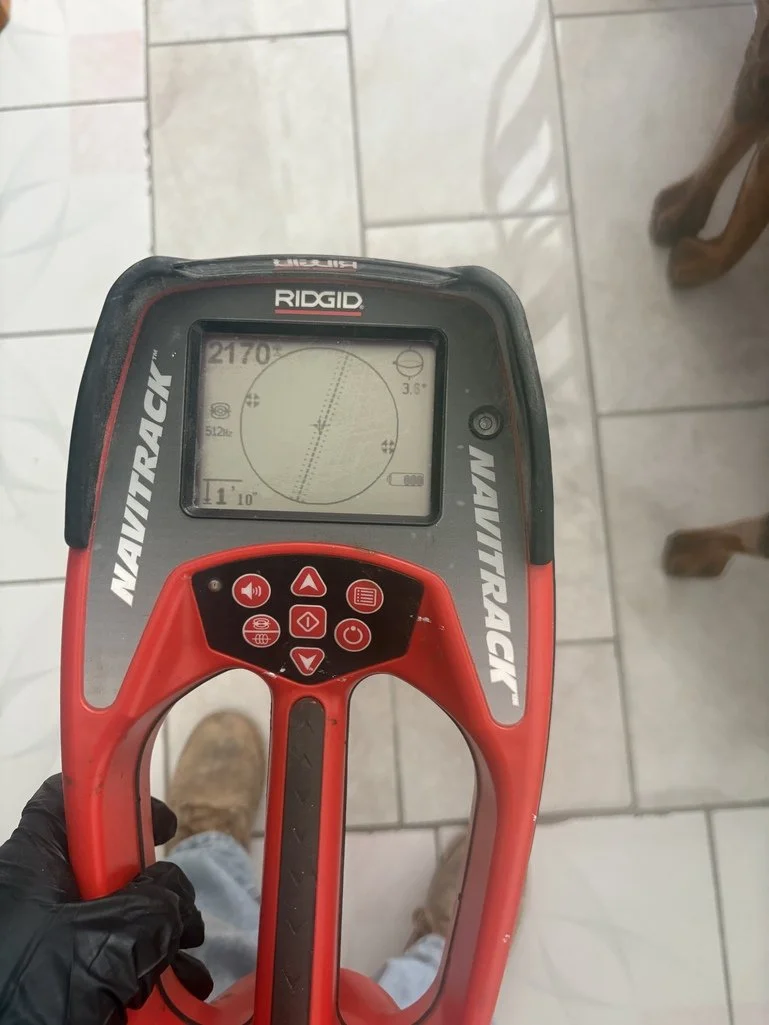
Finding the exact spot under a slab requires specialist acoustic equipment, and even then it means breaking concrete to reach it. There's usually a better way.
We confirm the leak is under the slab. Pressure testing tells us whether the system is losing water and which side, hot or cold, it's on.
Then we talk about rerouting. Instead of hunting for the exact spot and jackhammering your floor to reach it, we abandon the line under the slab and run new pipe through the wall or attic. No concrete comes up. The old line stays where it is, capped and dry.
When rerouting isn't the right call, we'll say so and tell you what is.
Slab Leak Repair Options
There are usually more than one way to fix it, and the right choice depends on the pipe, the location, and how much life the rest of the system has left.
Spot repair
We open the concrete at the leak, repair that section, and patch the slab. Best when the pipe is otherwise sound and the leak is accessible.
Rerouting
We abandon the line under the slab and run new pipe through walls or the attic. Best when the leak is under something you would rather not open, like a kitchen island or tile you cannot match. No concrete gets broken.
Partial or full repipe
If the pipe under the slab has leaked more than once, replacing a section or the whole system usually costs less over time than chasing leaks one by one.

Our Slab Leak Process, Step by Step
What Happens If You Wait
A slab leak does not hold still.
The bill keeps climbing every month it runs
Foundation damage. Water erodes soil under the slab, which leads to settling and cracking
Flooring damage as moisture works up through the concrete
Mold in walls and under flooring
The repair gets bigger. A pinhole today is a section replacement later
Slab Leak detection and repair faqs
-
Not every mystery leak is under the slab.
It may be a slab leak if:
There is a warm spot on the floor
The meter runs with everything off
Moisture is coming up from the floor, not down from above
It is probably something else if:
Water shows up on a ceiling or upper wall
Only one fixture is affected
It started right after work was done somewhere specific
It is seasonal, or only happens when irrigation runs
We check the simple things first. If it turns out to be a running toilet, we will tell you that.
-
Detection and repair are separate parts of the job
Where the leak is. Under an open room is easier than under a kitchen island
Which repair you choose. A reroute and a spot repair price differently
Hot line or cold line
Flooring. Tile and stone are harder to open and harder to restore than carpet
How many leaks we find. Sometimes there is more than one
We give you the flat price after detection, when we actually know what we are dealing with.
-
We pressure test the hot and cold lines separately to confirm the system is losing water and which side it is on. We use electronic equipment to narrow down the area, and we trace the line to map where the pipe runs. If pinpointing it would mean opening more concrete than the repair is worth, we will say so, and rerouting is often the better answer at that point.
-
Not always. If the leak is somewhere hard to reach or under flooring you would rather not disturb, we can reroute the line through walls or the attic and leave the slab alone.
-
Detection usually takes a couple of hours. A spot repair is often same day. A reroute or partial repipe can take a day or two depending on layout.
-
Policies vary. Many cover the resulting water damage but not the pipe repair itself. Check your policy or call your agent. We can document what we find for a claim.
-
Soil movement from moisture changes, hard water corroding copper from the inside, and thermal movement wearing hot water lines against concrete. Homes from the 1970s through the 1990s with original copper are the most affected.
-
Yes. Water washing out soil under the slab causes settling, which leads to cracks in the foundation, floors, and walls.
-
Usually a leaking hot water line under the slab. It is one of the most reliable signs there is and worth having checked soon.