



Main Water Line Repair and Replacement in Las Vegas
The main water line runs from the meter to your house, and when it leaks, water disappears underground where nobody can see it. We confirm the line is losing water, tell you whether it needs repair or replacement, and give you the price before we start.
-

700+ 5-star Reviews
-

No Subcontractors
-

No Extra Fee Weekends & Nights
-

Free same-day estimates
-

SNWA Water Smart Contractor
Signs Your Main Water Line Is Leaking
Your water bill jumped with no change in usage
The meter keeps running with everything in the house off
Water pressure dropped throughout the whole house at once
A wet spot, soft ground, or a sinkhole between the meter and the house
An unusually green patch of grass or weeds along the line run
Water bubbling up through the driveway, sidewalk, or landscaping
Dirty or discolored water at the fixtures
A notice from the water district about excess usage
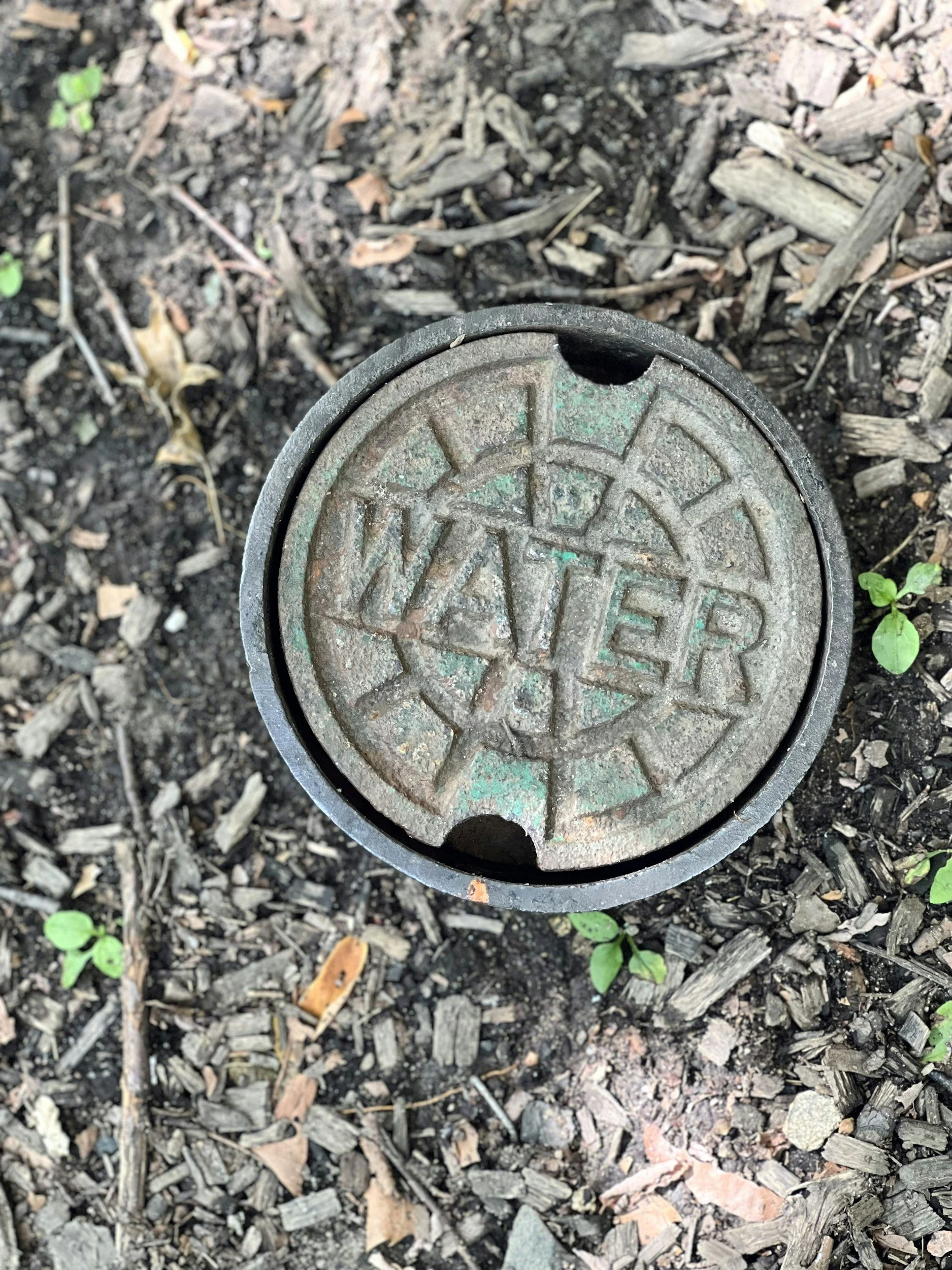
Check it yourself in two minutes: turn off every fixture and appliance in the house, then look at your water meter. If the leak indicator or dial is still moving, water is leaving the system. If you also close your house shutoff and the meter still moves, the leak is between the meter and the shutoff, which is your main line.
Reviews
We take pride in our customer service and workmanship. Don’t take our word for it, take a look.
Not Sure About a Quote You Were Given?
We Will Take a Look
Plumbing problems often come with a number attached, and it is usually bigger than you expected. If you are sitting with an estimate and have no way to know whether it is reasonable, we are glad to come look at it.
✓
There is no charge for it.
✓
If the quote you got was fair, we will tell you that.
✓
There is no obligation.
✓
If you need less than you were told, we will tell you that too.
Big plumbing decisions are stressful, and most people have no reason to know what a repipe or a sewer replacement should cost. Having a second set of eyes on it should not cost you anything.
Areas we service
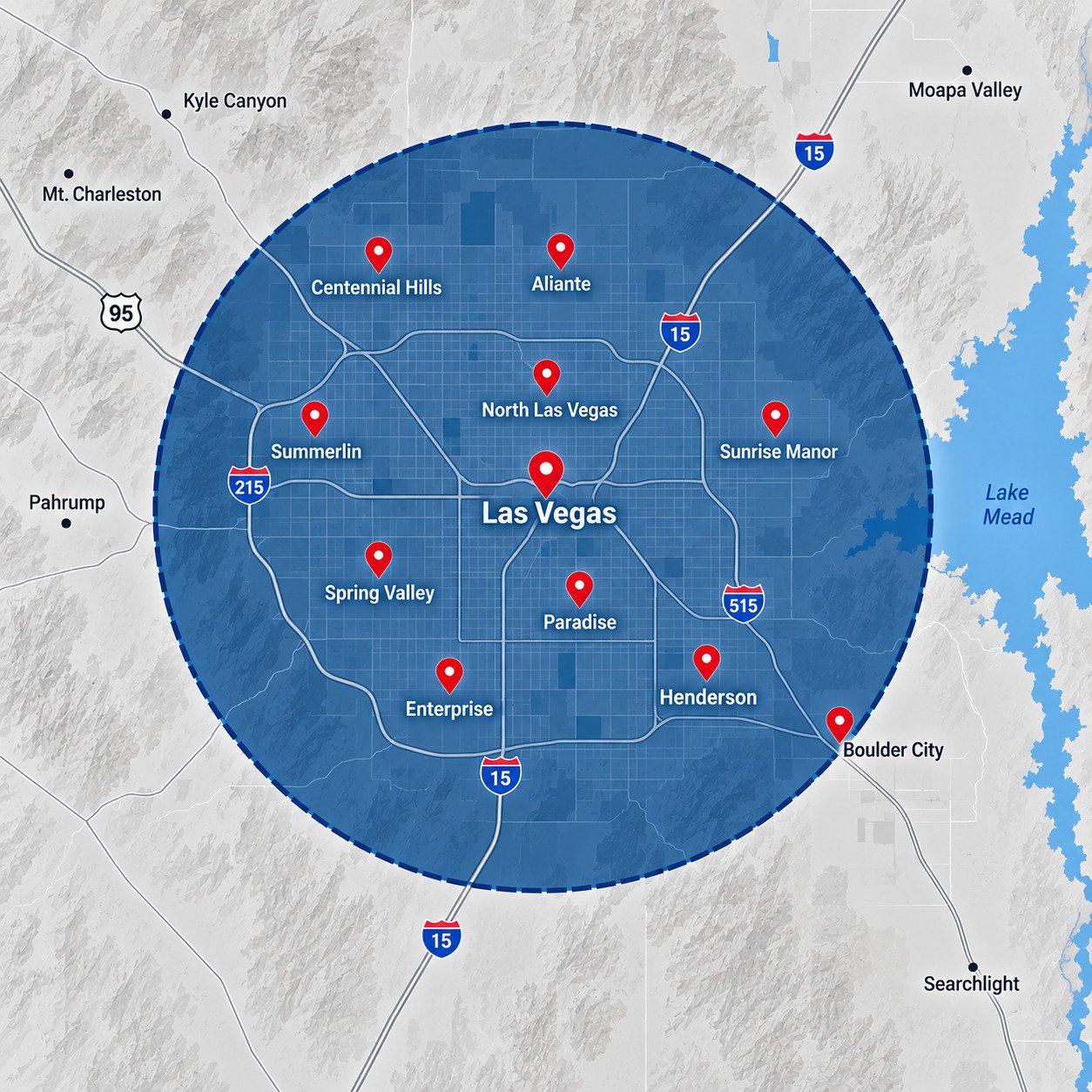
We cover the whole Las Vegas Valley, from Summerlin to Boulder City and everywhere in between. Our office is on East Charleston, so we're usually on the central and eastern side, but we're out across the valley every day. Not sure if we reach you? Give us a call.
Got an Excess Water Usage Notice?
If the water district flagged your account for unusual consumption, a main line leak is a common cause. So is a slab leak or an irrigation break.
-
It tells you quickly whether water is moving with everything off
-
Valve and lateral leaks are common in the valley
-
We will confirm where the water is going rather than guessing at it
-
As an SNWA Water Smart Contractor we know what may qualify for assistance, and we will bring it up before you pay
Worth acting on quickly. Usage keeps accumulating while the leak runs.
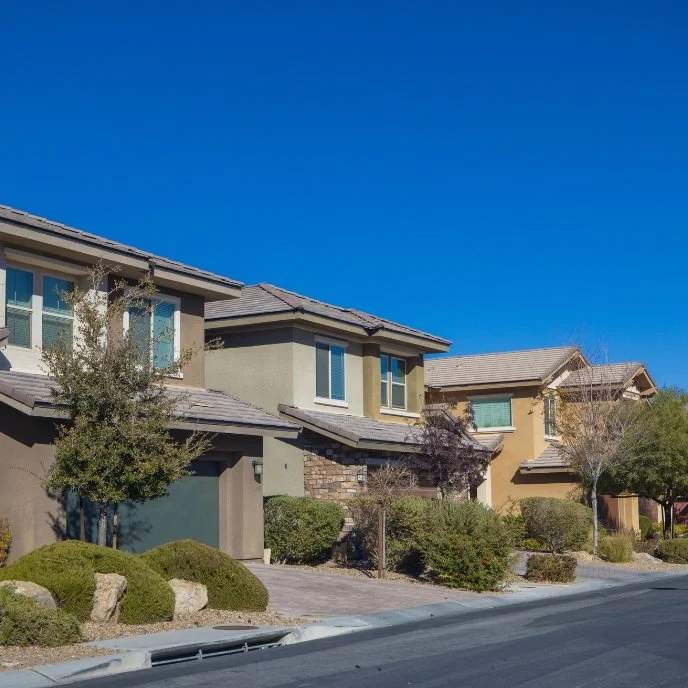
What Causes Main Water Line Failure in Vegas
Soil movement. Valley soil expands and contracts with moisture, and that shifting stresses the line, separates joints, and cracks pipe over time.
Caliche. The hard cemented soil layer under much of the valley wears at buried line over the years and makes both installation and repair harder.
Hard water corrosion. Our mineral load wears at copper and galvanized service lines from the inside until a pinhole opens.
Pipe age and material. Older central and eastern Las Vegas homes often have galvanized steel service lines that have been in the ground fifty years or more. Galvanized rusts closed and then rusts through.
Ground pressure and traffic. Lines running under driveways and parking areas carry load they were never meant to carry.
How We Narrow It Down
A main line runs underground between the meter and the house, so nobody can see it. The first job is working out whether the line is losing water and roughly where, before anyone digs.
Confirm the loss is on your side of the meter, not the district's
Isolate the system. We shut the house down in stages to separate the main line from everything inside
Pressure test to confirm the line is losing water
Check the obvious surface signs — soft ground, a wet patch, an unusually green strip along the run
What we tell you honestly. If the line is losing water but the break is somewhere we cannot reach without opening a lot of ground, we will say so rather than dig on a guess. In many cases, replacing the run is both cheaper and more certain than hunting for one spot in it.

Repair or Replacement?
We get asked this often, so here is how we actually decide. Not every leak means the whole line comes out.
A repair usually makes sense when:
It is a single break in a line that is otherwise sound
The pipe material still has good life left, like modern copper or PEX
The line has no history of previous leaks
The break came from something specific, like damage during other work
A replacement usually makes sense when:
The line is galvanized steel and rusting along its full length
You have already repaired this line before
Excavation shows corrosion well beyond the one spot
The pipe is old enough that the next leak is a matter of when
Repair costs are approaching what a replacement would be
If a repair will hold, that is what we quote. We will also tell you plainly when a repair is a short-term fix, so you can decide whether to spend once or twice.
Main Water Line Repair Process

SNWA Rebates and What You May Qualify For
Two programs most homeowners here do not know exist. We will tell you what applies to your job before the work starts, not after.
SNWA leak voucher, up to $250. Southern Nevada Water Authority offers a voucher toward your initial leak diagnostic visit or the first two hours of work to fix the leak. Single-family homeowners only, one per property per calendar year, and the work must be done by a plumber on SNWA's Water Smart list.
Water District reimbursement: up to 50 percent, up to $2,000. Las Vegas Valley Water District customers may get back half the cost of repairing a leak. A paid invoice is required, the minimum repair is $200, and you must apply within 60 days of the repair.
Low-income assistance. LVVWD also runs a program for households at or below 80 percent of the area median income, with substantially more available per leak event. Worth asking about if that applies to you.
Eligibility depends on your situation and the current program terms. Apply through SNWA and LVVWD directly.
Main water line faqs
-
It depends on the length of the run, the depth, and what is on top of it. Replacing a line under grass and replacing one under a concrete driveway are very different jobs. We come out at no charge, work out what is happening, then give you a flat written price.
-
It depends on the pipe. A single break in an otherwise sound line is a repair. A galvanized line rusting along its full length is a replacement. We will tell you which one you have, and we quote the repair when the repair will hold.
-
Turn off everything in the house and check your water meter. If it is still moving, water is going somewhere. If you also shut off your house valve and the meter keeps moving, the leak is between the meter and that valve, which is the main line.
-
Generally the district owns the line up to the meter and the homeowner owns it from the meter to the house. Worth confirming with your provider, since it can vary.
-
Policies differ. Many cover resulting damage but not the line repair itself, and some offer a separate service line endorsement. Check your policy or ask your agent.
-
Two worth knowing about. SNWA offers a voucher of up to $250 toward the initial leak diagnostic visit or the first two hours of repair work. Las Vegas Valley Water District customers may be reimbursed up to 50 percent of the repair cost, to a maximum of $2,000, with a paid invoice and a minimum repair of $200. Both have their own conditions and you apply directly.
-
It depends on whether you need a repair or a replacement. For a repair, we narrow down where the loss is and open the ground at that spot. For a replacement, the old line has to come out and a new one goes in, so yes, there is a trench along the run between the meter and the house. We tell you before we start what that path looks like, what is on top of it, and what gets restored afterward.
-
Most residential replacements run one to two days depending on length, depth, and what has to be dug through. Caliche and concrete both slow it down.