


Tankless Water Heater Installation, Repair, and Descaling in Las Vegas
Installation, repair, and annual descaling keep it working. Las Vegas water scales a heat exchanger faster than in most places, and a tankless unit that never gets serviced will underperform and fail early.
-

700+ 5-star Reviews
-

No Subcontractors
-

No Extra Fee Weekends & Nights
-

Free same-day estimates
-

SNWA Water Smart Contractor
No Hot Water from a Tankless Unit?
Before you call, check three things. Any of them might save you a visit.
1. Is the unit showing an error code? Tankless units display a code when they shut down. Write it down and tell us when you call, because it immediately narrows the problem.
2. Has the gas or power been interrupted? Check the gas valve and the breaker. A unit that lost power mid-cycle sometimes needs a reset.
3. Is it only one fixture? If hot water works elsewhere, the problem is that fixture, not the heater.
Still nothing? Call. We are open 24 hours Monday through Saturday with no extra fee.
Reviews
We take pride in our customer service and workmanship. Don’t take our word for it, take a look.
Not Sure About a Quote You Were Given?
We Will Take a Look
Plumbing problems often come with a number attached, and it is usually bigger than you expected. If you are sitting with an estimate and have no way to know whether it is reasonable, we are glad to come look at it.
✓
There is no charge for it.
✓
If the quote you got was fair, we will tell you that.
✓
There is no obligation.
✓
If you need less than you were told, we will tell you that too.
Big plumbing decisions are stressful, and most people have no reason to know what a repipe or a sewer replacement should cost. Having a second set of eyes on it should not cost you anything.
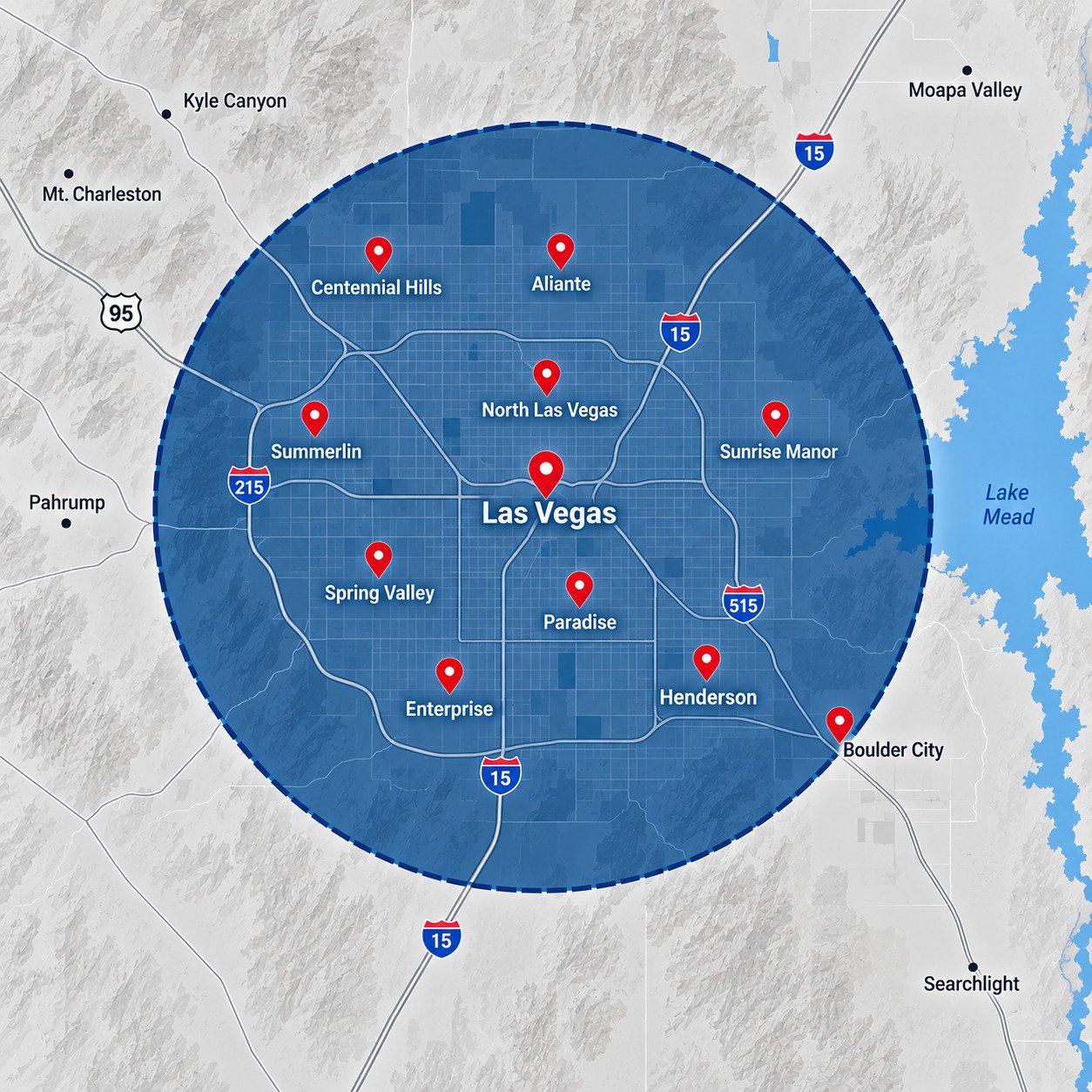
Areas we service
We cover the whole Las Vegas Valley, from Summerlin to Boulder City and everywhere in between. Our office is on East Charleston, so we're usually on the central and eastern side, but we're out across the valley every day. Not sure if we reach you? Give us a call.
Descaling, and Why It Matters More Here
This is the part most people are not told when they buy a tankless unit.
A tankless heater runs water across a heat exchanger and heats it on demand. Southern Nevada water carries a heavy mineral load, and those minerals settle out on the exchanger every time it runs. The scale insulates the exchanger from the water, so the unit works harder to deliver the same temperature.
What it looks like as it builds. Output drops. The unit shuts down mid-shower. Temperature swings between warm and cold. Eventually the exchanger fails, and on most units that is most of the cost of a new heater.
How often. Once a year here is a reasonable target, more if the water is untreated. In softer-water parts of the country manufacturers suggest every two or three years. That guidance does not fit Las Vegas.
A softener helps considerably. If you have a tankless unit and no water treatment, the two decisions are worth making together.
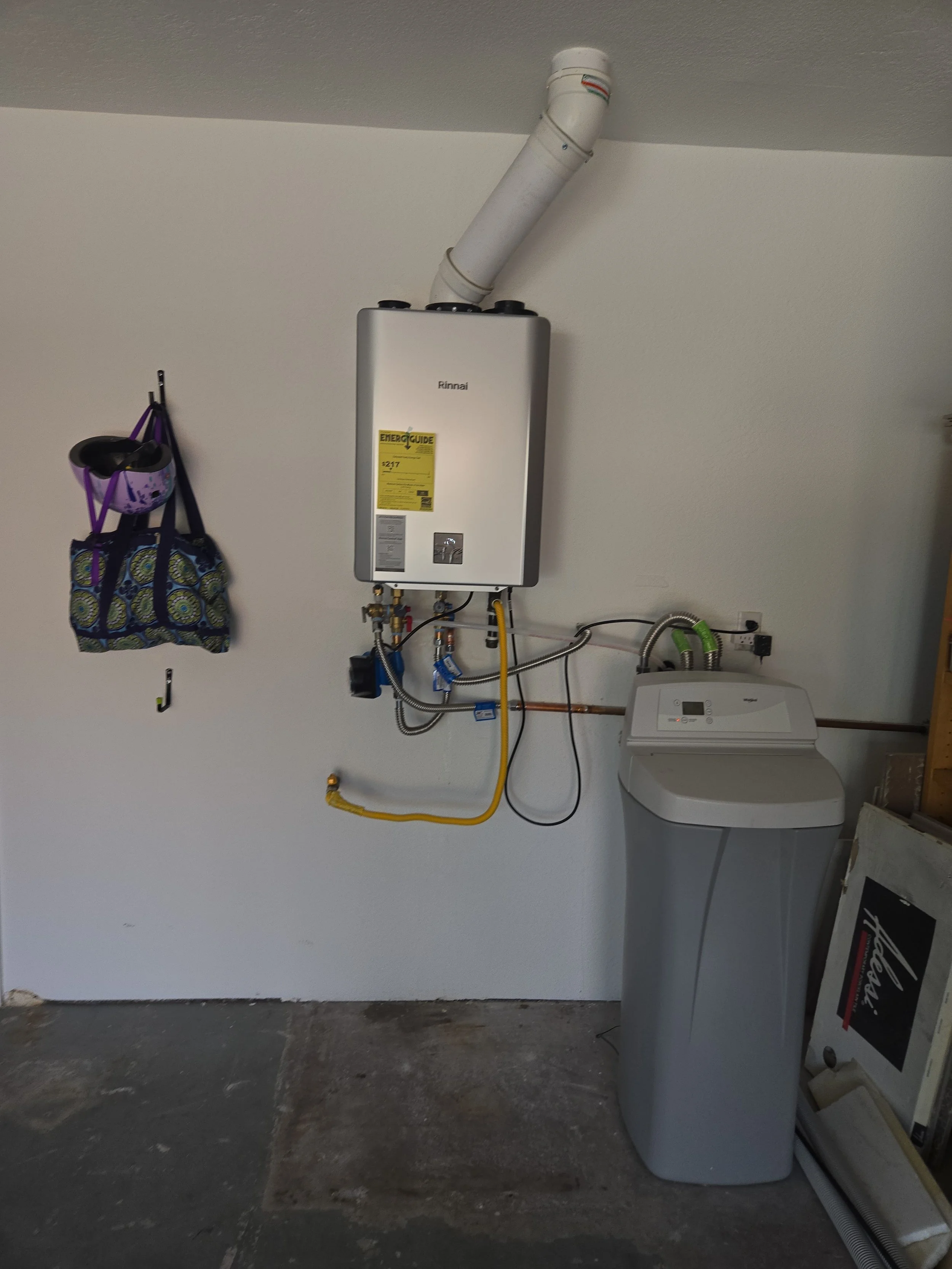
Tankless Water Heater Installation and Replacement
What we work out first. Whether tankless suits your house at all. It is excellent if you are staying put and willing to keep up with descaling. If you are selling in two years, a tank heater is the better spend.
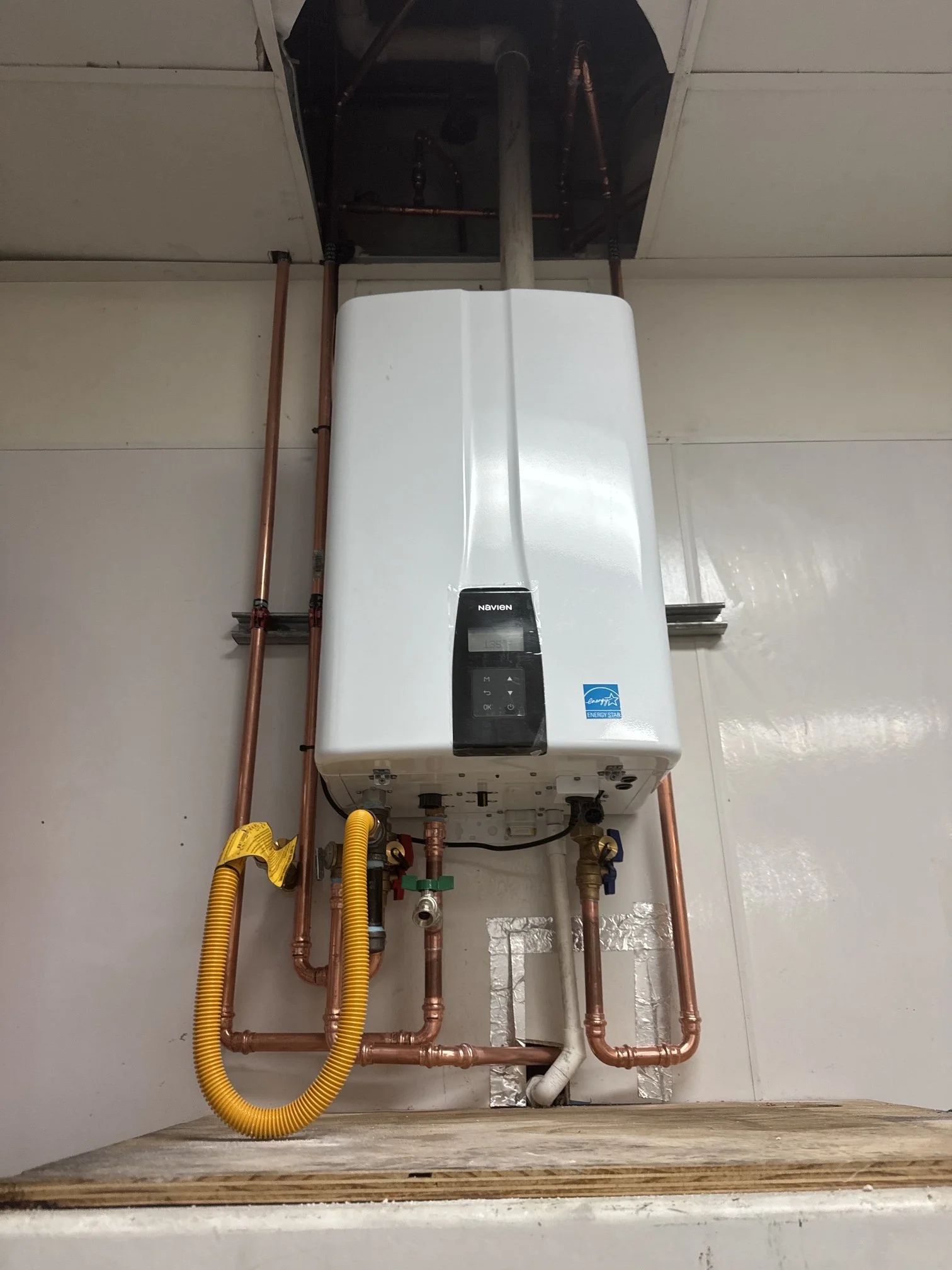
What installation involves. Sizing for your actual hot water demand, gas line capacity, venting, and condensate drainage. A first tankless installation often takes most of a day, longer if the gas line or electrical needs upgrading, because a tankless unit draws considerably more gas than the tank it replaces.
What is included. Removal and disposal of the old unit, permits where required, and the installation done to code.
Tankless Water Heater Repairs We Handle
-
The unit displays a code and stops. Codes differ by manufacturer but generally point at ignition, flow, venting, or overheating. Write it down before you call, because it usually tells us what we are walking into.
-
The unit tries to fire and does not catch, or lights and goes straight out. Gas supply, igniter, flame sensor, or a venting problem the safety system is reacting to.
-
The unit will not fire on a low flow, so a trickle at a tap stays cold while a full-flow fixture works fine. Usually a sensor fouled with mineral deposit rather than a failed part.
-
Hot water that is not as hot as it was, or drops off when a second fixture opens. Scale on the heat exchanger insulating it from the water. This is the most common thing we see on a Las Vegas tankless unit, and it is often a descale rather than a repair.
-
A blocked, disconnected, or incorrectly pitched vent, or a bird nest in a termination. The unit shuts down rather than running, which is the safety system working correctly.
-
Condensing units produce acidic condensate that drains away. When the line blocks or the neutralizer is spent, the unit faults out and you can get water where it should not be.
-
A burst of cold between two hot draws, caused by water sitting in the line between the heater and the fixture. Normal behavior rather than a fault, though a recirculation system reduces it and we can tell you whether yours is a candidate.
-
A leak at a fitting is a repair. A leak from the heat exchanger itself usually is not, because on most units that part costs most of what a new heater costs. We will tell you honestly which one you have.

The process of a Water heater installation
How a Tankless Water Heater Works
Worth two minutes, because it explains nearly everything else on this page.
A tank heater keeps forty or fifty gallons hot all the time, whether anyone uses it or not. A tankless unit keeps nothing hot. When you open a hot tap, a flow sensor detects the water moving, the burner fires, and water passes across a heat exchanger and comes out hot on the other side.
Three consequences follow from that.
It only heats what you use, which is where the efficiency comes from.
There is a short delay while the burner fires and the exchanger comes up to temperature. On a long run to a far bathroom, that delay plus the cold water already sitting in the pipe is what people notice first.
Everything depends on the heat exchanger staying clean. It is the only surface transferring heat, and anything coating it reduces output. In Las Vegas water, that coating is mineral scale, and it arrives faster here than almost anywhere else in the country.
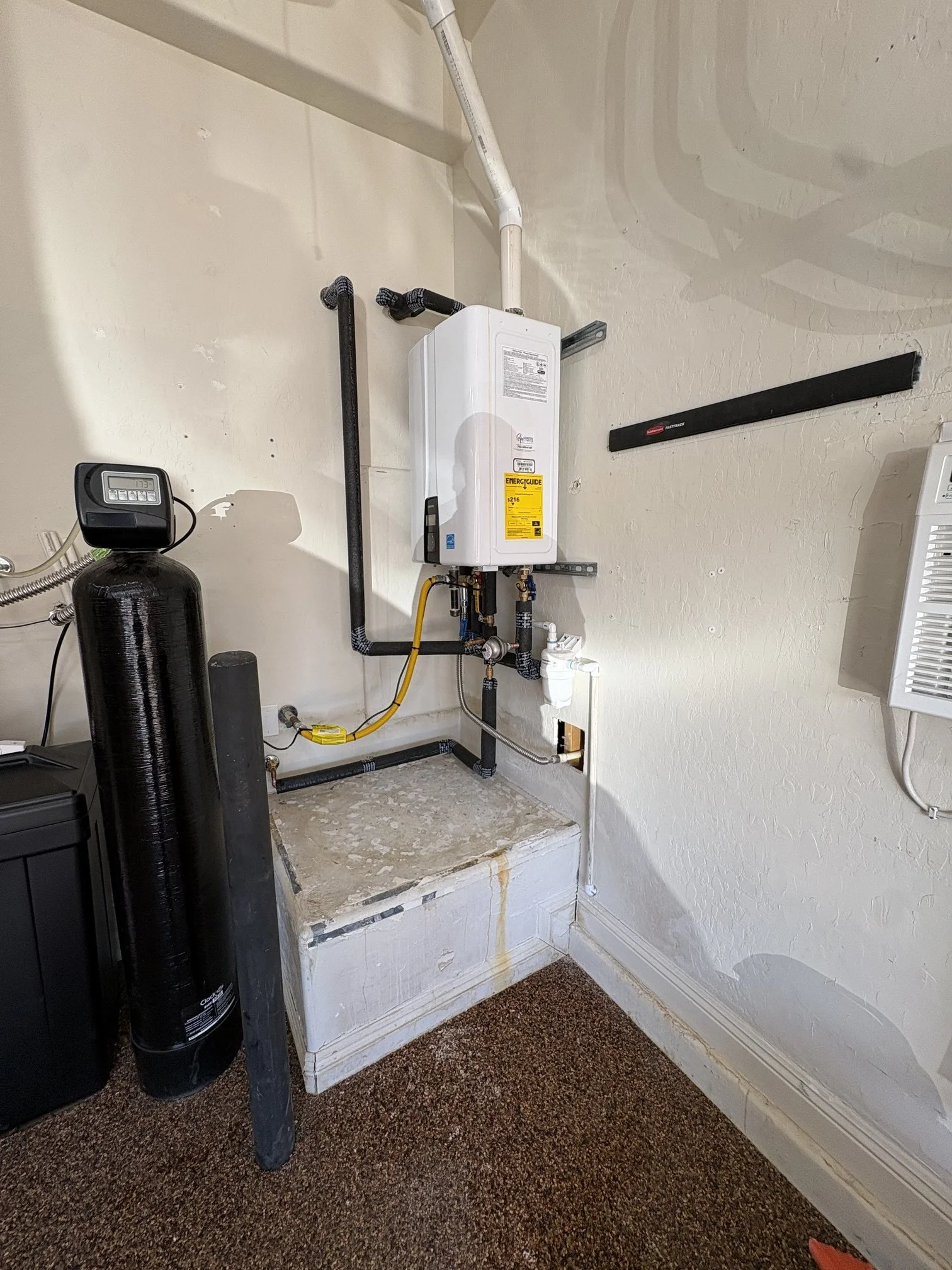
Signs Your Tankless Unit Needs Descaling
In rough order of when they show up.
Hot water takes longer to arrive than it used to
The temperature swings during a shower rather than holding steady
Output drops when two fixtures run, where it used to manage both
The unit cuts out mid-use and restarts
A rumbling or ticking sound when it fires
An error code relating to flow or temperature
Visible scale at the inlet or outlet connections
If you are seeing the first two, a descale will probably sort it. If you are at the last three, call before it becomes an exchanger replacement.
Water Heater Flush vs Tankless Descaling
Different jobs, often confused, and worth knowing which one you need.
A tank flush drains sediment off the bottom of a storage tank. The sediment is loose mineral that settled out of the water, and flushing carries it out the drain valve.
A tankless descale circulates a descaling solution through the heat exchanger to dissolve scale that has bonded to the metal. Nothing drains out of a tankless unit, because there is no tank for anything to settle in.
If someone quotes you a flush on a tankless unit, they mean a descale. If they actually drain it like a tank, it does nothing.
Recirculation and the Wait for Hot Water
The most common complaint about a new tankless install is that hot water takes longer than expected, and it is usually not the heater.
The water already sitting in the pipe between the heater and the fixture has to clear before the hot water reaches you. On a long run, that is the same wait a tank heater would give you, plus the few seconds the burner takes to fire.
A recirculation system fixes it by keeping hot water moving through the loop so it is already at the fixture when you open the tap. Some tankless units have one built in, some take an external pump, and some houses have a dedicated return line already.
If the wait is the thing bothering you, that is the conversation, not the heater.
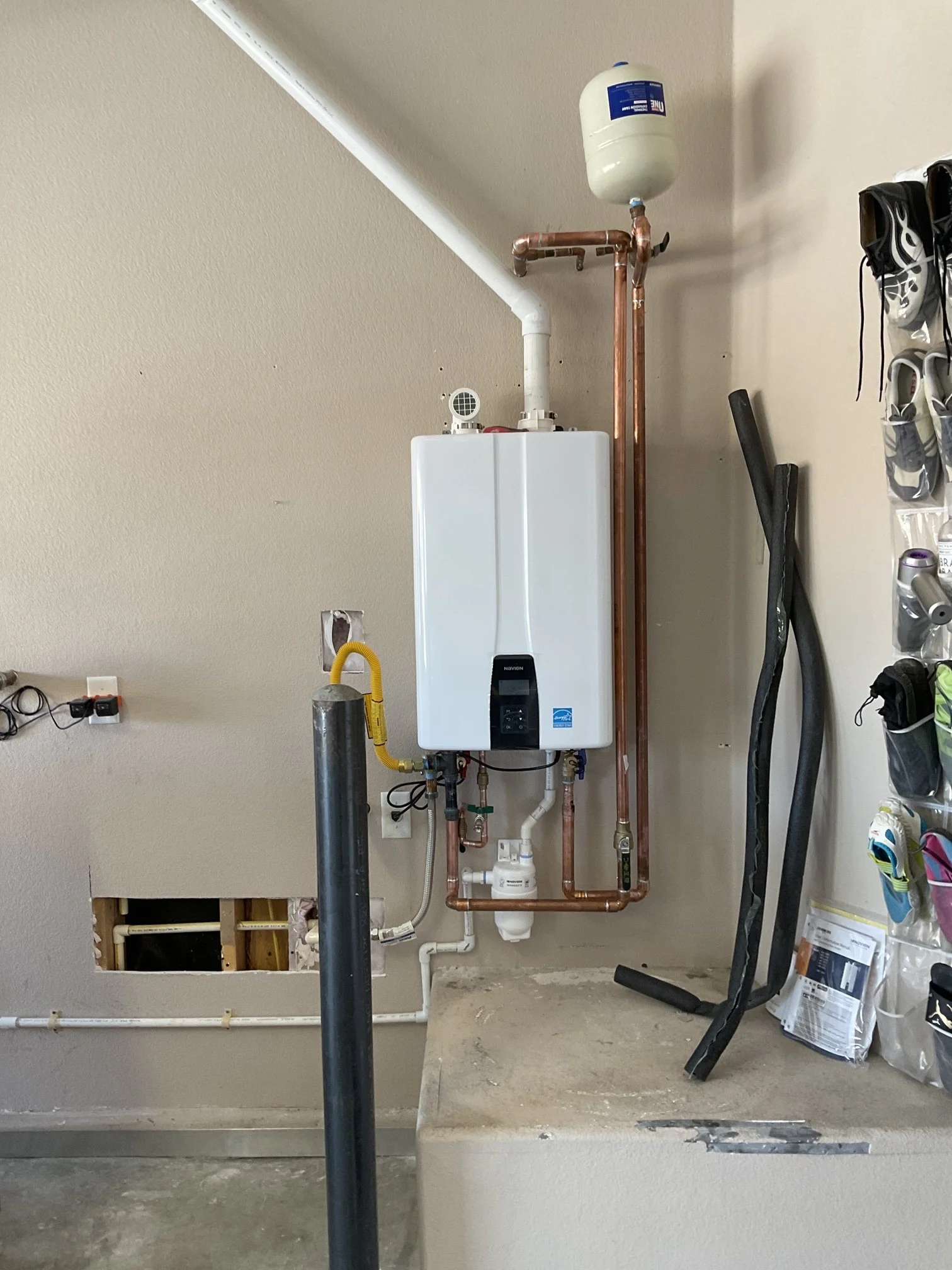
Tankless Water heater faqs
-
About once a year here, sometimes more if the water is untreated. Our hard water scales the heat exchanger, which reduces output and causes shutdowns mid-use.
-
Output drops, the unit short-cycles or shuts down during a shower, and eventually the heat exchanger fails. On most units that failure costs most of what a new heater costs.
-
It can be, if you are staying in the house and willing to keep up with descaling. A softener helps considerably. If you are selling soon, a tank heater is the better spend.
-
Manufacturers commonly claim 20 years. Here, that assumes it gets descaled. Units that never get serviced do not reach it.
-
Some people do, with a pump kit and a descaling solution. It requires isolation valves, which not every installation has. If yours does not, it is a plumbing job rather than a DIY one.
-
Often, yes. A tankless heater draws considerably more gas than the tank it replaces, and the existing line is frequently undersized for it. That is one of the main things we check before quoting.
-
A short burst of cold water between two hot draws, caused by water sitting in the line between the heater and the fixture. It is normal behavior rather than a fault, though a recirculation system reduces it.
-
Call and ask. It depends on the unit and whether it suits your gas, venting, and demand.
-
It depends on whether it is a first install or a replacement, the gas line capacity, the venting, and where it is going. A first tankless installation is considerably more than a like-for-like tank swap because the gas and venting usually need work. We quote flat after we have seen the setup.
-
Call and ask, since it depends on the unit and whether it has isolation valves fitted. Units without them take longer.
-
Usually an hour or two for the circulation itself, plus setup. If isolation valves need fitting first, longer.
-
We install and service the major brands. The right unit depends more on your gas capacity, venting, and hot water demand than on the badge. We will tell you what fits the house rather than what we would rather sell.
-
Usually, since it is not keeping forty gallons hot all day. The savings are real but modest, and they take years to offset the install cost on a first conversion. The better reasons are endless hot water and the space back.
-
On a correctly sized unit, yes. Undersizing is the most common installation mistake, and it shows up exactly there. We size on your actual fixture count and usage rather than a rule of thumb.
-
They work, but they need the annual descaling to keep working. Hard water is the main thing that shortens a tankless unit's life in Las Vegas, and it is why we raise descaling before you buy rather than after.
-
Codes differ by manufacturer, but they generally point at ignition, flow, venting, or overheating. Write the code down and tell us when you call. It usually narrows the problem before we arrive.