



Sewer Line Repair and Replacement in Las Vegas
When the main sewer line fails, everything in the house backs up at once. We scope the line first, so you can see what is wrong before you pay to fix it.
-

700+ 5-star Reviews
-

No Subcontractors
-

No Extra Fee Weekends & Nights
-

Free same-day estimates
-

SNWA Water Smart Contractor
Signs of a Sewer Line Problem
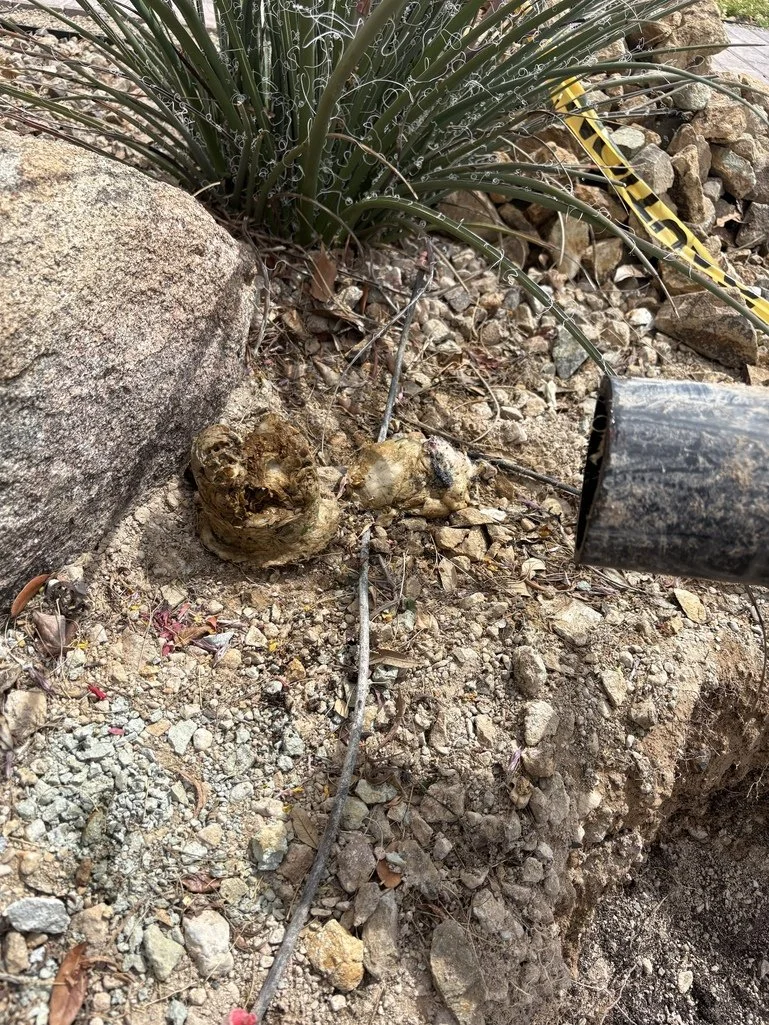
A single slow drain is usually a fixture problem. A sewer line problem shows up across the house.
Several drains backing up at once, especially the lowest ones
Toilets gurgling when you run a sink or the washing machine
Sewage smell inside the house or in the yard
Water backing up into a tub or shower when you flush
A wet or unusually green patch in the yard along the line run
Slow drains that return a few weeks after every snaking
Sinkholes or settling in the yard or driveway
If the lowest drain in your house is the one backing up, that points to the main line.
Reviews
We take pride in our customer service and workmanship. Don’t take our word for it, take a look.
Not Sure About a Quote You Were Given?
We Will Take a Look
Plumbing problems often come with a number attached, and it is usually bigger than you expected. If you are sitting with an estimate and have no way to know whether it is reasonable, we are glad to come look at it.
✓
There is no charge for it.
✓
If the quote you got was fair, we will tell you that.
✓
There is no obligation.
✓
If you need less than you were told, we will tell you that too.
Big plumbing decisions are stressful, and most people have no reason to know what a repipe or a sewer replacement should cost. Having a second set of eyes on it should not cost you anything.
Areas we service
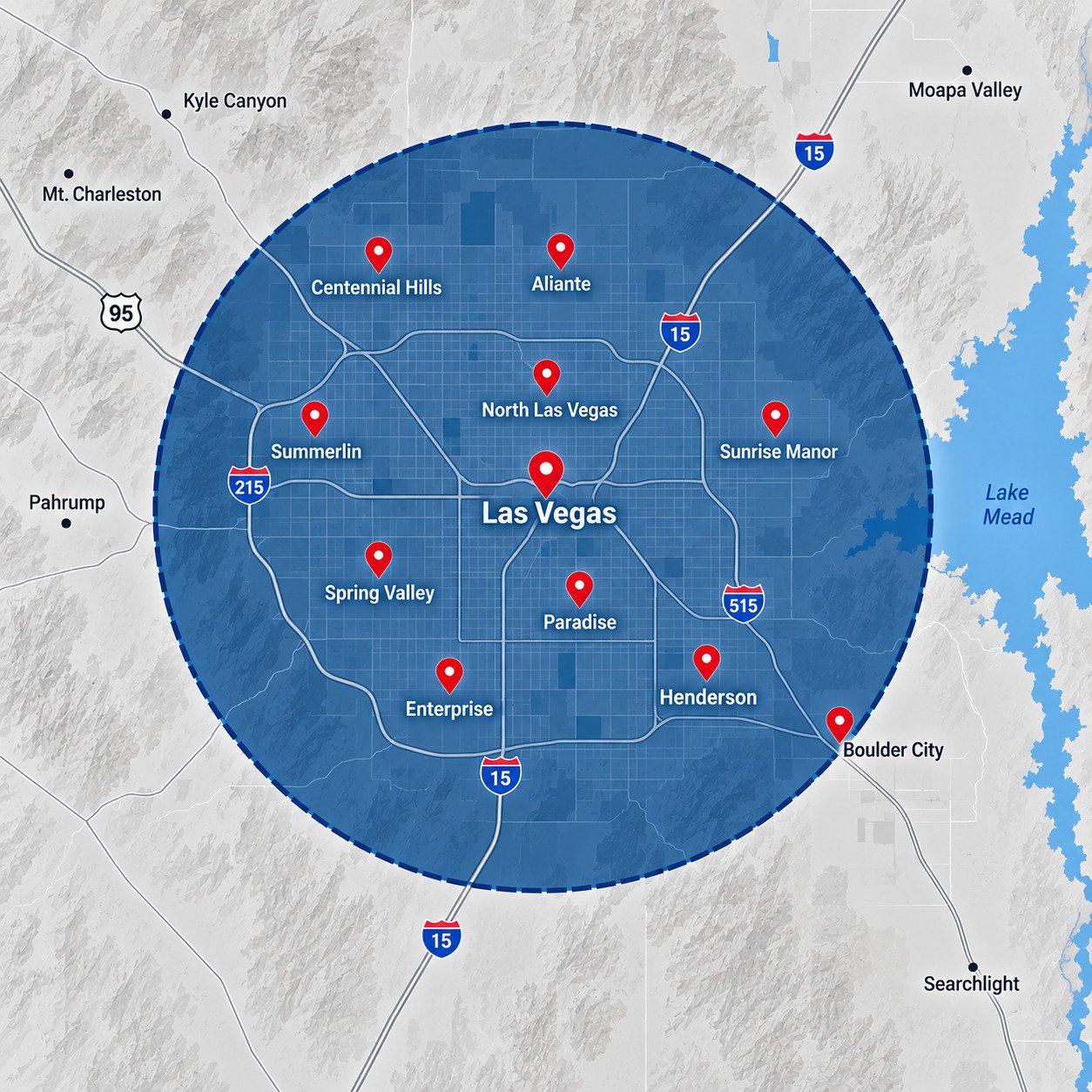
We cover the whole Las Vegas Valley, from Summerlin to Boulder City and everywhere in between. Our office is on East Charleston, so we're usually on the central and eastern side, but we're out across the valley every day. Not sure if we reach you? Give us a call.
What Causes Sewer Line Damage in Las Vegas
-
Roots find the smallest crack or loose joint and grow toward the water. Mature landscaping in older central and eastern neighborhoods is a common source.
-
Homes in the older parts of the valley, particularly Downtown, Huntridge, and the Charleston corridor, often have cast iron or clay sewer lines. Cast iron rusts through from the inside. Clay cracks and the joints separate.
-
The same expansion and contraction that causes slab leaks shifts sewer lines, pulling joints apart and creating low spots where waste collects.
-
Years of grease and mineral scale narrow the pipe until it cannot clear normal flow.
-
If a line was installed with too little fall, or settled out of grade, waste sits instead of moving. That is a belly, and snaking will not fix it.
Types of Sewer Line Damage
Knowing which one you have is why we scope the line first. These six need very different fixes at very different prices, and from above ground they all look the same.
-
Blockages
Grease, roots, or debris sitting in a pipe that is otherwise sound. Cleaning or hydro jetting clears it, and the line goes back to normal.
-
Cracks and fractures
The pipe has split but the sections are still in place and holding their shape. A spot repair is often enough, though it is worth knowing what caused the crack before deciding.
-
Root intrusion
Roots have found a joint or a crack and grown into the line. Cutting them clears the blockage, but they come back unless we also repair the opening that let them in. Older neighborhoods with mature trees see this most.
-
Offset joints
Two sections have shifted out of line with each other, usually from soil movement. Waste catches on the lip where they no longer meet, so clogs keep returning at the same spot. The affected section has to be realigned or replaced.
-
Bellies
A low spot where the pipe has settled and lost its slope, so waste pools instead of flowing. Snaking clears it for a while, but it always comes back, because the problem is the grade rather than a blockage. The section has to be dug up and re-laid.
-
Collapse
The pipe has failed structurally and the walls have caved in. Nothing can be cleaned or patched at that point, and waste has no path through. That run gets replaced.
How We Diagnose Sewer lines
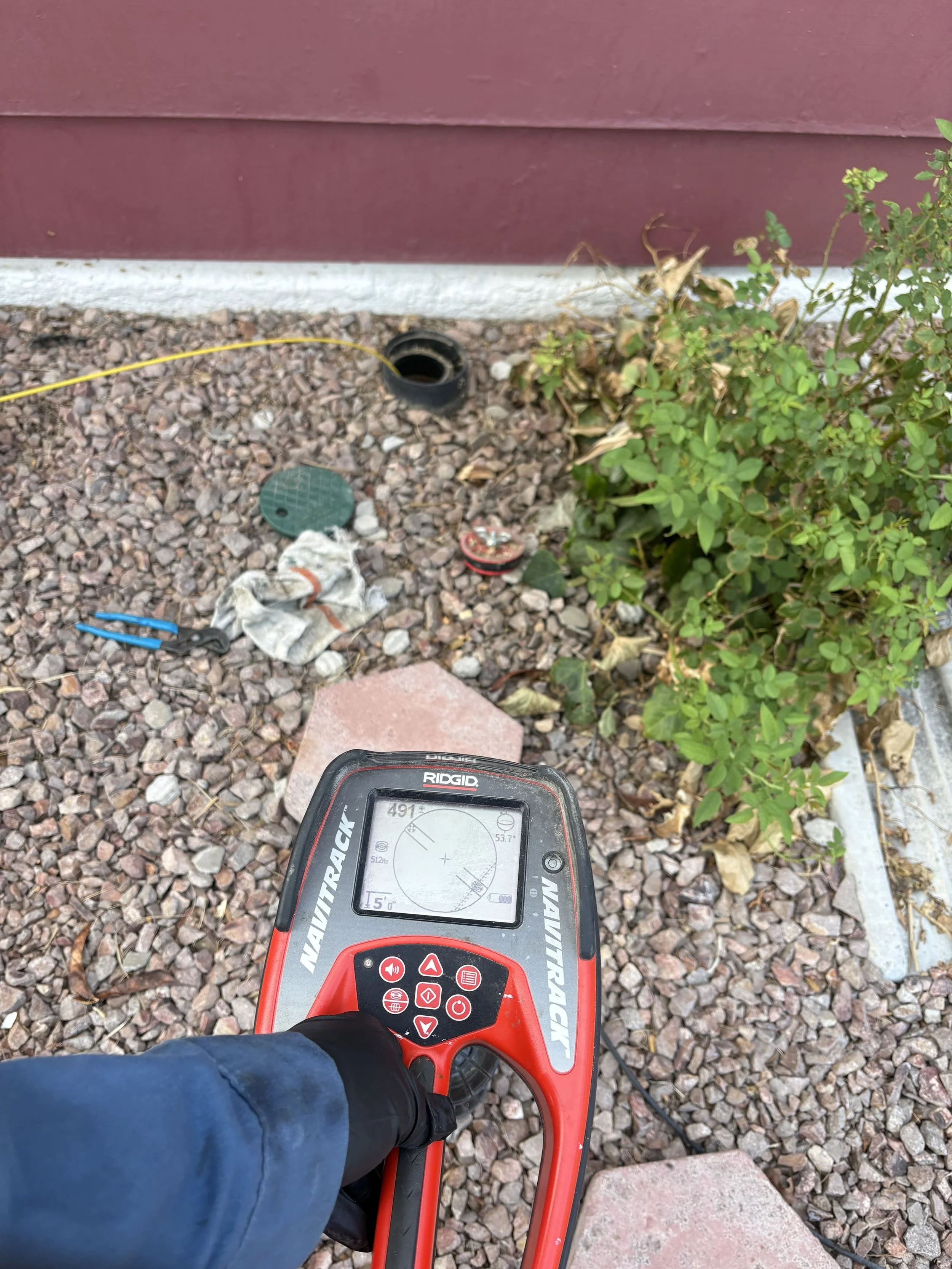
Camera inspection. We run a video camera down the line and look at the actual pipe
Locate. We trace the camera head from the surface to mark exactly where the problem is and how deep
Assess. Material, damage type, and how much of the run is affected
Show you the footage. You should be able to see what is down there yourself
Flat quote for the repair that matches the problem

Sewer line Repair or Replacement?
A repair usually makes sense when:
Damage is confined to one section
The rest of the line looks sound on camera
The pipe material still has life in it
Access is reasonable
A replacement usually makes sense when:
The line is cast iron or clay and failing along its length
There are several problem areas
There is a belly, which cannot be repaired in place
The pipe has collapsed
You have already paid for repeated cleanings on the same line
Our Sewer Line Repair Process
How Long Does It Take?
Camera inspection: about an hour
Cleaning or jetting: same day
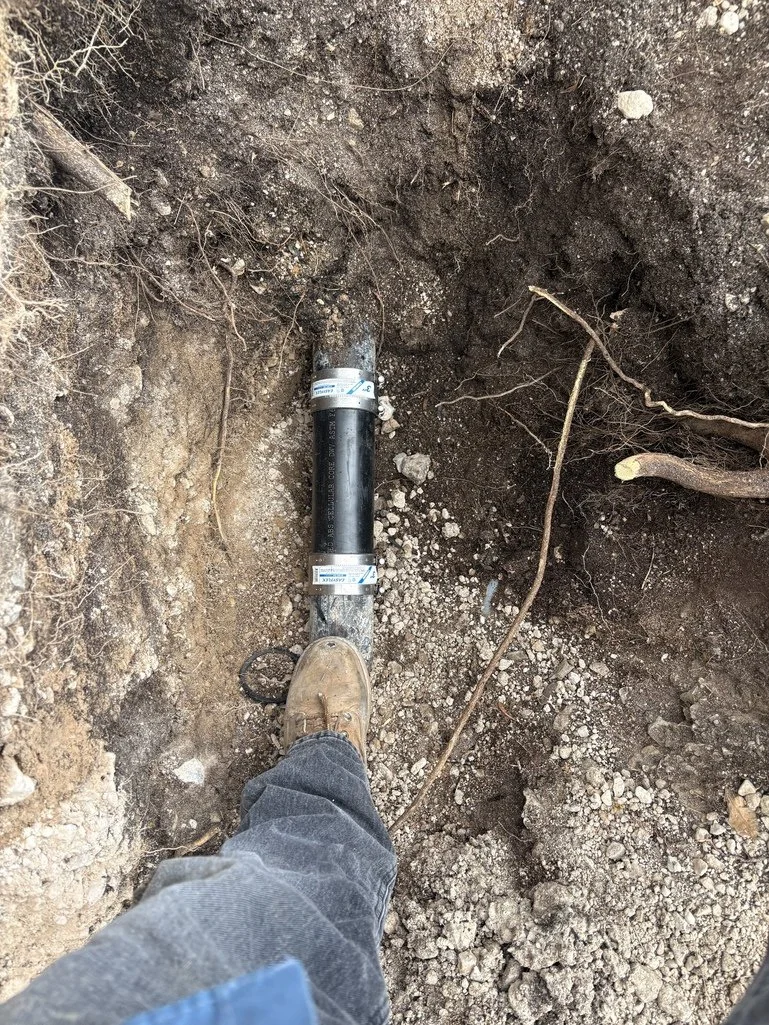
Spot repair: typically one day
Full line replacement: two to four days depending on length, depth, and what is on top of it
Depth matters more than length here. Caliche is slow digging, and lines under driveways or mature landscaping take longer to open and longer to restore.
Sewer line repair faqs
-
It depends on length, depth, and what is on top of the line. A spot repair and a full replacement are very different numbers. We run a camera first, then give you a flat written price.
What Affects the Cost
Length of the run that needs work
Depth
What is on top of it. Grass is one thing, a driveway or mature landscaping is another
Pipe material going in
Permits where required
Repair or full replacement
Surface restoration after backfill
We give you the flat number after the camera inspection, because that is the first point at which anyone can price it honestly.
-
Yes, and we will not skip it. Without seeing the pipe there is no way to know whether you have a blockage, a crack, roots, or a belly, and those need different fixes at very different prices.
-
If one fixture is slow, it is usually that fixture. If several drains back up at once, if toilets gurgle when you run water elsewhere, or if the lowest drain in the house is flooding, that points to the main line.
-
Often yes. We locate the exact problem spot first, so we open the ground where the damage is rather than trenching the whole run.
-
Roots grow toward moisture. Any crack or separated joint lets water seep out, and roots find it. Older neighborhoods with mature trees see this most.
-
Cast iron and clay commonly run 50 to 60 years. Modern PVC lasts considerably longer. If your home is from the 1960s or earlier and the sewer line has never been replaced, it is worth scoping.
-
A low section where the pipe has settled and lost its slope, so waste pools instead of flowing. Snaking clears it temporarily but it always comes back. The section has to be re-laid.
-
No, we recommend traditional sewer repair and replacement since it lasts longer and has far less risk of future failure.