
Shower Goes Cold When Toilet Flushes: The Real Fix
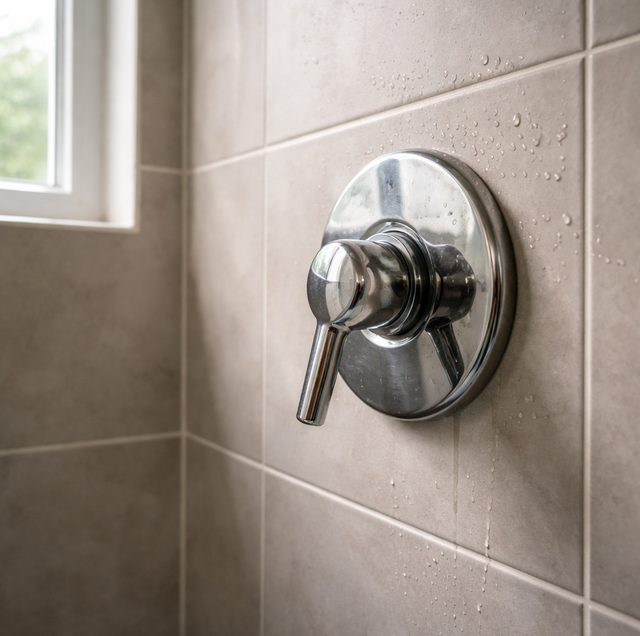
Quick Answer: When a toilet flushes, it pulls cold water from the same supply feeding your shower. That momentary drop in cold-side pressure lets more hot water through the mixed stream, so the shower runs hotter, not colder. A pressure-balancing or thermostatic shower valve corrects for the pressure shift and holds your set temperature steady.
You are mid-shower, comfortable, and someone flushes a toilet down the hall. For a second or two, the water surges uncomfortably hot, then settles back. It feels random, but it is not. The temperature swing is a direct, predictable result of how your home's water lines share pressure, and once you see the mechanism, you can tell whether it is a minor annoyance or a sign the shower valve needs attention.
Why The Water Temperature Actually Swings
Your shower head does not deliver hot or cold water. It delivers a blend, mixed inside the valve behind the wall from two separate feeds: a hot line coming off the water heater and a cold line coming off the main supply. The temperature you feel is the ratio of those two flows at that instant.
A toilet tank fills only with cold water. When it refills after a flush, it opens a demand on the cold side of the plumbing. If that cold line also feeds your shower, some of the cold water that was heading to your mixing valve gets diverted to the toilet instead. The pressure on the cold side of the valve drops for the few seconds the tank is filling.
Here is the part people get backward. Less cold pressure means less cold water reaching the blend, while the hot side keeps pushing at full pressure. The ratio shifts toward hot. So the classic "shower goes cold when the toilet flushes" complaint is usually experienced as a sudden hot spike, followed by a return to normal once the tank finishes filling and cold pressure recovers.
When it truly runs colder instead: There is one situation where the shower really does go cold. If the competing fixture draws from the hot side, say someone opens a hot tap at a nearby sink or starts a hot-fill appliance, then the hot-side pressure drops and the cold-side wins the ratio. The stream cools. The direction of the swing always tells you which side lost pressure: hotter means you lost cold, colder means you lost hot.
What Makes One Shower Swing And Another Stay Steady
Two showers on the same street can behave completely differently, and the difference is almost always the valve and the piping feeding it.
Old non-balanced valves have no defense: A basic two-handle or older single-handle valve is essentially two taps feeding a common spout. It sets a fixed opening for hot and a fixed opening for cold, and it has no way to react when the pressure behind one of those openings changes. Whatever pressure imbalance happens upstream passes straight through to your skin. These valves were standard in homes built decades ago and are still sitting behind plenty of tiled walls today.
Pressure-balancing valves react in real time: A pressure-balancing valve contains a moving element, usually a spool or a diaphragm, that senses the pressure on both the hot and cold inlets. When cold pressure drops because of that flushing toilet, the internal piston shifts and automatically throttles the hot side by a matching amount. It keeps the ratio close to where you set it, so the spike is trimmed down to something you barely notice. This is the same mechanism that earns these valves their anti-scald rating.
Thermostatic valves hold a target temperature: A thermostatic mixing valve goes a step further. Instead of balancing pressure, it reads the actual outlet temperature with a wax or bimetal element that expands and contracts, then repositions the mix to hit a temperature you dialed in. It corrects for both pressure swings and incoming temperature changes, which is why many people install one alongside a separate volume control. It is the steadiest option when household demand is unpredictable.
The Piping And Demand Side Of The Problem
The valve is the main character, but the pipes feeding it decide how severe the swing is in the first place.
Undersized or partially restricted supply lines make every pressure drop worse. A half-inch line that has narrowed over the years from mineral scale, or a long branch run that serves the shower and the toilet off the same tee, leaves very little pressure reserve. When the toilet grabs its share, there is not much left, so the swing is dramatic. A home with generously sized trunk lines and short dedicated branches has more cushion and swings less.
Overall demand stacks on top of that. A single flush is a brief blip. But a flush at the same moment a dishwasher fills, and someone runs the kitchen tap, is a much bigger combined draw, and even a decent valve can be pushed past what it can compensate for. Homes with older galvanized piping tend to be the worst offenders, because internal corrosion has quietly shrunk the usable diameter of every line.
Think of the cold supply as a single pie that every open fixture is slicing at once: the more mouths at the table, the smaller each slice, and the shower is simply the one you happen to be standing in. Fixing the swing means either enlarging the pie (repiping) or making the valve smart enough to re-cut its own slice on the fly (the valve upgrade).
The Fix That Actually Holds
For most homes, the practical, lasting solution is replacing an old non-balanced shower valve with a pressure-balancing or thermostatic unit. The valve is designed to absorb exactly the pressure shift a flushing toilet creates, so the shower stays close to your set temperature even while the toilet refills.
This is a behind-the-wall job. The valve body is soldered or pressed into the hot and cold lines inside the wall cavity; the water has to be shut off at the supply, and the new valve has to be matched to the trim and to the home's pressure range. It is a plumber's install, not a swap of the visible handle. Access is usually gained from the shower side or through a panel behind the wall.
The safety payoff is the reason building standards moved toward these valves in the first place. A sudden hot surge is not only unpleasant, but it is also a scald risk, and the people most at risk are young children and older adults whose skin burns faster and who cannot react as quickly to move out of the stream. A pressure-balancing or thermostatic valve caps that surge automatically. If your existing valve already has a scald-guard or a temperature limit stop, do not disable it to chase more heat; have the limit adjusted properly instead.
If the valve is modern and the swing is still severe, the piping is the next suspect, and a plumber can check line size, look for scale restriction, and confirm whether the shower and toilet are sharing a branch that could be re-run.
Frequently Asked Questions
It shifts the temperature rather than wasting hot water. The toilet only ever draws cold, so your water heater is not being tapped. What changes is the blend at the valve. The one indirect cost is comfort behavior: people often crank the mixing handle toward cold during the hot spike, and if they forget to reset it, the next few minutes run cooler than intended until they readjust.
Lowering the heater setting reduces how hot the spike can get, so a swing to 118 degrees is milder than a swing to 140, but it does not stop the swing itself because the cause is pressure, not heater output. Setting a tank heater around 120 degrees is a common comfort-and-safety compromise, though homes with dishwashers that lack an internal preheat coil sometimes need it higher, which is a trade-off a plumber can weigh for your setup.
Often, yes, because the size of the swing tracks how much cold water the tank suddenly demands. A modern 1.28-gallon or dual-flush toilet refills a smaller tank than an old 3.5-gallon model, so it borrows less cold water and for a shorter time, shrinking the pressure dip. It is a partial help, not a cure, since any simultaneous cold draw still competes with the shower.
It can be, because water pressure falls roughly 0.43 pounds per square inch for every foot of height the water has to climb. A second-floor or third-floor shower starts with less static pressure than a ground-floor one, so it has a thinner reserve to lose when a fixture on the cold line opens. Homes that run a pressure pump or a well pump with a wide cut-in and cut-out range can feel these upstairs swings more sharply.
Yes. The balancing spool inside these valves can seize from mineral scale or wear after years of service, and once it stops sliding freely, it can no longer compensate for pressure changes. A valve that used to hold steady and has recently started surging, even without another fixture running, is a classic sign the internal cartridge has stuck and needs a rebuild or replacement rather than a whole new valve body.
Run a simple isolation test: have someone flush while you watch a single faucet elsewhere in the house. If that unrelated faucet's flow visibly drops at the same instant, the pressure reserve is thin house-wide and points to piping or supply pressure. If only the shower reacts while other fixtures hold steady, the shower valve is the weak link and is the right thing to upgrade first.
Book a shower valve assessment — end the hot-cold surprise and get a steady, scald-safe stream. Adaven Plumbing serves Las Vegas and the surrounding area. Call (702) 766-3320.