
How to Clean a Garbage Disposal and Kill the Smell
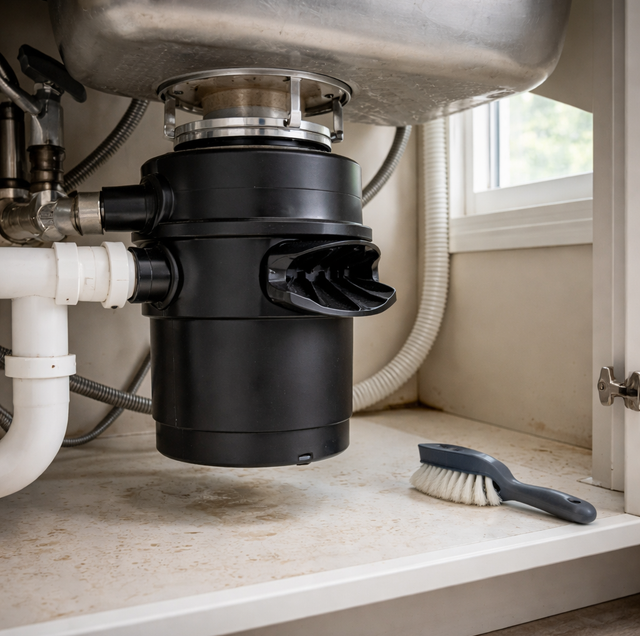
Quick Answer: To clean and deodorize a garbage disposal: run cold water and grind a tray of ice cubes with a couple of tablespoons of coarse salt to scour the chamber, pull back the rubber splash guard and scrub its underside with a small brush, then drop in citrus peels or a scoop of baking soda followed by a splash of white vinegar and let it fizz for a few minutes before flushing with more cold water. Skip chemical drain cleaners, and never put your hand inside.
That sour, garbage-can smell drifting up from the sink usually is not coming from the drain at all. It comes from the disposal itself, and specifically from the food and grease that never quite made it down the pipe. Bits of it cling to the walls of the grinding chamber, wedge under the metal rim, and coat the underside of the rubber flap at the top. Down there it sits warm, wet, and undisturbed, which is exactly the environment bacteria want. Cleaning the unit is really just the work of finding that gunk and removing it without hurting yourself or the machine.
Where the Smell Actually Hides
Before you reach for anything, it helps to know what you are fighting and where it lives. The odor almost never sits in the open where water can rinse it. It collects in three spots the flush stream misses.
The first is the grinding chamber wall. The impellers (the blunt lugs that fling food against the grind ring) do not scrape the sides, so a film of ground food and grease builds up around the perimeter and just below the top rim where the metal meets the sink flange.
The second, and the one most people never think to clean, is the rubber splash guard. That black flap with the slits is designed to keep water and debris from bouncing back at you, which means its whole underside faces the mess. Food smears onto it and stays there, hidden from view, doing its rotting in the dark. If you have scrubbed everything else and the smell survives, the splash guard is almost certainly why.
The third is the drain elbow and trap just past the disposal, where grease cools and hardens into a coating that catches the next round of scraps. This is the same reason a kitchen sink can smell even when the disposal looks spotless.
Safety First, Every Single Time
A garbage disposal is a motor with blunt grinding lugs turning inside a sealed chamber, and it deserves respect even when it is switched off.
Never put your hand into a disposal. Not to fish out a spoon, not to pull a scrap loose, not for anything. If you need to reach inside, cut the power first: flip the wall switch off, and for anything more than a two-second reach, switch off the breaker that feeds the outlet or unplug the unit under the sink. A wall switch alone can be bumped by a hip or an elbow while your fingers are down the throat of the machine, so the breaker is the honest safeguard.
Use long tongs or needle-nose pliers to retrieve a dropped object, working from above with a flashlight, never by feel. And never mix cleaning products in the sink. Bleach combined with vinegar, ammonia, or a drain product releases toxic gas in a space you are leaning right over.
Never put your hand into a disposal, and cut power at the breaker or unplug the unit before you reach in for anything. Never mix cleaning products in the sink either, because bleach combined with vinegar, ammonia, or a drain product releases toxic gas in a space you are leaning right over. Pick one method and finish it before you try another.
The Safe Cleaning Routine
With the machine treated as the hazard it is, the actual cleaning is quick.
Flush and scour with ice and salt: Turn on a strong stream of cold water. With the water running, feed in a full tray of ice cubes and about two tablespoons of coarse salt, then run the disposal until the grinding noise clears. The ice does not sharpen anything (there are no blades to sharpen), but the hard chunks knock loose the film on the chamber walls, and the salt acts as a gentle scouring grit. Cold water matters here: it keeps any grease semi-solid so it breaks off and washes away instead of smearing.
Clean the splash guard by hand: This is the step that fixes stubborn odor. With the power off at the breaker, lift or peel back one lobe of the rubber splash guard so you can see its underside. Dip an old toothbrush or a dedicated dish brush in warm soapy water and scrub every slit and fold, top and bottom. You will usually pull up a gray, greasy film that explains a lot.
If the smell survives after everything else looks clean, the underside of the rubber splash guard is almost always the reason, since the flush stream never touches it. On many models, the whole guard lifts straight out for a proper wash in the sink, which is far easier than scrubbing it in place.
Deodorize with citrus or a baking-soda fizz: Once the gunk is gone, freshen what remains. Cut a lemon, lime, or orange peel into a few pieces and grind them with cold water running; the oils in the rind leave a clean scent and help cut residual grease. For a deeper reset, pour in about half a cup of baking soda, then a cup of white vinegar. It will foam up through the chamber, which loosens light buildup and neutralizes odor. Let it sit and fizz for five to ten minutes, then flush with cold water for thirty seconds. Do this every week or two, and the smell rarely gets a foothold.
Why Chemical Drain Cleaners Are the Wrong Tool
It is tempting to pour a bottle of caustic drain opener into a smelly disposal and walk away. Do not. Those products are built to dissolve organic clogs with heat and harsh chemistry, and that same action attacks the rubber splash guard, the internal seals, and the gaskets that keep the unit watertight. They can pit metal and, if the disposal is even slightly clogged, they sit pooled against those parts instead of draining, doing damage the whole time. A leaking disposal a month later is often the real cost of a quick chemical fix. Physical cleaning and mild deodorizers do the job without eating your equipment or your pipes.
Feed It Right, and Keep It Running Cold
Half of cleaning is not making the mess in the first place. A disposal handles soft food scraps, not everything that lands in the sink.
Keep these out of it: grease and cooking oil (they coat everything and harden downstream), fibrous or stringy items like celery, artichokes, corn husks, and onion skins (they wrap the impellers), bones and fruit pits (too hard), coffee grounds and eggshells (they build up into a sandy sludge in the trap), and starchy scraps like pasta, rice, and potato peels (they swell and turn to paste). A disposal is like a paper shredder for food: a light, steady feed clears cleanly, but a fistful jammed in all at once binds it up.
Always run a strong stream of cold water before, during, and for fifteen to twenty seconds after grinding, and feed scraps in gradually rather than packing the chamber. Cold water keeps fats firm so they flush through instead of clinging, and the extra run time carries the last of the debris past the trap where odor would otherwise start.
When It Is a Jam, Not Just a Smell
Odor and a jam are different problems, and it helps to tell them apart. A disposal that is clogged with an object hums or buzzes when you flip the switch but the impellers do not turn, because the motor is stalled. If you hear that hum, switch it off right away; leaving it energized while stalled can burn out the motor.
To free a jam safely, cut the power at the breaker, then find the hex-shaped hole on the underside of the unit. Insert the little offset wrench that came with the disposal (a quarter-inch hex/Allen key fits most) and work it back and forth to rock the impeller plate free. Restore power, run cold water, and test. Most units also have a small red reset button on the bottom that pops out after an overload; press it back in once the unit has cooled.
Some things are past a cleaning routine. Call a plumber if the smell persists after you have scrubbed the splash guard and deodorized, which can mean buildup deeper in the drain line, or if you see water pooling under the sink, which points to a failed seal or a cracked body. A burning smell or repeated tripping of the reset points to an electrical or motor fault; that is an electrician or a plumber, not a job for the hex wrench. Do not keep resetting a unit that keeps quitting.
Frequently Asked Questions
A quick citrus or baking-soda freshen-up every week or two keeps odor down, but the ice-and-salt scour is a monthly job for most kitchens. Households that cook daily or run a lot of greasy food through the sink benefit from doing it every couple of weeks, since the chamber film rebuilds faster the more it is used.
Skip boiling water poured straight into the unit. High heat can soften and warp the plastic components and melt caught grease into a thin film that re-hardens deeper in the trap once it cools. Warm, soapy water on a brush is safe for scrubbing; for flushing, cold water is the right call because it keeps fats solid enough to break loose and wash away.
No. There are no blades. A disposal grinds with two blunt swiveling metal lugs called impellers that fling food outward against a stationary ridged grind ring, which does the actual shredding. Ice does not sharpen anything, because there is nothing to sharpen; it simply knocks debris off the chamber walls, which is why it still helps with cleaning.
It is fine briefly, but water that sits for days in the chamber goes stale and feeds odor, and it can mean the drain below is partly blocked. If water drains slowly or backs up into the disposal side of a double sink, the trap or drain line likely needs clearing rather than the disposal itself. Run the unit with cold water to push standing water through, and watch whether it drains freely.
Almost always the underside of the rubber splash guard, which the flush stream never touches. It is the single most overlooked odor source and the reason a unit can smell foul while looking clean from the top. Peel it back with the power off and scrub the hidden face; if yours lifts out, wash it in the sink. Check the mounting flange lip just under it too, where a ring of residue collects.
Running it empty for a second or two with cold water at the end of a cycle helps clear the last scraps, but do not run it dry for long stretches to air it out. There is no benefit, and grinding with nothing inside and no water lets the metal chamber and impellers sit unlubricated. A short cold-water flush after each use does far more to keep the inside clean and odor-free.
Book a drain and disposal check — get the odor traced to its real source and the unit running clean. Adaven Plumbing serves Las Vegas, Henderson, and Summerlin. Call (702) 766-3320.