
Water Heater Size Guide: How Many Gallons Do You Actually Need?
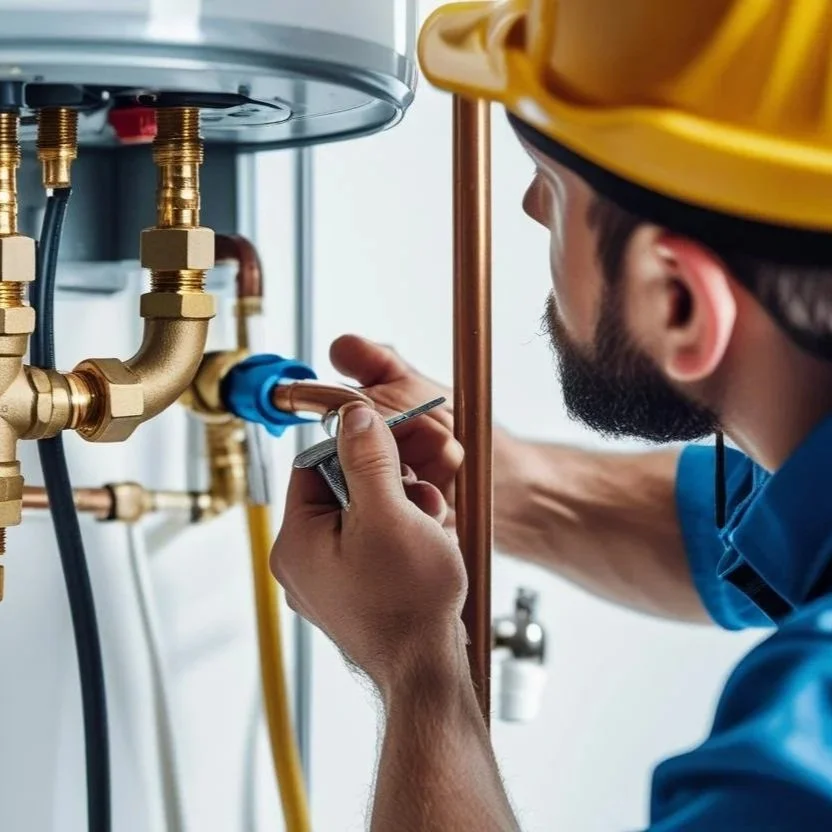
Plumber wearing a hard hat installing water heater pipes, tightening fittings and ensuring proper connections on a residential heating system.
Water heater sizing causes more frustration for homeowners than almost any other plumbing decision because problems rarely show up immediately. An undersized unit feels fine on day one, then suddenly runs out of hot water during back-to-back showers. An oversized unit works flawlessly but quietly drives up energy bills month after month. Choosing the right water heater size requires understanding how hot water is actually used inside the home rather than relying on generic charts or assumptions based solely on square footage.
Gallons alone do not tell the full story, but they provide a practical starting point for determining whether a system can handle peak demand without waste. Household routines, fixture efficiency, appliance usage, and recovery rate all influence how much hot water a home truly needs. A proper sizing approach looks at real usage patterns instead of idealized averages, helping homeowners select a system that delivers comfort without unnecessary operating costs.
How Household Size Influences Water Heater Capacity
Household size strongly influences water heater sizing, but the relationship is not as simple as one person equals a fixed number of gallons. A single occupant who takes long showers and runs a dishwasher daily may use more hot water than a family of four with staggered schedules. Water heater size must account for how many people use hot water during overlapping time periods rather than total occupancy alone.
In most homes, peak demand occurs during morning or evening routines when showers, sinks, and appliances operate close together. A water heater must supply enough hot water during those windows without a significant temperature drop. Smaller households with concentrated usage patterns may require larger tanks than expected, while larger households with spread-out routines may function comfortably with moderate capacity. Evaluating how many fixtures run at the same time matters more than counting heads.
Understanding First Hour Rating And Why It Matters
Gallons listed on a tank water heater describe storage capacity, but the first-hour rating provides a clearer picture of real performance. First hour rating measures how much hot water a heater can deliver during its busiest hour, combining stored hot water with recovery capacity. Two tanks with the same gallon rating may perform very differently depending on burner strength or heating element output.
Homes with frequent back-to-back showers rely heavily on the first-hour rating rather than the total tank size. A smaller tank with high recovery can outperform a larger tank with slower heating capability. Ignoring the first hour rating often leads homeowners to oversize tanks unnecessarily, increasing energy costs without improving comfort. Matching the first hour output to the actual peak usage helps avoid that mismatch.
Shower Usage And The Hidden Demand Factor
Showers represent the single largest driver of hot water demand in most homes. Flow rate, duration, and frequency all influence sizing needs. Older showerheads often use more water than modern low-flow fixtures, increasing demand even with fewer occupants. Long showers amplify this effect quickly, especially when multiple showers run consecutively.
Water heater size should reflect realistic shower habits rather than idealized conservation goals. If household members consistently take extended showers, sizing must accommodate that behavior. Attempting to downsize based on planned changes rarely succeeds long-term. Accurate sizing starts with an honest assessment of daily routines rather than aspirational usage assumptions.
Appliances And Simultaneous Demand Considerations
Dishwashers and washing machines quietly add a significant load to hot water demand, especially when used alongside showers. Modern appliances may advertise efficiency, but cycles still draw hot water during specific stages that often overlap with other usage. When appliances operate during peak hours, the water heater capacity must absorb those demands without a noticeable temperature drop.
Homes that routinely run laundry and dishes during morning or evening routines benefit from additional capacity or higher recovery rates. Ignoring appliance contribution leads to sizing that feels adequate until multiple systems run together. Factoring appliances into peak hour planning prevents unexpected shortages that surface only under normal household behavior.
Tank Water Heater Sizing Guidelines In Practice
Tank water heaters rely on stored volume to meet demand. Typical sizing guidelines suggest forty to fifty gallons for smaller households and larger tanks for higher occupancy. These ranges assume average usage patterns and moderate fixture efficiency. Real-world needs often exceed those averages when usage clusters tightly.
Oversized tanks introduce inefficiency by maintaining more heated water than necessary. Undersizing leads to repeated reheating cycles and user frustration. Evaluating both storage capacity and recovery speed allows homeowners to select tanks that deliver consistent comfort without unnecessary energy waste.
Tankless Water Heater Sizing Differences
Tankless systems do not rely on gallons in the same way tank systems do. Instead, sizing depends on flow rate and temperature rise. A tankless unit must supply enough hot water simultaneously across fixtures without dropping temperature. Homes with multiple showers or appliances running together require higher capacity units or multiple systems.
Tankless sizing errors commonly occur when homeowners focus on single fixture demand rather than combined usage. Calculating maximum simultaneous flow prevents undersized installations that struggle during peak hours. Proper sizing ensures consistent temperature delivery rather than intermittent performance.
Hybrid Water Heater Capacity Planning
Hybrid water heaters combine tank storage with heat pump recovery, which affects sizing differently than traditional electric tanks. Because recovery occurs more slowly in heat pump mode, adequate storage becomes critical for peak demand periods. Hybrid systems benefit from slightly larger tanks to compensate for slower recovery during high usage.
Warm climates support heat pump efficiency, but storage capacity still determines comfort during busy periods. Selecting a hybrid tank that aligns with household peak demand prevents reliance on electric resistance backup, preserving energy savings. Capacity planning balances efficiency with real-world usage patterns.
Future Proofing Your Water Heater Choice
Lifestyle changes affect water heater sizing more than homeowners anticipate. Growing families, home additions, and changes in work schedules all alter hot water demand. Selecting a system that accommodates modest future growth prevents premature replacement or performance dissatisfaction.
Future proofing does not mean oversizing excessively. Instead, it involves choosing systems with recovery flexibility, upgrade options, or modular expansion capability. Planning for realistic growth maintains comfort while avoiding unnecessary long-term operating costs.
Common Sizing Mistakes Homeowners Make
Many homeowners rely on outdated rules of thumb that ignore modern fixture efficiency and appliance behavior. Others base sizing decisions on square footage rather than usage patterns. Both approaches lead to mismatched performance expectations.
Underestimating peak demand remains the most common error. Overestimating conservation behavior ranks close behind. Accurate sizing depends on observing how the home actually uses hot water rather than how it might ideally operate. Avoiding these mistakes leads to more reliable performance and lower long-term cost.
FAQs
Many families of four operate comfortably with a fifty to sixty-gallon tank, depending on shower habits and appliance usage. Homes with frequent simultaneous use may need additional capacity.
A larger water heater increases energy use and standby loss. Proper sizing delivers comfort without unnecessary operating costs.
Low-flow fixtures reduce demand, but usage habits still matter. Downsizing should follow a full assessment of peak demand.
Tankless systems still require careful sizing based on flow rate and temperature rise. Undersized units struggle during simultaneous use.
Undersized water heaters run out of hot water quickly and cycle frequently, increasing wear and reducing comfort.