
Hearing Running Water With Nothing On? What That Sound Means
You shut off the last faucet, the dishwasher finished an hour ago, and the house is quiet. Except it is not. Somewhere behind a wall, under the floor, or off toward the garage, you can still hear water moving. A faint trickle, a steady hiss, the soft rush of a stream that has no business flowing when nothing is turned on.
That sound is worth taking seriously. In a plumbing system that is working correctly, water only moves when you ask it to. When you hear it moving on its own, water is almost always going somewhere it should not. Most of the time, that means a leak.
Quick Answer: If you hear running water with every fixture off, water is escaping somewhere on the pressurized side of your plumbing. The most common source is a toilet quietly leaking from the tank to the bowl. The next most likely is a hidden supply leak inside a wall, ceiling, or slab. The fastest way to confirm it is real is the meter test: shut everything off and watch the water meter. If it keeps moving, water is leaking.
Why a Closed System Should Be Silent
Your home's water lines stay under pressure all the time, even when nothing is running. The water sits in the pipes, held back by closed valves at every faucet, toilet, and appliance. Nothing flows until you open one of those valves.
Sound happens when water moves. Once you understand that, the phantom running-water noise stops being a mystery and becomes a clue. If water makes noise, it is flowing. If water is flowing while all the valves are closed, it has found an opening you did not create. Pressurized water pushing through that opening is what you are hearing, whether the opening is a worn rubber flapper in a toilet tank or a pinhole in a copper line buried in a wall.
Think of the system like a garden hose left pressurized with the nozzle shut. Squeeze the trigger, and water rushes out. Keep the trigger closed, and it stays silent, unless the hose has a split somewhere along its length. Then you get that quiet, continuous weep, no matter what the nozzle is doing. A house works the same way. The noise is the split talking.
The Usual Sources, From Most to Least Common
A handful of culprits account for the large majority of these calls, and they are worth knowing in rough order of likelihood.
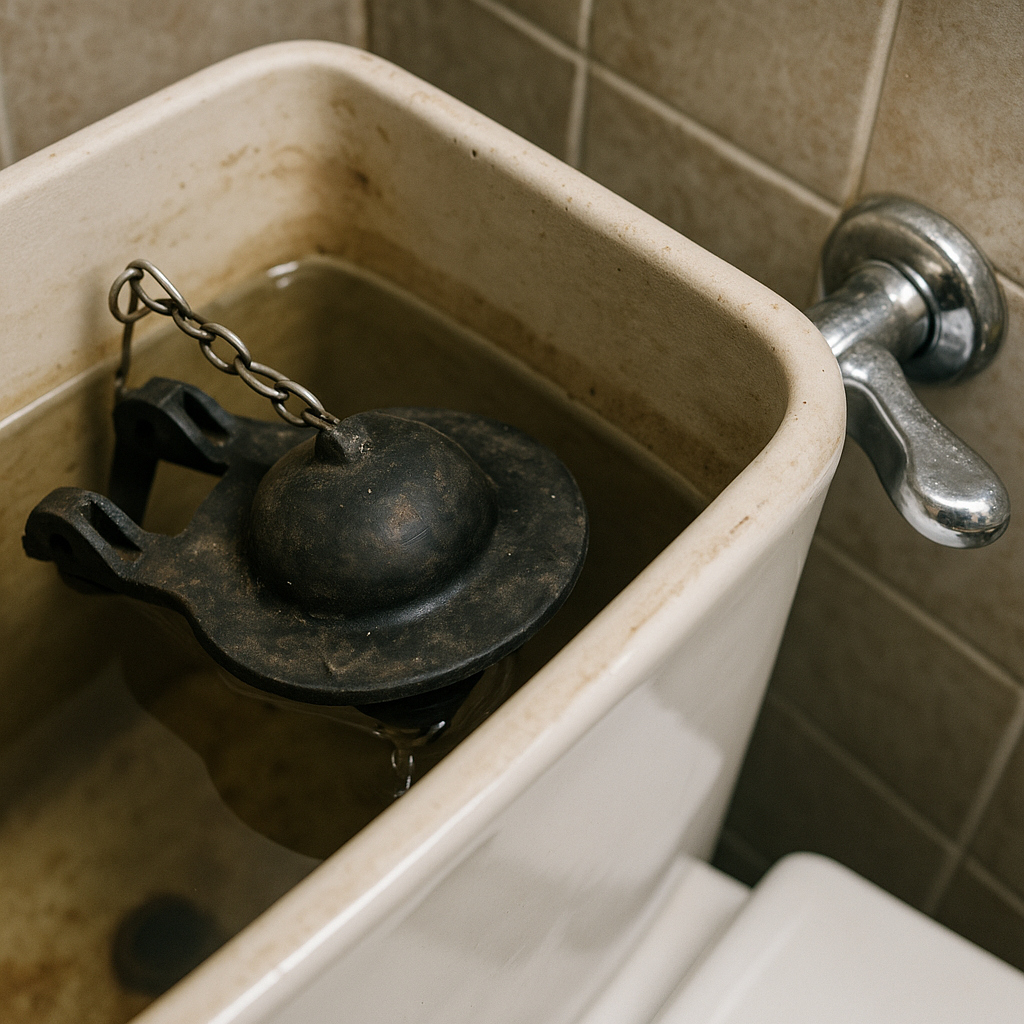
A running toilet- This is the leader by a wide margin. Inside the tank, a rubber flapper seals the opening to the bowl, and a fill valve refills the tank after a flush. When either wears out, water slips past and trickles from the tank to the bowl continuously. Because toilets often share a wall with a bedroom or hallway, the sound frequently seems to come from inside the wall when it is really coming from the fixture a few feet away.
A hidden supply leak- A pressurized line running inside a wall, above a ceiling, under the concrete slab, or out in the yard can develop a crack or a pinhole. This produces a steadier sound than a toilet, a constant hiss or trickle that does not pause. Homes built on slab-on-grade foundations tend to show supply-line failures as slab leaks, where the pipe under the concrete is the weak point.
An outdoor or irrigation line- A cracked irrigation pipe, a leaking drip system, or a hose bib that never fully closes will run continuously and still count against your system. The sound can carry back toward the house through the pipe.
A water heater or its relief valve- A temperature and pressure relief valve that is seeping, or a tank that is weeping at a fitting, can produce a soft running or dripping sound near the unit.
A recirculation pump- If your home has a hot-water recirculation system, the pump itself moves water on a loop. It can be the sound you hear, especially if it is set to run continuously rather than on a timer or on demand.
Confirm It Is Real: The Meter Test
Before chasing sounds, prove that water is actually escaping. Your water meter is the honest witness here.
Turn off every fixture and every water-using appliance in the house. Faucets, the ice maker, the dishwasher, the washing machine, everything. Then find your meter, usually in a box near the street or the curb. Most meters have a small triangular or star-shaped low-flow indicator that spins at the slightest movement, along with the main dial. Note the position, wait, and watch.
If the indicator keeps creeping with nothing running, water is leaving your system somewhere. That single observation tells you the sound is not your imagination and points you toward a real leak rather than a settling pipe or an appliance you forgot about.
Narrowing Down Where It Is
Once the meter confirms a leak, the goal is to localize it before anyone opens a wall.
Start with toilets, because they are the cheapest fix and the most common cause. A dye test settles it fast. With the tank lid off, drop a bit of food coloring into the tank water and wait without flushing. If color seeps into the bowl on its own, the flapper is leaking, and you have found your source.
If the toilets are clean, listen along the walls and floors. Press an ear to the wall near plumbing runs, or use a screwdriver handle against your ear like a stethoscope to pick up where the hiss is loudest. Feel the floor with a bare hand or foot as you move through the house. A warm patch on the floor can indicate that a hot-water line is leaking beneath the slab and heating the concrete above it. Look for damp spots, discoloration on drywall or ceilings, bubbling paint, or a musty smell, all signs that water has been escaping for a while.
If the inside of the house checks out but the meter still moves, the leak is likely outdoors, on the irrigation system, a hose bib, or the buried service line running from the meter to the house.
Why This Is Not a Wait-and-See Problem
A leak you can hear is one that runs around the clock. Even a slow one adds up, and a running toilet on its own can waste an enormous volume of water day after day without ever overflowing. Beyond the waste, water that escapes inside the structure has to go somewhere. It soaks into framing and drywall, feeds mold, and, over time, can rot wood or undermine the ground beneath a slab.
There is also a safety dimension. Water pooling anywhere near electrical outlets, appliances, or a panel is a shock hazard, so if you find standing water near anything electrical, keep clear and get it addressed rather than wading in to investigate. And a pressurized leak inside a slab or a wall is not a DIY find. It hides behind concrete and framing, and guessing wrong means opening the wrong spot.
What to Do About It
Work from cheap and easy toward complex. Check and fix the toilets first, since a flapper or fill valve is an inexpensive, common repair that resolves a large share of these cases. If the toilets are not the problem and the meter still moves, the leak is hidden and pressurized, and that is where a professional takes over.
A plumber does not guess. Acoustic listening equipment picks up the specific sound of water escaping under pressure, and thermal imaging spots the temperature difference a leaking hot line leaves behind, so the exact location can be pinpointed and the wall or slab opened only at that one spot. The meter test you already ran gives them a confirmed starting point.
The key distinction to carry with you: a toilet you hear is usually something you can handle, while a steady hiss with no toilet in play, a warm spot on the floor, or a meter that keeps turning after everything is off points to a hidden pressurized leak that needs professional detection.
Frequently Asked Questions
Shut off every fixture and appliance, then watch the water meter for 15 to 30 minutes. If the dial or the small leak indicator keeps moving with nothing running, water is leaking somewhere on the pressurized side of the system. It is the single most reliable check you can do without any tools, because the meter measures everything leaving the main and cannot be fooled by a sound that seems to move around the house.
A flapper typically lasts only about three to five years before the rubber hardens and stops sealing, so it is a wear part that fails on a schedule in most homes. The classic tell is a ghost flush, where the tank refills on its own every few minutes, even though no one has touched the handle. That symptom pins the problem on the flapper before anyone opens a wall or chases a sound down a hallway. It is also the least expensive thing to fix, which is why it goes first.
A toilet leak comes and goes as the tank refills, and the sound sits right at the toilet. A hidden supply leak is a steady hiss or trickle you can hear along a wall or floor, even with every toilet ruled out. The rhythm is the tell: a fixture leak cycles because the fill valve kicks on and off, while a pressurized line leak runs at a constant, uninterrupted pitch because the pressure behind it never lets up.
A hot-water line leaking under a slab warms the floor above it, so a running sound, a warm patch, and sometimes higher humidity nearby point to a slab leak on the hot side rather than a fixture. The warmth is a useful diagnostic clue because a cold-water slab leak leaves no temperature signature, which is one reason hot-side slab leaks are often the first ones a homeowner notices underfoot.
They use acoustic listening equipment that detects water escaping under pressure, thermal cameras that spot the temperature difference a leak creates, and a pressure test to isolate which line is losing water. That combination means the wall must only be opened at the exact spot where the leak is, rather than through exploratory demolition across an entire run of pipe.
Yes, and there is a simple way to split the indoor from the service line. Shut the main valve where it enters the house, then re-read the meter. If the meter still creeps with the whole house isolated behind that closed valve, the leak is on the buried line running between the meter and the house rather than anywhere indoors. If the meter stops once the house is isolated, the leak is inside. Sound travels back through the connected pipe, which is why a yard leak can seem to come from a wall until this test settles it.
Track it to the source before the damage spreads — a quick check now beats a torn-open wall later. Adaven Plumbing serves Las Vegas and the surrounding area. Call (702) 766-3320 for a free assessment.