
Rusty or Brown Hot Water From One Faucet? What It Tells You
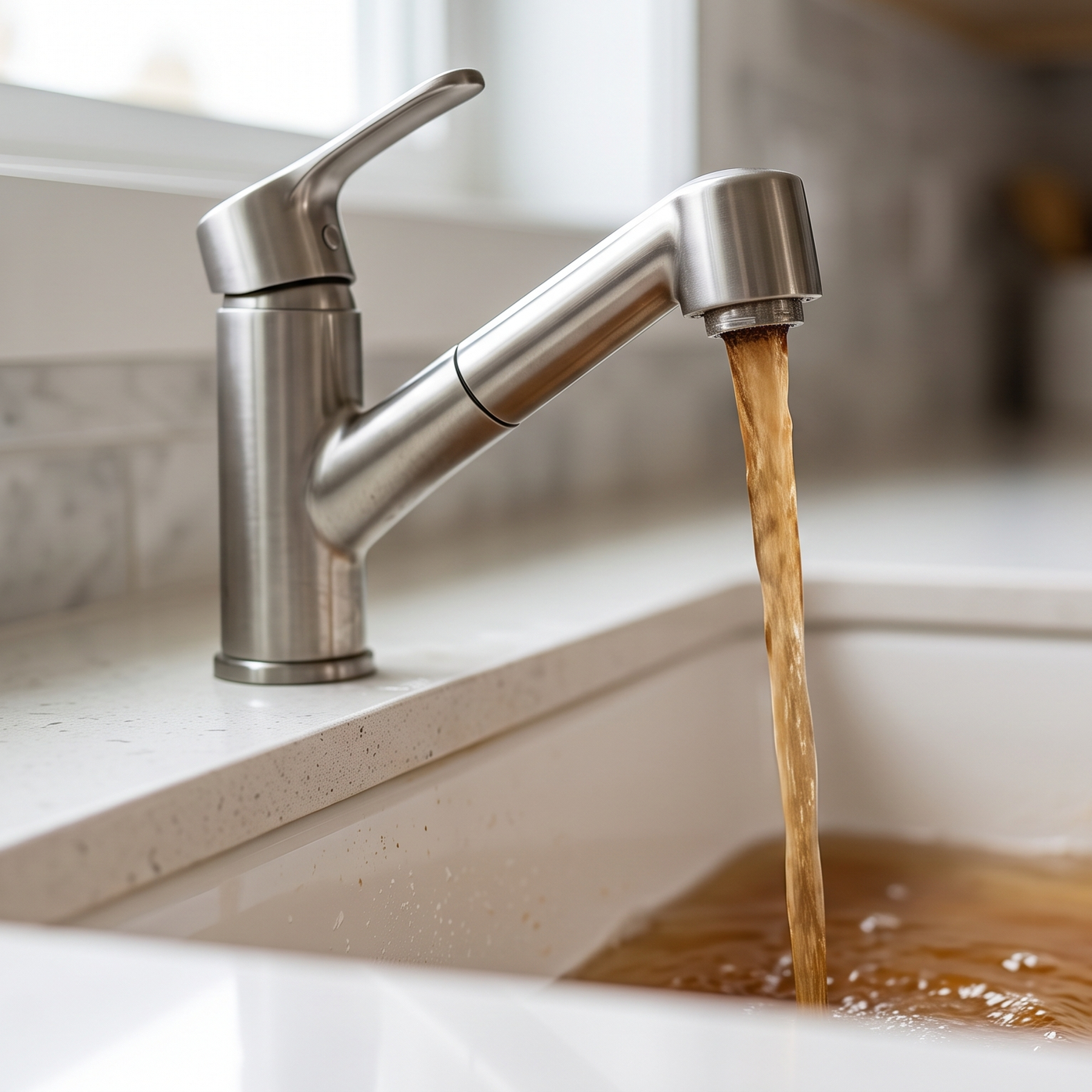
You turn on the hot water to wash your hands, and it comes out the color of weak tea. The cold runs clear. Every other faucet in the house seems fine. It is the kind of thing that makes you wonder whether the water is safe and whether something expensive just started to fail.
Discolored hot water is not random. Where it shows up, and whether it is the hot side, the cold side, or both, tells you almost exactly what is going on. A minute of paying attention narrows it down before anyone comes out.
Color Is Information: Read the Pattern First
Brown or rusty water may be due to iron oxide, sediment, or mineral particles suspended in the water, and the key to diagnosing it is not the color itself but the pattern. Three questions sort most cases: Is it only the hot side, or both the hot and cold sides? Is it one faucet, or every faucet? And does it clear after the water runs for a minute, or does it stay discolored?
Each answer points to somewhere different. Hot-only points at the water heater or the hot lines. One-faucet-only points at that fixture. All-faucet points upstream at the main or the meter. Reading the pattern is how a plumber decides where to look before touching a wrench.
| What you notice | What it usually means | First thing to check |
|---|---|---|
| Hot side only, most faucets | Rust or sediment in the water heater tank | Age and condition of the heater |
| One faucet, hot only, clears when run | Sediment settled in that fixture's line | Flush the fixture; check the aerator |
| Hot and cold, all faucets | Main line, meter work, or a supply disturbance | Whether it clears house-wide after running |
| Rusty after no use, clears fast | Stagnant water in a rarely-used branch | Normal-ish; flush and monitor |
When It's Only the Hot Side
If the discoloration is on the hot side of the house, the water heater is the prime suspect, and the cause is corrosion. A tank heater has a steel tank and a sacrificial anode rod inside it whose whole job is to corrode so the tank does not. When that rod is used up, the tank itself starts to rust from the inside, and flakes of that rust color the hot water. Sediment adds to it: minerals settle to the bottom of the tank, bake against the burner or element, and stir up into the water.
In an area with some of the hardest water in the country, this happens faster than most people expect. Heavy minerals mean the anode rod wears out sooner and sediment piles up faster, so a heater here ages on an accelerated clock. Rusty hot water is often the first sign a tank is nearing the end of its life, which is why it is worth a look rather than a wait.
When It's Just One Faucet
If only a single faucet runs rusty on the hot side and the rest of the house is clear, the problem is usually local to that fixture, not the whole system. Sediment and small rust particles settle in the pipes that branch off to a faucet you do not use often. When you finally run it, that settled material flushes out first, then the water clears. The particles frequently collect in the aerator, the little screen on the tip of the faucet, which acts as a trap.
The test is easy: run the hot water at that faucet for a minute or two. If it clears and stays clear, you flushed out settled sediment, and the fixture is fine. If it keeps running discolored, the trouble is deeper in that line or back at the heater. Cleaning the aerator often solves the last of it.
Before you call anyone, run the affected hot faucet for two full minutes. If the water clears and a rinse of the aerator screen finishes the job, you have solved a settled-sediment problem for free. If it stays brown past two minutes, the source is upstream and worth a professional look.
Is the Water Safe to Use?
Rusty water is usually more of a nuisance than a health hazard in the short term, but it is not something to live with. The iron and sediment can stain laundry and fixtures, wear on valves and appliances, and signal a heater that is corroding and may lead to a leak. If the discoloration is severe, persistent, or accompanied by a metallic smell or taste, stop using it for drinking and cooking until the cause is identified. A sudden change throughout the house, hot and cold, can also indicate a disturbance in the municipal supply, which usually resolves on its own after running the taps.
Frequently Asked Questions
Because the problem is on the hot side, which almost always means the water heater. As the tank corrodes internally or collects sediment, that rust and mineral material colors the hot water, while the cold, which never enters the tank, stays clear. A rusting tank or a spent anode rod is the usual cause.
Sediment and rust particles settle in the branch line feeding a faucet you do not use often, then flush out when you finally run it. The particles also collect in the aerator screen at the tip of the faucet. Running that tap for a couple of minutes and cleaning the aerator usually clears it.
Not always, but it is a warning worth heeding. Rusty hot water often means the tank is corroding from the inside, which can end in a leak. Sometimes the fix is to flush the tank or replace the anode rod if it is caught early. A plumber can tell you whether the heater has life left or is near the end.
Indirectly, yes. Very hard water accelerates sediment buildup and shortens the anode rod’s life, which protects the tank, so the heater corrodes and collects mineral debris faster. That is why heaters in hard-water areas tend to show discoloration sooner and benefit from more frequent flushing.
Short-term and lightly discolored, showering is generally fine, though heavy rust can stain the tub and is unpleasant. What you want to avoid is drinking or cooking with heavily discolored water until you know the cause. If the rust is persistent or strong, have it checked rather than continuing to use it throughout the house.
If it cleared and remains clear at that faucet, you likely flushed out settled sediment, and there is nothing more to do other than rinse the aerator. Keep an eye on it. If the discoloration returns quickly or shows up at other hot taps, the source is the heater or the hot lines, and that is worth a professional look before it worsens.
The Pattern Points to the Fix
Discolored hot water feels alarming, but it is one of the more readable plumbing problems once you check the pattern. Hot-only across the house points at a corroding or sediment-filled water heater. One faucet that clears when you run it is settled sediment that you can flush yourself. Hot and cold everywhere points upstream at the supply. Read which one you have, handle the easy version at the tap, and bring in help when the heater is the answer.
If your hot water keeps running rusty and the heater is the suspect, have it checked before a corroding tank turns into a leak. Adaven Plumbing serves Las Vegas and the surrounding area. Call (702) 766-3320 for a free assessment.