
Salt-Based Softener vs. Salt-Free Conditioner: Which Wins?
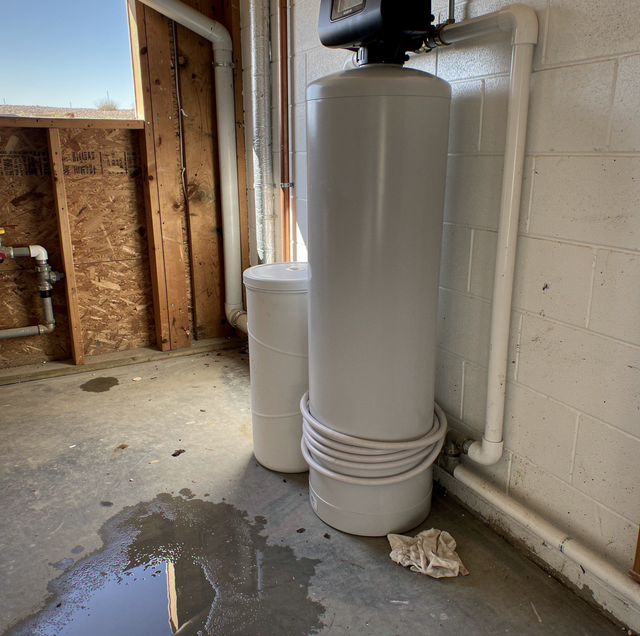
Quick Answer: A salt-based softener uses ion exchange to physically remove calcium and magnesium from the water and replace them with sodium, which is the only approach that measurably lowers hardness and eliminates scale buildup. A salt-free conditioner uses template-assisted crystallization to alter the minerals' structure so they resist sticking to surfaces, but the hardness itself, and the total mineral content, stays in the water. For very hard water, a salt-based system is the more reliable fix for scale; a salt-free unit is a lower-maintenance option for households more worried about sodium intake or wastewater discharge than about eliminating hardness entirely.
Two homeowners can both call it "the hard water fix" and mean two different pieces of equipment. One has a tank of resin beads that needs a bag of salt dumped in every few weeks. The other has a cartridge that never touches salt and barely needs attention beyond an occasional swap. Both install on the main line, both claim to solve scale issues, and both are recommended by someone who swears by theirs. The confusion is understandable, since the two technologies don't do the same job at all, even though they're marketed as interchangeable.
How A Salt-Based Softener Actually Works
A salt-based softener runs water through a tank filled with resin beads coated in sodium ions. As hard water passes through, the resin attracts calcium and magnesium and swaps them out for sodium, a process called ion exchange. The water coming out the other side has measurably less calcium and magnesium than went in, along with a bit more sodium. Because the hardness minerals are physically removed rather than just altered in place, a properly sized softener eliminates the conditions that cause scale to form, not just some of them.
Over time, the resin bed loses its capacity to keep swapping ions and needs to be recharged. That's what the regeneration cycle does: a brine solution made from the salt in the brine tank washes over the resin, stripping off the accumulated calcium and magnesium and replacing it with a fresh coat of sodium, while the rinsed-off hardness minerals flush out to a drain. Most residential units run this cycle automatically on a schedule tied to water usage, so the household barely notices it except during a stretch when the softener is temporarily offline.
How A Salt-Free Conditioner Actually Works
A salt-free conditioner, most commonly built around template-assisted crystallization media, works on a completely different principle. Instead of removing calcium and magnesium, the media provides a surface where those minerals form microscopic crystals in the water itself rather than depositing on pipe walls, water heater elements, or fixture surfaces. The minerals are still there when the water leaves the unit; they've just been converted into a form that tends to pass through the plumbing and out of a faucet instead of clinging to it.
Because nothing is being exchanged and no brine solution is involved, a salt-free conditioner needs no regeneration cycle, no drain connection for waste discharge, and no ongoing bags of salt. The media itself degrades gradually with use and gets swapped out as a cartridge rather than recharged in place, a meaningfully different maintenance pattern than a softener's.
The Core Difference: Removing Hardness Versus Managing Its Effects
This is the distinction that gets lost in a lot of marketing copy. A softener changes the water's actual hardness reading, measured in grains per gallon, by removing the minerals that make water hard. A conditioner does not lower that reading at all; calcium and magnesium remain at the same concentration, just restructured so they behave differently when they come into contact with a surface. Test before and after each type of system, and a softener will show a real drop, often close to zero, while a conditioner's numbers look essentially unchanged even though scale formation slows down.
Effectiveness At Very Hard Water Levels
At moderate hardness, both approaches tend to perform reasonably well at reducing visible scale and protecting fixtures. At the very hard end of the range, the gap widens. A correctly sized salt-based softener continues to strip calcium and magnesium at close to the same rate regardless of how hard the incoming water is, because ion exchange capacity is a function of resin volume and regeneration frequency, both of which can be adjusted upward for tougher water. A salt-free conditioner's crystallization capacity is comparatively fixed, so extremely hard water can push more untreated mineral load through than the media is rated to convert, showing up as scale that's reduced but not eliminated. Homes already fighting heavy scale on water heater elements, tankless units, or fixtures are the ones most likely to notice that gap in practice, since they're already at the harder end of what either technology is built to manage.
Maintenance Requirements Compared
A salt-based softener's ongoing maintenance centers on the brine tank: keeping it stocked with salt, checking that the salt hasn't bridged or crusted over into a solid mass that prevents it from dissolving properly, and occasionally cleaning the tank if sediment builds up. The resin bed itself lasts for years under normal conditions but eventually needs replacing as its exchange capacity degrades.
A salt-free conditioner's maintenance centers on the cartridge or media tank instead. There's no salt to buy or haul, no brine tank to monitor, and no regeneration cycle to schedule around. The tradeoff is that the media has a defined service life and requires a full cartridge replacement rather than a simple refill, and skipping that replacement lets crystallization performance drop off gradually instead of failing outright, as a softener running dry on salt tends to.
Water Taste And Sodium Content
Because ion exchange trades calcium and magnesium for sodium, softened water has a higher sodium content than the water that entered the system, with the increase tied to the hardness of the incoming water. For most households, this is a minor dietary consideration, but it matters more for anyone closely managing sodium intake, and it's a common reason some homes keep a separate, unsoftened tap or install a small reverse osmosis unit at the sink for drinking water.
A salt-free conditioner adds no sodium at all, since nothing is being exchanged. The mineral content leaving the unit is essentially the same as what went in, just restructured. Households where sodium intake is a real concern tend to weigh this difference heavily.
Environmental And Wastewater Discharge Considerations
A softener's regeneration cycle sends a batch of brine, loaded with flushed-out calcium, magnesium, and excess salt, down the drain every time it recharges. Some municipalities and septic systems handle this without issue, while others restrict brine discharge or recommend high-efficiency softeners that use less salt and water per cycle. A household on a septic system is worth checking against the manufacturer's guidance first, since heavy, repeated salt discharge can affect the system's bacterial balance over time.
A salt-free conditioner produces no wastewater discharge during normal operation, since there's no regeneration cycle and no brine to flush. That's often the deciding factor for a household on a septic system or in an area with discharge restrictions, even when a softener would otherwise be the more effective option for the hardness level involved.
Upfront Investment Considerations
A salt-based softener is a more involved system overall: a resin tank, a separate brine tank, a control valve, and a drain connection for regeneration, which generally makes it the larger install with more ongoing consumable cost tied to salt purchases. A salt-free conditioner is a simpler physical installation, typically a single tank or cartridge housing with no drain line required, which keeps both the installation scope and long-run consumable costs lower, offset somewhat by periodic cartridge replacement. The better comparison isn't which one costs less upfront, but which one delivers the outcome a household actually needs, relative to the cost of ownership over the years it remains in service.
Comparing Salt-Based Softening And Salt-Free Conditioning
| Factor | Salt-Based Softener | Salt-Free Conditioner |
|---|---|---|
| How it works | Ion exchange: swaps calcium/magnesium for sodium in resin beads | Template-assisted crystallization: restructures minerals so they resist sticking to surfaces |
| Effect on hardness reading | Measurably lowers hardness (grains per gallon) | Hardness reading stays essentially unchanged |
| Performance at very hard water levels | Scales with resin volume and regeneration frequency | Fixed crystallization capacity can be outpaced by very heavy mineral load |
| Maintenance | Salt refills, brine tank upkeep, periodic resin replacement | Cartridge/media replacement on a set interval; no salt or brine tank |
| Water taste/sodium | Adds sodium in exchange for removed hardness minerals | No sodium added; mineral content largely unchanged |
| Wastewater/discharge | Regeneration cycle sends brine and flushed minerals to a drain | No regeneration cycle; no wastewater discharge |
| Upfront investment | More equipment (resin tank, brine tank, drain line); higher ongoing salt cost | Simpler installation, no drain line; lower ongoing consumable cost with periodic cartridge swap |
| Best fit | Very hard water, heavy existing scale, priority on eliminating hardness | Moderate hardness, septic or discharge-restricted properties, sodium-conscious households |
Matching The System To The Household
A household dealing with heavy, visible scale, an early water heater failure, crusted aerators, and spotting on glassware, testing at the very hard end of the range, is usually better served by a salt-based softener, since eliminating hardness outright is the most reliable way to stop scale from reforming. The added sodium and periodic drain discharge are tradeoffs that households are accepting in exchange for a bigger, more predictable reduction in scale-related wear.
A household with moderate hardness, no septic concern but a strong preference for skipping sodium, or a property where brine discharge to a septic system is a genuine limitation, tends to lean toward a salt-free conditioner. It won't move a hardness reading, but it addresses the complaint most homeowners actually care about, scale sticking to surfaces, without the added sodium or ongoing salt purchases.
A hardness test, reported in grains per gallon, better guides this decision than any general description of "hard" or "soft" water. Moderate hardness leaves real room for either technology to perform well, and the choice comes down to sodium, discharge, and maintenance style. Very hard water narrows that room considerably, since it's the range where a conditioner's fixed crystallization capacity is most likely to fall short. A test also catches issues that ride alongside hardness, like iron staining or high sediment, that neither system addresses on its own and that call for a separate treatment stage regardless of which hardness solution is chosen.
Frequently Asked Questions
No. It restructures calcium and magnesium into a crystalline form that resists sticking to surfaces, but the minerals stay in the water, and a hardness test shows essentially the same reading before and after treatment. A salt-based softener physically removes the minerals, lowering the reading.
Softened water contains more sodium than untreated water, depending on how hard the source water is. For most people, this amount is minor, but anyone closely managing sodium should account for it, and many households handle this by keeping one unsoftened tap or by adding a small reverse osmosis unit for drinking and cooking water.
It can help, but its crystallization capacity is comparatively fixed, so very hard water can push more untreated mineral load through than the media is rated to convert. Scale reduction still occurs, but a salt-based softener is generally the more reliable choice once hardness reaches the very high end of the range.
The regeneration cycle sends brine and flushed-out minerals to the drain, and heavy, repeated salt discharge can affect a septic system's bacterial balance over time. Checking manufacturer guidance and any local rules before installing a standard softener on a septic system is worth doing first.
A softener needs salt added to the brine tank on an ongoing basis, roughly every few weeks depending on household use and hardness level, plus occasional resin replacement over its longer service life. A salt-free conditioner requires a cartridge or media replacement at set intervals and otherwise runs without regular attention.
Not on their own. Both target hardness minerals specifically, and a household dealing with iron staining, sediment, or a chlorine taste alongside hardness typically needs an additional filtration stage matched to that issue, installed alongside whichever hardness solution best fits the household.
Choosing between the two comes down to one honest question: does the household need the hardness removed, or does it need the effects of hardness managed without added sodium and in the drain discharge? A hardness test answers most of the rest, since that single number, more than any brand comparison, determines whether a technology handles the job cleanly or gets pushed beyond what it's built to do.
Not sure which hardness solution fits your water? Get a hardness test and a straight recommendation. Adaven Plumbing serves Las Vegas and the surrounding area. Call (702) 766-3320.