
Why Your Garbage Disposal Vibrates Or Shakes The Sink
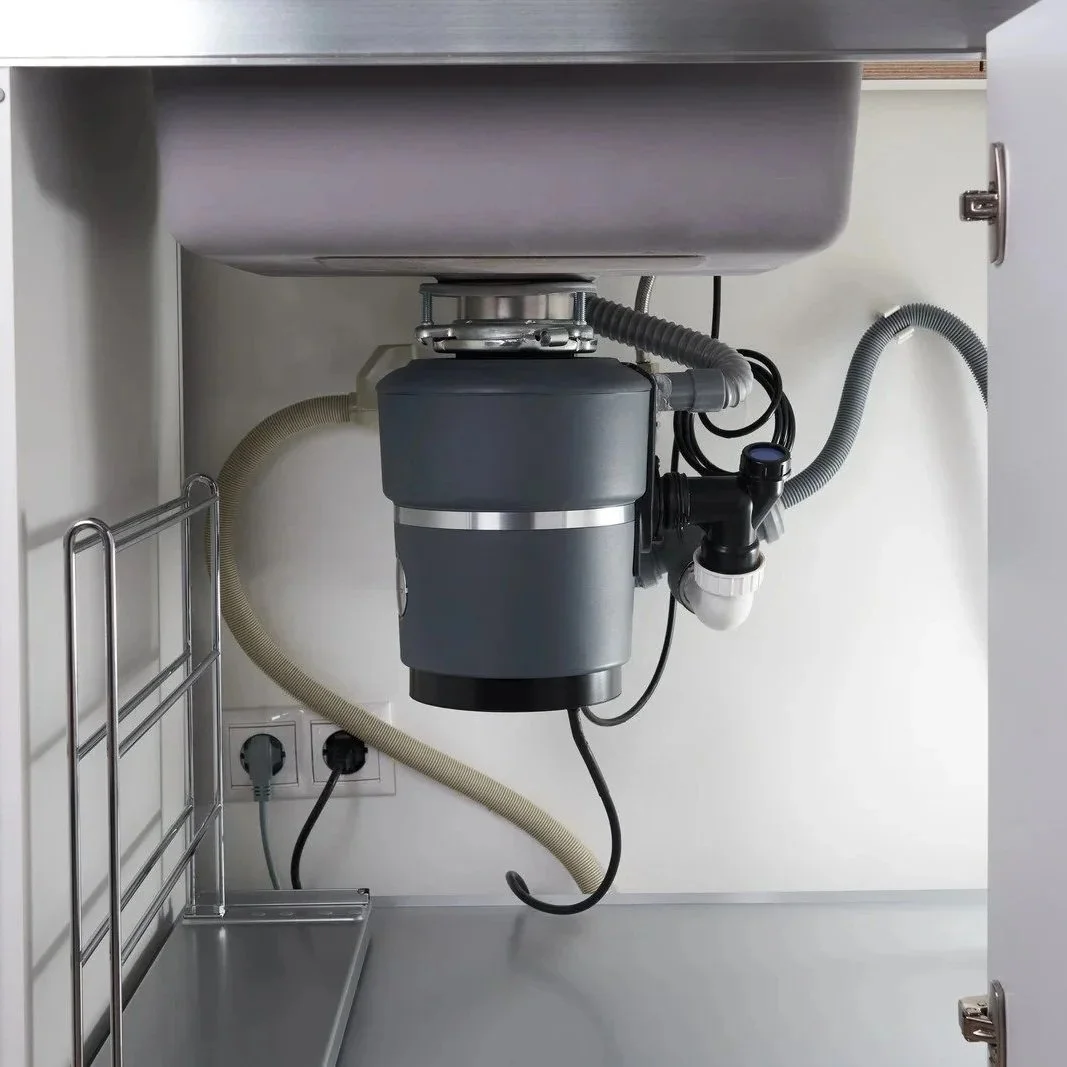
Garbage disposal vibration signals installation or structural issues, not motor failure, and fixing alignment early prevents noise, leaks, and damage.
Garbage disposal vibration tends to grab attention fast because it feels dramatic, loud, and unsettling in a space where homeowners expect smooth, predictable operation. A shaking sink or rattling countertop often triggers concern that something is broken inside the unit, yet vibration usually points to installation or structural factors rather than internal motor failure. Garbage disposals rely on balanced rotation, stable mounting, and consistent support to operate quietly, and when any of those elements fall out of alignment, vibration becomes the most obvious symptom. Understanding why a garbage disposal vibrates helps homeowners identify whether the issue stems from setup choices, surrounding plumbing conditions, or gradual changes that occur after installation.
Kitchen sinks act like amplifiers for vibration because they connect directly to countertops, cabinets, and plumbing lines. Even minor instability at the disposal level causes movement to spread outward, making the entire sink appear to shake. Over time, repeated vibration can loosen fittings, fatigue seals, and create secondary problems such as leaks or cracked drain components. Addressing garbage-disposal vibration early helps protect not only the appliance itself but also the surrounding cabinetry and plumbing infrastructure that support it.
Improper Mounting Assembly Alignment
Mounting assembly alignment remains one of the most common reasons a garbage disposal vibrates or shakes the sink. The mounting ring secures the disposal to the sink flange and must lock evenly to distribute weight and rotational force. When the ring locks unevenly or fails to seat completely, the disposal hangs slightly off-center, creating an imbalance during operation. That imbalance transfers motion upward into the sink basin, which then vibrates against the countertop and cabinet framing.
Over time, misalignment grows worse as vibration loosens mounting components further. Homeowners may notice that tightening the mounting ring temporarily reduces movement, only for vibration to return weeks later. That cycle often indicates that the disposal was never properly centered during installation. Correcting alignment requires fully disengaging the mounting assembly, reseating the flange, and locking the ring evenly so the disposal rests squarely beneath the sink rather than pulling to one side.
Loose Or Inadequate Sink Flange Support
The sink flange anchors the disposal at the top, making its stability critical to vibration control. Garbage disposal vibration frequently occurs when the flange lacks proper support or sealing beneath the sink. Thin sinks, especially stainless steel models, flex more than heavier materials, which magnifies vibration if the flange is not reinforced properly. Inadequate use of mounting putty, gaskets, or support rings allows the flange to shift slightly during operation.
As the disposal spins, even minimal flange movement becomes noticeable through the sink surface. Homeowners may feel the vibration directly through the basin or hear rattling sounds where the sink meets the countertop. Over time, repeated movement can degrade sealing materials, leading to leaks that are exacerbated by vibration. Addressing flange support requires stabilizing the sink itself and confirming that the flange assembly compresses evenly without distortion.
Drain Pipe Misalignment And Stress
Drain piping connected to a garbage disposal plays a significant role in vibration transmission. When pipes are misaligned, forced into position, or under constant tension, they resist natural movement during disposal operations. That resistance causes vibration to travel back into the disposal housing and upward into the sink. Garbage disposal vibration often worsens when rigid piping lacks flexibility to absorb motion.
An improper pipe slope exacerbates the issue by allowing water to pool in the discharge line. Standing water increases weight and pressure during operation, amplifying vibration as the disposal works harder to expel waste. Homeowners may hear gurgling or knocking sounds along with the shaking sink, which point to airflow and drainage resistance rather than internal mechanical failure. Correcting pipe alignment reduces stress on the disposal and restores smoother operation.
Cabinet Contact And Restricted Clearance
Cabinet clearance issues frequently contribute to garbage disposal vibration without being immediately obvious. Disposals installed in tight spaces may touch cabinet walls, shelves, or framing once they begin operating. Even light contact becomes problematic because vibration transfers directly into the cabinet structure, creating loud rattling and visible shaking at the sink.
Restricted clearance also prevents vibration from dissipating naturally. Instead of movement dispersing gradually, contact points concentrate vibration into small areas, increasing noise and perceived intensity. Homeowners may notice that vibration worsens after storing items beneath the sink that press against the disposal housing. Maintaining adequate clearance around the unit helps keep vibration within acceptable limits, rather than allowing it to spread through the kitchen structure.
Imbalanced Internal Components And Debris Issues
Although installation factors dominate most vibration complaints, internal imbalance can contribute when foreign objects or hardened debris accumulate inside the disposal chamber. Bones, utensils, or hardened food waste can lodge unevenly, disrupting rotational balance. Garbage disposal vibration caused by an internal obstruction often occurs suddenly after a specific use rather than gradually over time.
In these cases, vibration accompanies irregular grinding sounds or brief stalling during operation. Homeowners may feel shaking intensify as the disposal struggles to spin evenly. Removing obstructions restores balance, but repeated internal imbalance can stress mounting components if vibration persists. Maintaining proper use habits and avoiding inappropriate materials helps prevent internal causes from compounding existing installation vulnerabilities.
Electrical Supply And Motor Performance Factors
Electrical supply issues influence how smoothly a garbage disposal motor starts and maintains speed. Inconsistent voltage, shared circuits, or loose wiring connections can cause uneven motor engagement, resulting in vibration during startup and operation. Garbage disposal vibration linked to electrical issues often appears as a brief shake or surge when the unit turns on, rather than constant movement.
Over time, irregular power delivery forces the motor to compensate, increasing wear and amplifying vibration under load. Homeowners may notice lights dimming or breakers tripping alongside sink movement, which signals broader electrical strain. Addressing power supply stability helps restore consistent motor speed and reduces vibration that might otherwise be misattributed to mechanical defects.
Structural Sink And Countertop Considerations
Sink and countertop construction influence how vibration presents itself. Lightweight sinks and laminated countertops transmit movement more readily than heavier materials like cast iron or stone. Garbage disposal vibration may feel more severe in kitchens with flexible sink mounts or aging cabinet frameworks that lack rigidity. Even a properly installed disposal can cause noticeable shaking if surrounding structures fail to absorb movement effectively.
Over time, repeated vibration loosens fasteners that secure the sink and countertop, further increasing movement. Homeowners may observe vibration spreading beyond the sink area into adjacent counter sections. Reinforcing sink mounts and cabinet framing reduces vibration transmission and helps maintain long-term stability without altering the disposal itself.
Weight And Size Mismatch With Sink Design
Modern garbage disposals vary significantly in size and weight, and mismatches between the unit and sink design can create vibration issues. Heavy disposals installed on thin sinks place additional stress on mounting assemblies, increasing movement during operation. Garbage disposal vibration becomes more noticeable as the sink flexes under the unit’s weight.
Smaller sinks or older installations may lack reinforcement designed for newer, heavier disposal models. Homeowners upgrading units sometimes encounter vibration that did not exist previously, even when the installation appears correct. Evaluating sink compatibility before installation helps prevent vibration caused by structural mismatches and long-term mounting fatigue.
FAQs
Sink shaking during operation usually results from mounting misalignment, flange instability, or cabinet contact. The disposal’s rotational force transfers movement to the sink when support components fail to properly absorb vibration.
Vibration itself does not pose immediate danger, but prolonged movement can loosen plumbing connections, damage seals, and contribute to leaks. Addressing vibration early helps prevent secondary water damage and component wear.
Tightening may temporarily reduce vibration, but persistent issues often indicate deeper alignment or support problems. Proper correction typically requires reseating the disposal and addressing flange or drain alignment rather than repeated tightening.
Dishwasher drainage increases water flow and pressure through the disposal, which can amplify vibration if drain connections or mounting components are stressed. Combined operation exposes weaknesses in installation or pipe alignment.
Larger, heavier disposals can increase vibration if the sink and mounting system lack adequate support. Matching disposal size to sink design helps maintain stability and reduces movement during operation.