
Tank vs. Tankless vs. Hybrid Water Heaters: Which Is Best for Las Vegas Homes?
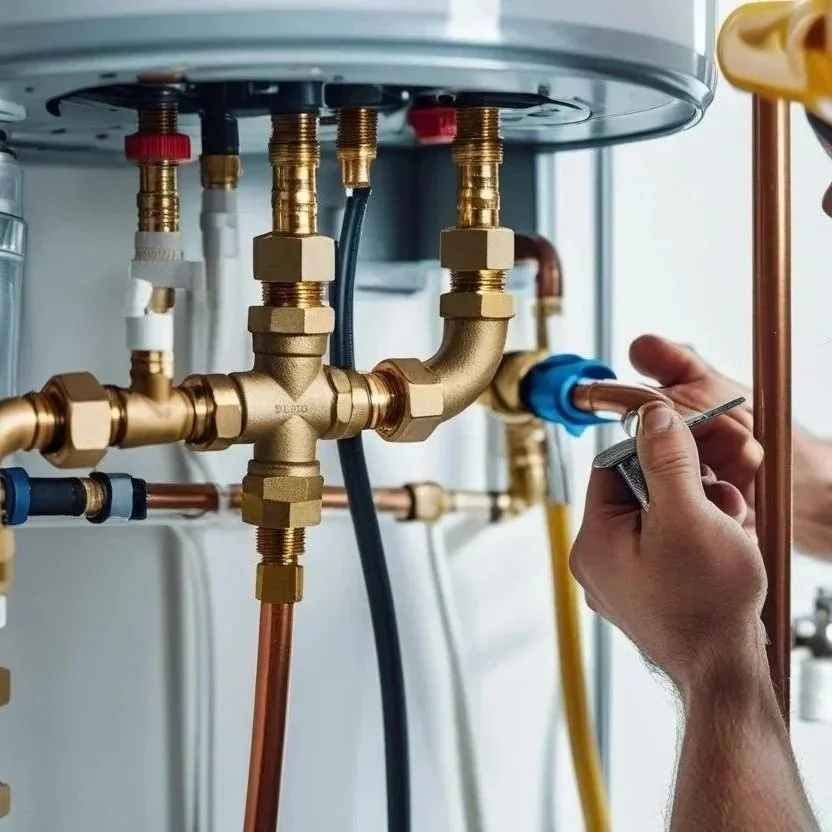
A technician inspecting and maintaining a residential water heater unit, checking connections, safety components, and system performance for reliable hot water.
Choosing a water heater in Las Vegas goes far beyond selecting a tank size or comparing price tags. Desert climate conditions, mineral-heavy water, and year-round demand for reliable hot water place unique pressures on residential systems. Water heaters operate quietly in the background, yet they influence daily comfort, monthly utility bills, and long-term maintenance costs in ways homeowners often do not fully consider until problems arise. Comparing tank vs tankless vs hybrid water heaters requires a realistic look at how each system behaves under actual household conditions rather than idealized marketing scenarios.
Las Vegas homes benefit from warm ambient temperatures that reduce incoming groundwater heating demands, but those same homes often face high mineral content that accelerates wear inside plumbing systems. Water heater selection affects how efficiently heat is generated, how long the equipment lasts, and how well the system responds to fluctuating household usage. Understanding how tank, tankless, and hybrid systems interact with local conditions helps homeowners choose equipment that supports both comfort and durability without creating hidden performance limitations.
Traditional Tank Water Heaters And Everyday Reliability
Traditional tank water heaters store a fixed volume of heated water that remains ready for immediate use. This approach offers predictability, especially for households with overlapping hot water needs like simultaneous showers, laundry, and dishwashing. Tank systems perform well when usage patterns remain consistent, allowing stored water to absorb demand spikes without noticeable temperature drops. Many Las Vegas homes still rely on tank heaters because installation is straightforward and replacement often requires minimal system changes.
Energy use remains the primary drawback of tank systems. Stored water loses heat over time, even when not in use, which increases energy consumption and utility costs. Mineral buildup inside the tank also occurs faster in hard water environments common throughout Las Vegas, reducing heating efficiency and increasing stress on internal components. Regular flushing helps manage sediment, but does not eliminate the long-term impact. While tank heaters provide reliable performance, homeowners must balance lower upfront costs against higher ongoing energy use and maintenance demands.
Tankless Water Heaters and On-Demand Performance
Tankless water heaters heat water only when a fixture requests it, eliminating stored reserves entirely. Cold water enters the unit and passes through heating elements or burners that instantly raise the temperature. This on-demand design removes standby heat loss and allows homeowners to draw hot water continuously without worrying about tank depletion. Space savings also appeal to Las Vegas homeowners, where garage and utility room layouts often compete with storage needs.
Capacity limitations represent the most common challenge with tankless systems. Output depends on flow rate rather than stored volume, meaning multiple simultaneous fixtures can strain the system. Larger households may require multiple units or higher capacity models to maintain comfort during peak usage. Installation complexity also increases when electrical panels or gas lines require upgrades. While tankless systems deliver efficiency and longevity benefits, matching system capacity to real usage patterns remains critical to avoiding performance frustration.
Hybrid Water Heaters And Heat Pump Efficiency
Hybrid water heaters combine traditional storage tanks with heat pump technology that pulls heat from the surrounding air. Instead of generating heat directly, the system transfers existing heat into the stored water, dramatically reducing electricity consumption. Warm Las Vegas air creates favorable operating conditions for heat pumps, allowing hybrid systems to perform efficiently for much of the year. Stored water capacity provides familiar reliability while energy savings exceed those of conventional electric tanks.
Space and airflow requirements deserve careful consideration. Hybrid systems need adequate clearance to move air effectively, which can limit placement options in compact utility areas. Operating noise from heat pump components also differs from standard tank heaters, which some homeowners notice in garages or indoor utility rooms. Higher upfront costs accompany advanced technology, but energy savings over time often offset the investment for households with steady daily hot water demand.
Water Quality And System Longevity In Las Vegas
Local water quality plays a major role in system performance regardless of heater type. Hard water accelerates mineral accumulation on heating elements, inside tanks, and within tankless heat exchangers. Tank systems experience sediment buildup that reduces efficiency, while tankless units face scaling that restricts flow and heat transfer. Hybrid systems combine both risks and require maintenance strategies tailored to heat pump components and storage tanks.
Water treatment options, such as softeners or descaling maintenance routines, help extend system life across all heater types. Ignoring water quality shortens equipment lifespan and increases repair frequency regardless of efficiency ratings. Las Vegas homeowners benefit from selecting systems with accessible maintenance features and planning for long-term care rather than focusing only on initial installation.
Energy Costs And Household Usage Patterns
Energy savings depend as much on usage behavior as equipment efficiency. Households with sporadic hot water use benefit more from tankless systems that avoid standby losses. Homes with predictable daily routines may see stronger returns from hybrid systems that maintain stored water efficiently. Traditional tanks deliver consistent comfort but consume more energy over time, regardless of usage frequency.
Electricity and gas rates also influence outcomes. Las Vegas energy pricing favors efficient systems that minimize peak load demand. Modeling expected hot water usage helps determine whether energy savings justify higher upfront costs. Matching system type to actual household habits remains one of the most overlooked steps in water heater selection.
Installation Constraints And Home Design
Physical space, ventilation, and infrastructure shape how systems install smoothly. Tank systems require floor space and clearance for replacement. Tankless units demand adequate power or gas supply capacity and proper venting when gas-fired. Hybrid systems require airflow volume and drainage for condensation. Each option introduces unique design considerations that affect installation cost and feasibility.
Older homes may require upgrades to support newer technology, which adds complexity and expense. Evaluating installation constraints early prevents surprises that erode projected savings. Professional assessments tailored to Las Vegas housing styles help homeowners align expectations with realistic installation outcomes.
Balancing Comfort, Convenience, and Cost
Choosing between tank vs tankless vs hybrid water heaters involves balancing comfort expectations with long-term cost control. Some homeowners prioritize endless hot water and space efficiency, while others value predictable performance and simpler maintenance. Hybrid systems appeal to those seeking energy savings without sacrificing stored capacity.
No single system fits every household equally. The best choice reflects how the home uses hot water, how long the homeowner plans to stay in the property, and how much maintenance involvement feels acceptable. Thoughtful evaluation avoids the common trap of selecting based on trends rather than practical needs.
FAQs
Hybrid water heaters perform efficiently in warm climates because heat pump technology benefits from higher ambient air temperatures. Tankless systems also perform well due to reduced groundwater heating demand.
Tankless systems often cost less to operate than traditional tanks due to on-demand heating. Operating costs depend on usage volume, energy source, and system sizing.
Hybrid systems produce some noise from the heat pump fan and compressor. Noise levels remain modest but may be noticeable in enclosed spaces.
Hard water can cause scaling inside tankless heat exchangers, reducing efficiency and flow. Regular descaling maintenance helps manage this issue.
Tankless water heaters often last longer than tank systems when properly maintained. The lifespan of a hybrid system varies based on heat pump care and water quality management.