
Prevent Bathroom Water Damage: The Hidden Leaks That Ruin Floors, Toilets, Tanks, Supply Lines
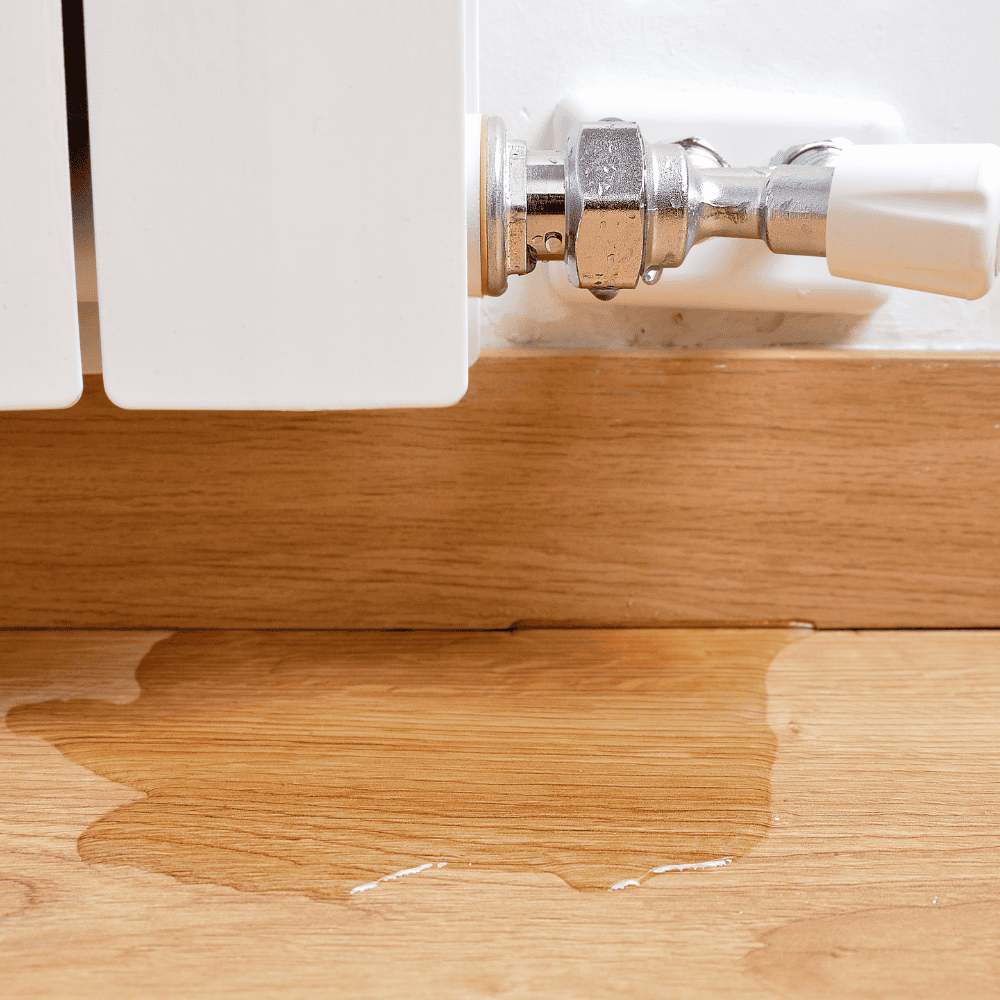
A close-up of a white wall-mounted radiator with a visible water leak dripping from the silver metal pipe connection. A small puddle of water has formed on the light-colored wood flooring directly beneath the unit.
Bathroom water damage rarely starts with a dramatic flood. In most homes, it begins quietly with small leaks that go unnoticed until the flooring softens, the subfloors rot, or the ceilings below stain and sag. Toilets, toilet tanks, and supply lines create some of the most damaging hidden leak scenarios because they sit directly over finished floors and operate under constant pressure. By the time visible symptoms appear, moisture has often been spreading for weeks or months.
Hidden bathroom leaks create a unique problem because they remain active even when fixtures appear to function normally. A toilet may flush properly, a tank may look dry at a glance, and a supply line may feel tight, yet water can still migrate slowly into flooring materials. Understanding where these leaks originate and how they behave helps homeowners intervene before structural damage escalates. Preventing bathroom water damage depends less on reacting to floods and more on identifying quiet failures early.
Toilet Base Leaks That Soak Subfloors Without Warning
Toilet base leaks cause some of the most destructive bathroom damage because water escapes beneath the fixture rather than onto visible surfaces. When the wax ring or sealing system fails, water leaks only during flushing and flows directly under the toilet. Flooring may feel dry for long periods because moisture remains trapped below the surface, slowly saturating plywood or OSB subfloors.
This type of leak often goes unnoticed until flooring becomes soft, tile loosens, or persistent odors develop. Vinyl flooring may bubble, while tile grout may discolor near the toilet base. Replacing the wax ring alone does not always solve the problem if the toilet rocks or the flange sits at the wrong height. Stabilizing the toilet and correcting flange conditions prevent repeat leaks that quietly destroy floors over time.
Tank To Bowl Leaks That Drip Into Cabinets And Flooring
The connection between the toilet tank and bowl relies on gaskets and mounting bolts that degrade gradually. When these seals fail, water leaks during flush cycles and drips down the back of the bowl. Because the leak often stays behind the toilet, homeowners miss it until damage spreads outward.
Water from the tank to the bowl leaks commonly runs down bolts or the rear of the fixture, soaking baseboards and flooring seams. Moisture may collect inside cabinets or under vanity edges before becoming visible on the bathroom floor. These leaks worsen immediately after flushing rather than continuously, which makes detection harder. Prompt gasket replacement and bolt inspection stop water before it reaches structural materials.
Cracked Toilet Tanks That Release Water Unpredictably
Cracked toilet tanks present a unique water damage risk because failure can be sudden rather than gradual. Hairline cracks may leak slowly at first, producing intermittent moisture that dries between uses. Over time, pressure and temperature changes widen the crack until the tank ruptures.
When a tank fails, several gallons of water are released rapidly, flooding floors and adjacent rooms. Because tanks remain full at all times, damage occurs regardless of toilet use. Cracked tanks cannot be repaired safely. Shutting off the supply immediately and replacing the tank prevents catastrophic damage that spreads far beyond the bathroom.
Supply Line Leaks That Damage Floors From The Inside Out
Toilet supply lines operate under constant pressure, making even small failures dangerous. Slow leaks at compression fittings or aging hoses often drip behind the toilet, where water remains hidden. These leaks saturate the flooring gradually, often escaping detection until structural damage becomes visible.
Older braided or plastic supply lines deteriorate internally before external signs appear. Corrosion at valve connections also causes seepage that worsens under pressure. Replacing supply lines proactively and checking connections periodically reduces the risk of sudden failure and prolonged moisture exposure.
Fill Valve Leaks That Mimic Condensation
Fill valve leaks create moisture patterns that often get mistaken for condensation. A leaking valve sprays or drips water inside the tank, allowing moisture to escape through bolt holes or overflow channels. Water then appears on the exterior surface of the tank or at the base of the toilet.
Because the toilet still functions normally, homeowners often ignore the moisture until flooring damage appears. Fill valve leaks usually worsen during refill cycles rather than continuously. Replacing the valve restores proper water level control and prevents moisture from escaping into surrounding materials.
Condensation That Becomes A Water Damage Contributor
Condensation itself does not represent a plumbing failure, but persistent moisture can still damage floors over time. In humid environments, cold toilet tanks sweat continuously, allowing water to drip onto the flooring daily. Over months, that moisture degrades grout, vinyl seams, and subfloor materials.
Condensation damage often appears as darkened grout lines, soft flooring edges, or mold growth near the toilet base. Improving ventilation, insulating the tank, or managing indoor humidity reduces condensation enough to prevent long-term damage. While condensation seems harmless, sustained exposure creates conditions similar to slow leaks.
Why Bathroom Flooring Fails Before Leaks Become Obvious
Bathroom flooring materials hide moisture effectively. Tile and vinyl resist surface water but trap moisture underneath. Once water penetrates seams or grout, it spreads laterally through subfloors without appearing above. By the time flooring softens or tiles loosen, damage has already progressed extensively.
Wood subfloors absorb moisture and lose strength gradually. Mold growth accelerates decay and compromises indoor air quality. Early detection prevents structural repair that far exceeds the cost of fixing the original leak. Regular inspection around toilets remains one of the most effective prevention strategies.
Simple Inspection Habits That Prevent Major Damage
Routine inspection helps identify hidden leaks before they cause significant damage. Checking around toilet bases after flushing, feeling for moisture behind tanks, and inspecting supply line connections catches problems early. Paper towels placed behind fixtures reveal slow leaks that remain invisible on surfaces.
Listening for continuous refill sounds and monitoring water bills also helps identify hidden toilet leaks. Any unexplained increase in water usage often signals internal leakage. Early intervention protects floors and prevents escalation.
When Replacement Protects Floors Better Than Repair
In some cases, replacement offers better protection than repeated repairs. Aging toilets with recurring leaks, cracked tanks, or unstable bases create ongoing risk. New fixtures correct alignment issues, incorporate updated sealing systems, and reduce failure likelihood.
Replacement also allows inspection and repair of damaged flooring beneath the toilet before new leaks develop. Addressing both fixture and structural issues together restores bathroom integrity and prevents future damage cycles.
FAQs
Toilet base leaks caused by failing wax rings are among the most common and damaging because water flows directly into the subfloor.
Soft flooring, loose tiles, odors, or moisture appearing only after flushing indicate a possible base leak.
Yes. Supply lines operate under constant pressure and can cause significant water damage if they leak or fail.
Yes. Persistent condensation drips can saturate flooring over time, leading to rot and mold.
A quick inspection every few months and after any repair helps catch leaks early and prevent long-term damage.
Trust Adaven Plumbing for an effectively and efficiently functioning residential plumbing system. We offer drain cleaning, water leak detection and repair, toilet repairs, home repiping, faucet repair and replacement, and plumbing maintenance solutions in Las Vegas. We have a team of licensed technicians who deliver quality work and 24-hour emergency assistance. Call today to schedule a free onsite estimate.