
Garbage Disposal Not Spinning: How To Safely Unjam It And When Not To
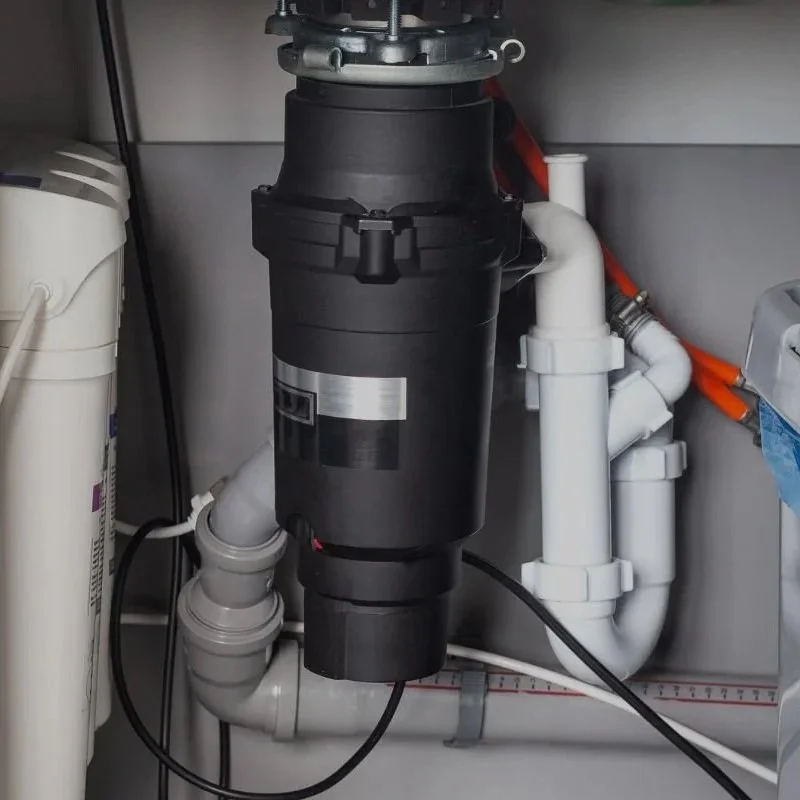
A modern garbage disposal unit installed under a kitchen sink, featuring complex white PVC piping and a sleek black motor housing.
A garbage disposal that stops spinning creates immediate anxiety because the sink becomes unusable and the problem feels mechanical rather than cosmetic. When the switch flips and nothing happens, or the unit hums without movement, the disposal is telling you that rotation has been blocked or disabled for protection. This situation sits at a crossroads where a safe, correct response can restore operation quickly, while the wrong response can turn a simple jam into a burned-out motor or personal injury. Understanding what actually stops a disposal from spinning helps homeowners respond calmly and effectively.
Disposals stop spinning for specific reasons. Internal safety features, mechanical obstructions, and wear-related failures all present differently. Treating every non-spinning disposal as a simple jam leads to mistakes that shorten the lifespan or create dangerous conditions. Knowing how to unjam a disposal safely and when to stop trying separates a successful fix from a costly replacement.
Why Garbage Disposals Stop Spinning In The First Place
Most non-spinning disposals still have power but cannot rotate due to resistance. Food waste packed too tightly, fibrous materials wrapped around the impeller, or foreign objects lodged inside the chamber physically prevent movement. The motor attempts to start, encounters resistance, and either hums or shuts down to prevent overheating.
Some disposals stop spinning because the internal overload protector trips. This occurs after repeated resistance causes heat buildup. The motor shuts off even though the jam remains. Less commonly, internal electrical failure prevents rotation entirely, even when the chamber is clear. Differentiating between these causes determines whether unjamming is appropriate or whether replacement is inevitable.
What Makes A Disposal Safe To Unjam
A disposal can be safely unjammed when resistance comes from a removable obstruction and the internal components remain intact. These situations usually involve recently introduced items such as silverware, bones, fruit pits, or compacted food waste. The key indicator is that the disposal previously worked normally and stopped suddenly.
In these cases, restoring free rotation returns the disposal to full function. Safety depends on removing power completely and using proper tools. Hands should never enter the disposal chamber, regardless of power status. Respecting this rule prevents serious injury even during routine fixes.
The First Step Always Involves Cutting Power
Before attempting any inspection or repair, power must be disconnected at the source. Turning off the wall switch alone is not enough. Power should be cut at the breaker to eliminate any chance of accidental activation. Disposals can energize unexpectedly if wired improperly or if switches fail.
This step protects against injury and prevents the motor from overheating further. A disposal that hums without spinning generates heat rapidly. Cutting power allows the unit to cool and stabilizes the situation before intervention begins.
How To Check For Obstructions Safely
With the power off, a flashlight provides visibility into the chamber. Many jams are visible immediately. Foreign objects often sit wedged between the impeller and grinding ring. Long handled tongs or pliers allow safe removal without placing hands near moving parts.
If no obvious object appears, resistance may come from packed food waste. Removing loose material improves access and reduces load before attempting rotation. Visual inspection informs the next step rather than guessing blindly.
Using The Bottom Wrench To Restore Rotation
Most disposals include a hex-shaped socket on the bottom of the unit. Inserting the appropriate wrench allows manual rotation of the impeller plate. Turning the wrench back and forth gently breaks resistance and frees jammed material.
Smooth rotation indicates that the jam has cleared. Grinding or uneven resistance suggests lingering obstruction or internal damage. Forcing rotation aggressively risks bending components. The goal is to restore movement, not overpower resistance.
Why The Reset Button Matters But Does Not Fix Jams
After clearing resistance and allowing the disposal to cool, the reset button restores power to the motor. This button trips during overheating, not during obstruction removal. Pressing it without clearing the jam simply allows the motor to attempt spinning again under the same conditions.
Resetting becomes appropriate only after free rotation has been restored manually. Treating the reset as a fix rather than a safeguard often leads to repeated shutdowns and motor damage.
When A Disposal Should Spin Freely By Hand
A healthy disposal spins freely with minimal resistance when turned manually. Some drag from internal components is normal, but rotation should feel smooth and consistent. Grinding, catching, or looseness indicates damage beyond a simple jam.
Testing manual rotation provides valuable insight. If the disposal cannot rotate freely with no load, attempting to run it electrically risks further damage. This test often determines whether repair or replacement makes sense.
Signs That Unjamming Is Not The Right Move
Certain symptoms indicate that unjamming should stop immediately. A disposal that does not spin by hand even after clearing the chamber likely has internal mechanical failure. A unit that hums with no resistance, felt manually, often suffers from electrical or motor issues.
Burning smells, repeated reset tripping, or visible corrosion also signal deeper problems. In these cases, continued attempts to unjam waste time and accelerate failure. Replacement becomes the safer and more reliable option.
Why Forcing A Jam Makes Things Worse
Forcing rotation or repeatedly toggling power increases stress on internal components. Motors designed for intermittent resistance cannot tolerate sustained stalling. Bearings wear, windings overheat, and internal parts deform under excessive force.
What begins as a removable obstruction can escalate into a broken impeller or damaged grinding ring if forced. Gentle, deliberate action protects the unit and preserves the possibility of a successful fix.
How Improper Items Create Recurring Jams
Repeated non-spinning incidents often trace back to usage habits. Fibrous foods wrap around impellers. Starchy foods swell and pack tightly. Non-food items create sudden hard stops. Each incident stresses the motor and increases future failure risk.
Recognizing these patterns helps prevent recurrence. Proper feeding and awareness reduce the likelihood of future jams and extend disposal lifespan significantly.
When Replacement Is The Responsible Choice
Replacement becomes appropriate when the disposal no longer spins freely by hand, trips the reset repeatedly, or shows signs of internal wear or corrosion. Older units with frequent jams often lack the torque or internal condition needed for reliable operation.
Replacing a failing disposal prevents unexpected breakdowns and restores predictable performance. Modern units offer improved corrosion resistance and motor protection that reduces future issues when used correctly.
Preventing Non-Spinning Problems Going Forward
Prevention focuses on respecting how disposals work. Feeding waste gradually allows centrifugal force to operate effectively. Running cold water flushes debris and prevents grease buildup. Avoiding fibrous and hard materials reduces jam risk.
Listening to changes in sound and response catches problems early. Addressing minor resistance promptly prevents escalation into non-spinning conditions.
FAQs
The motor has power but cannot rotate due to a jam or internal resistance.
No. Hands should never enter the disposal chamber, even when power is disconnected.
Most disposals use a hex wrench at the bottom to manually rotate the impeller.
If it will not spin freely by hand or trips the reset repeatedly, replacement is usually needed.
No. Resetting without clearing the cause risks motor damage and shortens lifespan.
Call Adaven Plumbing for affordable and lasting tankless water heater installations, water filtration, water softeners, garbage disposal installation, garbage disposal repair, and garbage disposal replacement. Our team stays up-to-date on the current plumbing techniques and technology. Enjoy affordable pricing and same day service. We offer on-time and reliable services. Call today to book an appointment.