
Garbage Disposal Drains Slowly, Disposal Problem, or Clogged Sink
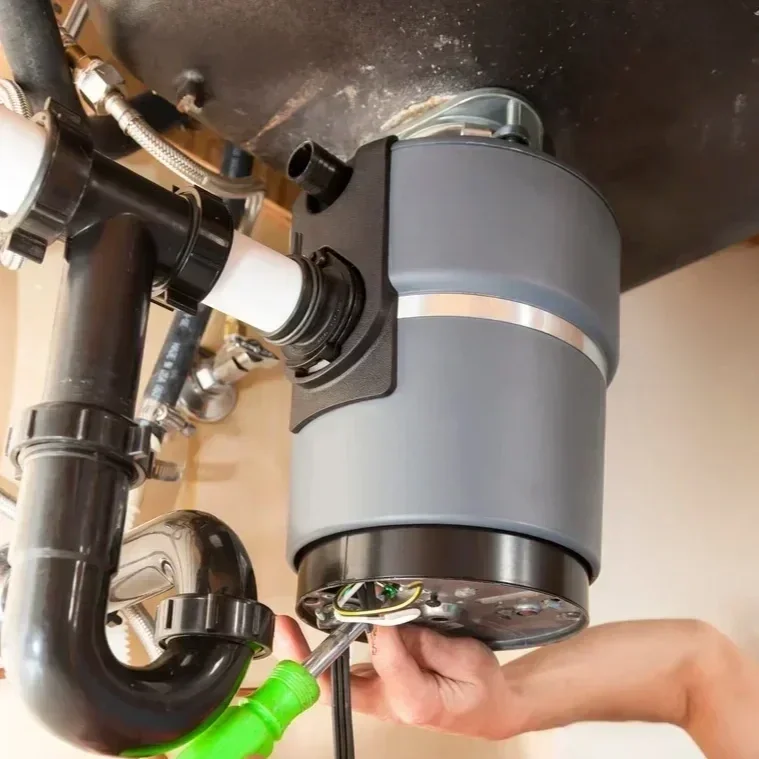
A garbage disposal that drains slowly creates confusion because the symptoms sit right at the intersection of appliance performance and plumbing flow.
A garbage disposal that drains slowly creates confusion because the symptoms sit right at the intersection of appliance performance and plumbing flow. Water backs up into the sink, food waste lingers longer than it should, and the disposal sounds like it is working even though the basin refuses to clear. Many homeowners immediately assume the disposal itself is failing, while others reach for chemical drain cleaners. In reality, slow drainage usually involves a combination of factors, and identifying whether the problem lies inside the disposal or beyond it determines whether the fix is simple or increasingly disruptive.
Garbage disposals do not actually move water through the plumbing system. They break food into smaller particles and rely entirely on the drain line to carry that material away. When drainage slows, either the disposal is no longer processing waste effectively, or the plumbing downstream cannot move water fast enough. Understanding how those two systems interact explains why slow drainage often develops gradually and why treating only one side of the equation rarely solves the issue completely.
How A Garbage Disposal Is Supposed To Drain
A properly functioning disposal allows water to pass through the grinding chamber freely while breaking down food waste. As water flows, centrifugal force pushes ground particles outward and downward into the drain opening. The disposal itself does not store water or create suction. It depends on gravity and an open drain path.
When everything works correctly, water should never pool in the sink during normal operation. Even with the disposal off, water should drain at a steady rate. If water lingers only when the disposal runs, that behavior suggests internal flow restriction. If water drains slowly regardless of whether the disposal is on, the issue usually sits in the drain piping rather than the appliance.
Why Grease And Food Sludge Cause Slow Disposal Drainage
One of the most common disposal-related causes of slow drainage involves grease and food sludge buildup inside the unit and the immediate drain connection. Grease enters the disposal in liquid form, then cools and solidifies on internal surfaces. Food particles stick to that grease layer and accumulate gradually.
This buildup narrows the discharge opening and slows water movement even though the disposal still spins normally. The grinding sound remains unchanged, which leads homeowners to assume the disposal is fine. Over time, the chamber becomes coated with residue that restricts flow. Running water longer may temporarily improve drainage, but the restriction continues to worsen until addressed.
How Partial Drain Line Clogs Mimic Disposal Failure
Partial clogs in the drain line create symptoms that closely resemble disposal problems. Water drains, but slowly. The sink may clear eventually, then back up again during the next use. These clogs often form downstream from the disposal where grease, soap residue, and fine food particles accumulate.
Because the disposal sits directly above the clog, water backs up into the sink, making the disposal seem responsible. In reality, the appliance is pushing waste into a drain line that cannot carry it away efficiently. Chemical cleaners rarely resolve this type of buildup fully and may damage pipes while leaving the restriction intact.
Why The P Trap Is A Common Trouble Spot
The P trap beneath the sink serves an important purpose, but it also becomes a natural collection point for debris. Heavier particles settle there, especially when water flow slows. In disposal-equipped sinks, ground food and grease combine in the trap and gradually reduce its effective diameter.
A partially blocked P trap causes slow drainage without complete blockage. Water drains, but not fast enough to keep up with the faucet flow. Because the trap sits close to the disposal, symptoms appear disposal-related even though the appliance itself may be functioning correctly. Cleaning the trap often restores normal drainage quickly when this is the root cause.
How Improper Disposal Installation Affects Drain Speed
Installation issues frequently contribute to slow drainage problems. Drain lines that slope incorrectly, use improper fittings, or include unnecessary loops restrict water movement. Disposals installed without adequate fall to the trap or drain rely on minimal gravity assistance, which slows flow significantly.
Improperly sized drain pipes also create bottlenecks. A disposal pushing waste into a line not designed for that volume struggles to drain effectively. These issues often show up shortly after installation or renovation and persist despite normal disposal operation.
Why A Failing Disposal Can Slow Drainage
Not all slow drainage issues originate in the plumbing. A disposal with worn grinding components may no longer break food into sufficiently small particles. Larger pieces pass into the drain and increase the likelihood of buildup downstream. The disposal runs and sounds normal, but waste processing efficiency has declined.
Corrosion inside older disposals also reduces internal clearance. Rough surfaces trap debris more easily and slow water movement through the chamber. In these cases, drainage improves temporarily after cleaning but deteriorates again as internal wear continues. The disposal contributes directly to the problem rather than merely revealing a clogged drain.
How To Tell If The Problem Is The Disposal Or The Sink Drain
Several observations help narrow the source. If water drains slowly even when the disposal is off and empty, the issue almost always lies in the drain piping. If drainage improves when the disposal runs, the clog likely sits further down the line.
If water pools specifically when the disposal is on and drains normally otherwise, internal disposal restriction becomes more likely. Listening also helps. A disposal that sounds strained or labored while draining slowly may be struggling with internal buildup or wear rather than a downstream clog.
Why Chemical Drain Cleaners Often Make Things Worse
Chemical cleaners feel convenient, but they rarely solve disposal-related drainage problems effectively. Grease and food sludge often resist chemical breakdown, especially in partially clogged lines. The chemicals may burn a small channel through the blockage while leaving most of it intact.
These products also damage disposal components and piping over time. Heat generated by chemical reactions can warp plastic parts and accelerate corrosion. Repeated use increases long-term risk without restoring proper drainage. Mechanical cleaning proves far more effective and predictable.
When Simple Cleaning Can Restore Drainage
In the early stages, cleaning can restore drainage effectively. Flushing the disposal with hot water and appropriate degreasing agents helps remove internal residue. Cleaning the P-trap clears accumulated debris. These steps often resolve slow drainage when the buildup remains localized.
Consistency matters. One-time cleaning helps temporarily, but long-term improvement requires changes in usage habits. Without prevention, buildup returns quickly, and drainage slows again.
When A Clogged Sink Line Needs Professional Attention
Slow drainage that persists after basic cleaning usually indicates deeper drain line buildup. Grease and residue may coat pipe walls beyond the trap, where access becomes limited. Professional cleaning removes this buildup thoroughly and restores full flow.
Ignoring these clogs allows them to worsen until complete blockage occurs. Addressing partial clogs early prevents emergency backups and water damage. A professional evaluation determines whether the disposal contributes to the issue or whether the plumbing system requires attention.
When Disposal Replacement Makes Sense
Replacement becomes practical when slow drainage stems from disposal inefficiency rather than drain blockage. Older disposals with corrosion, worn grinding rings, or repeated buildup issues often fail to process waste adequately. Cleaning provides only short-term relief.
Replacing the disposal resets internal surfaces and restores proper waste breakdown. Paired with drain cleaning, replacement delivers lasting improvement. Continuing to rely on a failing disposal often leads to recurring drainage issues regardless of plumbing condition.
Preventing Slow Drainage Going Forward
Prevention focuses on how the disposal gets used. Avoid sending grease down the drain. Feed waste gradually with cold water running to flush particles. Limit starchy and fibrous foods that create a paste-like residue.
Regular flushing and inspection reduce buildup before it becomes restrictive. Paying attention to early changes in drainage speed allows intervention before full blockage develops. Proper habits protect both the disposal and the drain system.
FAQs
If water drains slowly even when the disposal is off, the drain line is usually the issue rather than the disposal.
Yes. Inefficient grinding, grease buildup, and internal corrosion can contribute to downstream clogs.
Ground food and grease may be accumulating in the trap or drain line, restricting flow.
Chemical cleaners often damage disposals and pipes and rarely solve the underlying problem.
Replacement makes sense when cleaning and drain clearing do not restore proper drainage, and the disposal shows signs of wear or corrosion.
Call Adaven Plumbing for affordable and lasting tankless water heater installations, water filtration, water softeners, garbage disposal installation, garbage disposal repair, and garbage disposal replacement. Our team stays up-to-date on the current plumbing techniques and technology. Enjoy affordable pricing and same day service. We offer on-time and reliable services. Call today to book an appointment.