
Garbage Disposal Blades Aren’t Real: How Disposals Actually Grind Food
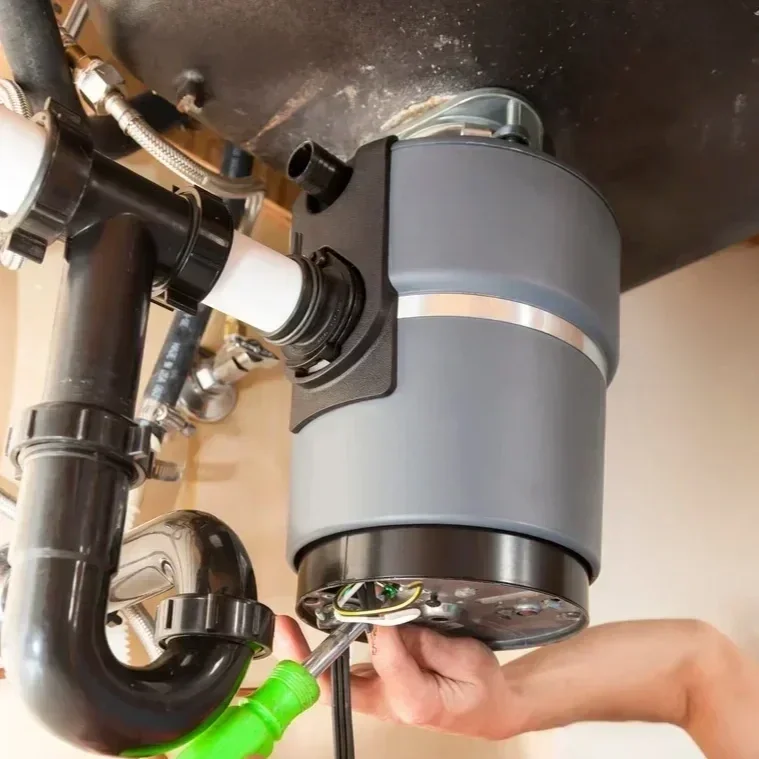
Many homeowners picture sharp spinning blades slicing food inside a garbage disposal.
Many homeowners picture sharp spinning blades slicing food inside a garbage disposal. That image feels logical because grinding noises sound aggressive, and food disappears quickly. In reality, garbage disposals do not contain blades at all. The grinding process relies on a completely different mechanism designed to break food apart through force, impact, and abrasion rather than cutting. Understanding how disposals actually work helps explain why certain foods cause problems, why jams happen, and why some usage habits shorten a unit’s lifespan.
The blade myth persists because the disposal chamber is hidden from view. Without seeing the internal components, it is easy to assume something sharp is doing the work. Disposals operate more like a centrifugal crusher than a blender. That distinction matters because it changes how food behaves inside the unit and how homeowners should use the system to avoid damage and clogs.
What Actually Lives Inside A Garbage Disposal
Inside the disposal sits a spinning metal plate called an impeller plate. Attached to that plate are one or two small metal arms known as impellers or lugs. These arms are not sharp and do not cut. They swing freely on pivots and rely on centrifugal force when the motor spins.
Surrounding the chamber is a stationary metal ring called the grinding ring. This ring has textured ridges rather than sharp edges. When the motor runs, the impeller plate spins rapidly, flinging food outward. The swinging impellers slam food against the grinding ring repeatedly until particles become small enough to wash through the drain opening. The process resembles a rock tumbler more than a knife.
How Centrifugal Force Does The Real Work
Centrifugal force plays a central role in the disposal operation. As the impeller plate spins, food gets thrown outward toward the grinding ring. The faster the plate spins, the harder the food hits the ring. Repeated impacts break food down gradually rather than slicing it instantly.
This process explains why disposals struggle with certain materials. Soft food breaks down easily under repeated impact. Hard or fibrous items resist crushing and bounce around longer, increasing stress on components. Because nothing slices cleanly, the disposal depends entirely on force and friction to do the job.
Why Swinging Impellers Matter More Than Sharp Edges
The swinging design of the impellers allows them to retract when encountering resistance. If a hard object enters the chamber, the impellers swing back instead of snapping. This design protects the motor and prevents catastrophic damage from sudden impact.
However, this protection has limits. When something too hard enters the chamber, the impellers strike it repeatedly without breaking it down. That repeated contact creates loud grinding noises and can cause jams. The lack of blades explains why disposals cannot simply chop through bones or metal the way many people expect.
How Food Size And Volume Affect Grinding
Because disposals rely on repeated impact, food size matters. Smaller pieces break down faster because they move freely and strike the grinding ring efficiently. Large chunks bounce around longer and create uneven loads on the motor.
Volume matters just as much. Overloading the chamber reduces available space for centrifugal movement. When food is packed tightly, impellers cannot fling it outward effectively. The motor struggles to spin under load, leading to humming, stalling, or thermal shutdown. Gradual feeding allows the grinding mechanism to work as intended.
Why Fibrous Foods Cause So Many Problems
Fibrous foods behave differently inside a disposal. Instead of breaking apart cleanly, fibers wrap around the impellers and grinding plate. Celery, corn husks, onion skins, and similar items tangle rather than crush.
Because there are no blades to cut fibers, the disposal relies on tearing through repeated impact. Fibers resist that process and often accumulate into rope-like bundles. These bundles interfere with impeller movement and restrict water flow, leading to jams and slow drainage. The blade myth encourages misuse by making people believe disposals can slice through anything.
How Water Assists The Grinding Process
Water does not help grind food directly, but it plays a critical supporting role. Flowing water carries food particles toward the grinding ring and flushes ground waste out of the chamber. Without sufficient water, ground particles linger and pack together.
Cold water keeps grease solid so it can break apart and move through the system. Hot water melts grease temporarily, allowing it to coat internal surfaces instead of flushing away. Proper water flow allows the centrifugal grinding process to work efficiently rather than letting residue accumulate.
Why Disposals Sound Aggressive Without Blades
The loud grinding noise often convinces people that blades must be involved. In reality, the sound comes from metal impellers striking food and the grinding ring repeatedly. Harder items produce louder, sharper sounds because they resist crushing.
Normal grinding noise smooths out quickly as food breaks down. Persistent loud noise indicates resistance rather than cutting action. Understanding this helps homeowners recognize when the disposal is struggling instead of functioning normally.
What Happens When Something Non-Food Enters
When metal or other non-food items enter the disposal, the impellers fling them against the grinding ring violently. Because nothing cuts the object, it remains intact and rattles loudly. The impellers retract to avoid breaking, but the object continues bouncing around.
This situation creates dramatic noise and vibration. Removing the object promptly prevents damage to the grinding ring or impellers. Continued operation risks bending components or damaging bearings, even though no blades are present to snap.
Why Dullness Is Not The Issue People Think It Is
Many people believe their disposal struggles because the blades are dull. Since there are no blades, dullness is not a factor. Performance decline usually stems from corrosion, buildup, or motor wear rather than loss of sharpness.
Grinding rings can wear or corrode, reducing their ability to abrade food effectively. Impellers can loosen or deform. These changes reduce crushing efficiency and increase jam frequency. Sharpening is neither possible nor necessary because cutting is not part of the design.
How Misunderstanding Leads To Improper Use
The blade myth leads people to misuse disposables. Treating the unit like a blender encourages dumping large volumes of waste at once or feeding inappropriate items. These habits overload the centrifugal system and accelerate wear.
Understanding that disposals crush rather than cut encourages better usage. Feeding smaller amounts, avoiding fibrous materials, and using proper water flow align with how the system actually works. This knowledge extends lifespan and reduces service calls.
Why Grinding Takes Time Instead Of Instant Results
Disposals do not destroy food instantly. They require several seconds of impact and abrasion to reduce particles sufficiently. Turning the unit off too quickly leaves partially ground waste behind.
Allowing the disposal to run briefly after food clears ensures particles wash through completely. This practice supports the centrifugal process rather than interrupting it prematurely.
When Internal Wear Changes Grinding Behavior
Over time, internal components wear and corrode. Grinding rings lose texture, impellers loosen, and clearances change. The disposal still runs, but grinding efficiency drops.
At this stage, food takes longer to break down, and jams occur more frequently. Because there are no blades to sharpen or replace, restoration is limited. Replacement becomes the most practical option once internal surfaces no longer perform reliably.
Why Replacement Solves Problems Sharpening Never Could
Replacement resets the entire grinding system. New impellers, fresh grinding rings, and smooth internal surfaces restore proper centrifugal crushing. Performance improves immediately without relying on mythical blade sharpness.
Modern disposals also offer improved corrosion resistance and motor strength. Understanding the true grinding mechanism helps homeowners recognize when replacement makes sense instead of chasing fixes that do not apply.
Using A Disposal The Way It Was Designed
Using a garbage disposal effectively means respecting how it actually works. Crushing through centrifugal force requires space, water flow, and appropriate material. Treating it like a blade-driven cutter leads to misuse and failure.
When homeowners understand the real mechanics, disposals become more predictable and reliable. Proper use aligns with design rather than fighting against it.
FAQs
Correct. Disposals use swinging impellers and a grinding ring, not sharp blades.
Food is flung by centrifugal force against a rough grinding ring until it breaks into small particles.
Fibrous or hard foods resist crushing and tangle around impellers instead of breaking down.
No. There are no blades to sharpen. Performance issues come from wear or buildup.
Yes. Using the disposal based on how it actually works reduces jams, wear, and drainage issues.
Call Adaven Plumbing for affordable and lasting tankless water heater installations, water filtration, water softeners, garbage disposal installation, garbage disposal repair, and garbage disposal replacement. Our team stays up-to-date on the current plumbing techniques and technology. Enjoy affordable pricing and same day service. We offer on-time and reliable services. Call today to book an appointment.